My favorite things North Dakota
It has been suggested to me that perhaps North Dakota is the most obscure state in the Union. Maybe so! Let’s take a look:
1. Author: William Gass would be a possible pick, but I do not enjoy his work. Same with Louis L’Amour.
2. Humorist: Chuck Klosterman.
3. Sociologist of religion: Rodney Stark.
4. Painter: Clifford Styll is the obvious pick, except I don’t much like his work. If you were wondering, he dominates so many rooms in American museums because of restrictions placed on grants of his paintings from the artist’s own collection. I suspect some curators have come to resent this, but often the grants were made propitiously near the peak of Styll’s reputation. I suppose I’ll opt for James Rosenquist, although I am not a huge fan of his work either.
5. Evening television bandleader and toastmaster: Lawrence Welk. I can’t even think of a clear runner-up, with or without bubbles; this video will show you why he was a favorite of so many.
6. Movie and TV show, set in: Fargo duh. Otherwise it is Man in the Wilderness, which was the original and in some ways superior source material for The Revenant.
7. Actress: Angie Dickinson comes to mind, Dressed to Kill is a good movie.
8. gdp per capita — That can set many things right, although 2016 may not be as good as was 2014.
The bottom line: Hm..but yet we must consider Delaware and Rhode Island!
*Passing on the Right*
The authors are Jon A. Shields and Joshua M. Dunn Sr. and the subtitle is Conservative Professors in the Progressive University. I found this book subtle and thought-provoking throughout. Here is one good bit:
In fact, many conservative academics feel more at home in the progressive academy than in the Republican Party. This alienation is not because most conservative academics we interviewed are Rockefeller Republicans. In some respects, they are more conservative than self-identified Republicans in the general population. Instead, the Republican Party tends to trouble even the most conservative professors because they share with the American founders a small-c conservatism that is sensitized to the dangers of democratic movements. This political orientation inclines conservative professors to look askance at the populism that has shaken up the Republican Party in recent years…
What also comes through in this book is the remarkable diversity of thought among the so-called “intellectual right.” And I enjoyed this anecdote:
A professor of history at an elite university, meanwhile, turned right after taking a course with the Marxist historian Arno Mayer. This admiring historian recalled Mayer announcing to his class, “I’m going to assign the book I most disagree with in the twentieth century, and I’m going to ask you not to critique it, but to recreate its arguments with intellectual empathy.” The book was Hayek’s Road to Serfdom.
If only the blogosphere was always so tolerant. I feared I would be bored by this book, but I found it a work of quality scholarship, yet highly readable too. Here is a Jonathan Marks WSJ review. And here is a relevant column by Virginia Postrel.
Monday assorted links
Words of wisdom
We conclude that the new Keynesian model is a poor guide to the effects of supply-side shocks in depressed economies.
That is from a new NBER working paper by Jérémie Cohen-Setton, Joshua K. Hausman, and Johannes F. Wieland.
For the pointer I thank David Levey.
Facts about billionaires
Research shows that about a quarter of the world’s wealthiest entrepreneurs dropped out of university or high school before going on to join the financial elite, a greater proportion than those who achieved masters degrees.
Here is the Murad Ahmed FT piece. Only about five percent of these super-billionaires have achieved a doctorate.
How bad will the D.C. Metro shutdown be?
I am finding it difficult to get hard information on this plan, surprise, surprise. They won’t say which lines will be shuttered and there is talk of “six months” for the shutdown, which I translate as “quite possibly more than a year.” They are not even saying it will happen for sure, but I find bureaucracies don’t announce such “bad news possibilities” unless they think they are extremely likely.
It is likely that the previous closing of the Metro for a day for “inspections” was in part a theatrical play to justify this decision. They already knew they would find what they were looking for, as no day-long investigation can reveal enough safety about a suspicious system to avoid a shutdown already thought to be necessary.
Given that Metro lines interconnect (“Only the Red Line runs independently of other lines“), and have hub-spoke relations, is it more efficient to close them all (or mostly) at once? Can you imagine a 14-month period where the core of D.C. did not have much working metro service? Or would it be a four- or five-year period with individual lines shuttered sequentially? If the lines are truly so dangerous, it seems a bunch of them will close at once, and soon.

There is no longer much resilience in area traffic patterns, or so many possibilities for rerouting, so downtown might be at a gridlocked standstill much of the time; it’s already hard enough to cross past the White House since the closing of Pennsylvania Avenue.
Discretionary visitors would avoid the city altogether. How many downtown coffee shops and lunch places will go out of business? How many restaurants? How would the Fourth of July fireworks be held? Smithsonian events? There is precious little parking near the Mall. How about getting the workers from D.C. to the Pentagon and to Reagan National Airport?
For many of the government agencies, the IT infrastructure cannot handle a significant percentage of the employees trying to telecommute at the same time. This is not commonly understood.
Many suburbanites will have their first experiences with local buses. But they still have to get from the bus stops to their places of work, and/or park near the bus stops. So often parking is the ultimate constraint.
What other economic implications should I be thinking about?
Will the authorities use this opportunity to upgrade anti-terrorist protections in the Metro?
Might we actually learn that travel is less important than we had thought, and that much of that to and fro was just an input into costly signaling? One wag even suggested to me that the D.C. area could in fact improve, national gdp might go up too.
If you are looking to make Tysons Corner a viable city, this is a good way to start!
I find this story to be under-covered so far. Here is background information on the metro crisis — I was so impressed when I first saw and rode it in 1979, it felt as if I had stepped into the future. Today, here is the Twitter feed UnsuckDCMetro.
Sunday assorted links
The new Yanis Varoufakis book
It is well written and consists mostly of reasoned economic arguments about the unworkability of various aspects of EU and eurozone affairs. It is not a kiss and tell memoir about what really happened or did not happen in Greece in the critical months of last year.
Here is a good FT Martin Sandbu review of the book, excerpt:
He [Varoufakis] clearly, and correctly, thinks Greece should have defaulted on its sovereign debt and Ireland should have restructured its banks in 2010. But if alternative policies did in fact exist, which leaders could have pursued but chose not to, then a fatalistic monetary theory that blames everything on the euro’s design serves, paradoxically, to exonerate the mistakes of those leaders. That may not be his intention, but Varoufakis glosses over why national governments repeatedly declined to restructure debt before it was refinanced by the rescue funds. Above all he does not mention why he, as finance minister, did not restructure Greece’s banks early in his tenure, so as to undo their dependence on the European Central Bank, which last summer forced Athens to accept a third bailout by shutting down banking liquidity. This very partial focus is why Varoufakis’s literary references are so telling. The rage expressed by Thomas and Thucydides’ Melians is not a constructive anger but a cover for helplessness. Neither death nor the Athenians are moved by their rage. Nor, I suspect, will eurozone decision makers be moved by Varoufakis’s.
You can order the book here, it is titled And the Weak Suffer What They Must?: Europe’s Crisis and America’s Future.
The Politician and the Mechanic are Still Conspiring to Rip Me Off
Mark Gibson writing in the Washington Post:
Virginia has a personal vehicle safety program overseen by the state police that cannot be shown to enhance public safety. The people who perform inspections are often the same people who fix any identified deficiencies. By contrast, neighboring Maryland requires only that a safety inspection take place upon transfer of ownership. That’s a reasonable consumer protection. The District does not require safety inspections.
A government program that requires the purchase of a good or service in return for a nonexistent public benefit is illiberal and anti-consumer. Two-thirds of states see no need to impose the burden of annual personal vehicle safety inspections on their citizens; Virginia should end its inspection requirement.
Tyler and I have been writing Marginal Revolution for 13 years now and one of the disadvantages is that you learn how little has changed. I first wrote about this absurd government program in 2003:
Virginia requires yearly “safety” inspections of automobiles. Yesterday, it was my turn – it cost me $15 bucks and an hour of my time. What a pain. Merrell, Poitras and Sutter estimate that nationally inspection programs cost in excess of a billion dollars a year (I think this is a serious underestimate – see below). What do we get for our time and effort? Not much. MPS find that mandatory inspections do not reduce highway fatalities or injuries. Not surprising really since there are already good incentives to maintain one’s car and accidents are most often caused by factors, primarily driver behaviour, that are not inspected. (By the way, yes there is an externality but if self-interest alone causes you to replace a broken headlight then on the margin the externality is irrelevant – economists often forget this point.)
MPS arrive at the billion plus figure by summing inspection fees and travel time. But the major cost of the inspection system, in my opinion, is unnecessary repairs. Mechanics have an incentive to indicate a car needs repairs and it is difficult to know when they are speaking the truth. This problem is bad enough when you have brought your car to the mechanic voluntarily – at least then you know the car has a problem. But the potential for opportunistic behaviour is worse when you are required to take your car in for inspection and if you don’t follow the mechanic’s advice you fail. The mechanics know they have you over a barrel and act accordingly.
About the only thing that has changed is that now I spell behavior differently.
Salt-flavored fork there is no great stagnation
Dousing every meal in salt might make food tastier, but all that extra sodium is eventually going to raise your blood pressure—giving you bigger problems than bland food. So researchers in Japan have built a prototype electric fork that uses electrical stimulation to simulate the taste of salt.
Designed and engineered using the research on electric flavoring at the University of Tokyo’s Rekimoto Lab, the battery-powered fork features a conductive handle that completes a circuit when the tines make contact with a diner’s tongue, electrically stimulating their taste buds.
The prototype fork, which was built from just $18 worth of electronics, creates the sensation of both salty and sour, and has adjustable levels of stimulation, given that everyone has unique taste buds. When pushed too far, though, the fork can produce an unpleasant metallic taste in the mouth. So if it’s ever commercialized, there will need to be an initial calibration procedure to ensure a pleasant and tasty dining experience, without going so far as to cause physical discomfort.
Take that, gdp deflator!
Here is the article, and for the pointer I thank Peter.
Why didn’t more Soviet movies have American villains?
Plenty of American films had Soviet or Soviet-linked villains, but the opposite was not true. Here is one excerpt from :
The Soviet and American mainstreams expressed themselves in radically different ways, with different fears. Being a single party state, the Soviet Union was always factionalist and unsustainable, and could only perpetuate itself through cycles of repression and repudiation. Its anxieties were mostly directed toward itself; as the Americans made fantasies of threat, the USSR made fantasies of stability and global standing. The Soviet Union was also dominated by Russian culture, and inherited its taste for oblique metaphor and indirect address. (It should be noted that the three greatest filmmakers to come out of the Soviet Union—Sergei Eisenstein, Andrei Tarkovsky, and Aleksei German—never completed a film set in the present day.)
Simply put, it wasn’t an environment that was primed to depict the Cold War directly. But it was also an environment with a Cold War mythos that was very different from that of the West. The Soviets did have a “worthy villain,” whom they beat year after year on the big screen: the Nazis. The Soviet Union was the hero who slew the dragon; defeating the Third Reich was a point of national pride. There would never be a more important opponent. The Soviets couldn’t reasonably elevate the Americans to the same status, or even to the status of the White Guard of the bloody Russian Civil War—the USSR’s origin-story villains, in a way.
…Americans couldn’t be expected to kill or die for their cause, because—as the 1965 spy film Game With No Rules, set in Berlin at the start of the Cold War, suggests—they didn’t have a cause to begin with. Instead, the rare American antagonists of popular Soviet film were portrayed as pawns of business interests, military-industrial collusion, or, of course, the Nazis. Portraying a monolithic United States of true believers, focused on the eradication of the USSR, would have gone against two essential aspects of the mythology of Soviet propaganda: the defeat of Nazism, which rid the world of an evil the likes of which it would never see, and the notion of communism as a self-evident ideal.
For decades, Soviet media attacked the United States—with varying degrees of subtlety—as a broken society, its failure obvious. Capitalism and Western democracy weren’t values that could inspire the same kind of commitment as communism, and the only reason anyone would fight for them was because they’d didn’t know better.
Here is the full piece, via someone in my Twitter feed sorry I can no longer find it.
Saturday assorted links
1. Which are over- and underrated dog breeds?
2. The newly unveiled painted portrait of Bernanke in the Fed. And Clickhole explains Bitcoin (short video, funny).
3. Laser-cloaking device could help hide us from aliens.
4. I hadn’t known that Zika had its first recorded outbreak on Yap island, where they use stone discs for money. NYT link, here is Wikipedia.
5. Interviewing Acemoglu about the Post Office.
6. Wikileaks on the IMF and Greece. No huge revelations, but lots of egg on face, and a caution looking forward around the time of the Brexit vote.
7. Historian and economic historian William L. O’Neill has passed away.
The drone wars sex workers culture that is Oklahoma advertising markets in everything
A sex worker in Oklahoma who was filmed using a quadcopter by a self-described “video vigilante” has pleaded guilty to a lewdness charge. According to a report from BBC News, the woman was sentenced to a year in state prison for the misdemeanor, although the case is still pending against her alleged client.
The encounter between the two was filmed by drone pilot Brian Bates, a known figure in Oklahoma City who describes himself as a “video vigilante.” Bates has long used video cameras to capture footage of alleged sex workers, which he uploads to his YouTube channel and his website, JohnTV.com, earning money through ad revenue in the process.
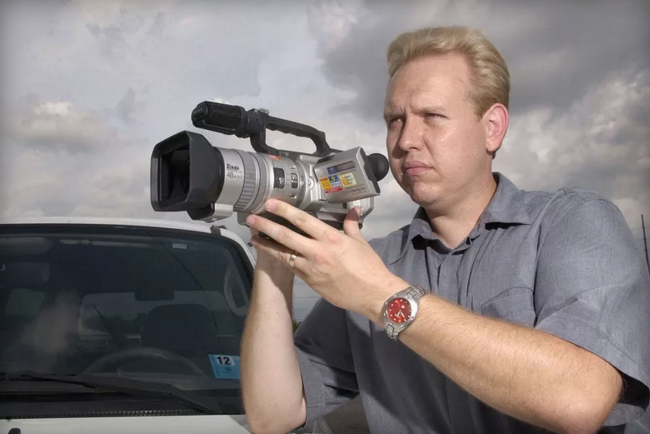
Here is the full story, the photo is of Bates, who because of a famous musical does not live in the most obscure state.
I thank a loyal MR reader for the pointer. And here is the Roam-E-Selfie drone.
Addendum: It is worse than you think. In the comments Jason Bayz alerts us to this story:
FEBRUARY 9–An Oklahoma man who has gained national exposure for his “video vigilante” campaign to expose street prostitution in his hometown was arrested yesterday for allegedly paying hookers to ensure that they serviced customers in an area where he could easily film the illicit trysts.
According to the below Oklahoma City Police Department report, Brian Bates, 34, orchestrated the public encounters so he could peddle the resulting videotape to media outlets (some of Bates’s surveillance tapes are offered for sale on his web site).
In his dealings with prostitutes, Bates was choosy, investigators contend.
For example, if a john was a “regular,” Bates asked prostitutes to give “specific signals” so he would know not to bother rolling tape. Investigators also noted that, like any good auteur, Bates “gave direction to the prostitutes on how to complete the act with a high probability of success,” as well as tips on how to spot an undercover cop.
Bates was hit with a felony pandering charge and a misdemeanor count of aiding in prostitution. The pandering rap, which is usually reserved for pimps, carries a minimum two-year jail term, and a maximum of 20 years in the stir.
Jason wins the internet today!
Why hasn’t economic progress lowered work hours more?
Here is a 42-minute video of a talk I gave on that topic at Duke University recently.
I start with Keynes’s prediction that we will be working 15 hours a week by 2030 and ask why it doesn’t seem to be coming true. Along the way, I consider the dominance of the substitution effect over the income effect for labor supply, and ponder why we don’t all have more sex. I conclude that progress is real rather than illusory, and we are not all caught up in a destructive rat race.
A paper on the same is forthcoming.
The case for a belief in free will
The paper title is Believing there is no free will corrupts intuitive cooperation, and the authors are John Protzko, Brett Ouimette, and Jonathan Schooler. The abstract is this:
Regardless of whether free will exists, believing that it does affects one’s behavior. When an individual’s belief in free will is challenged, one can become more likely to act in an uncooperative manner. The mechanism behind the relationship between one’s belief in free will and behavior is still debated. The current study uses an economic contribution game under varying time constraints to elucidate whether reducing belief in free will allows one to justify negative behavior or if the effects occur at a more intuitive level of processing. Here we show that although people are intuitively cooperative, challenging their belief in free will corrupts this behavior, leading to impulsive selfishness. If given time to think, however, people are able to override the initial inclination toward self-interest induced by discouraging a belief in free will.
I would say that we need a large swathe of society to believe in ideals of free will and individual responsibility, even though such concepts are not entirely faultless from a metaphysical point of view. For a given thinker, it is worth asking whether he or she adds to or takes away from that social belief. For some writers, the concepts of individual blame and responsibility apply only to their intellectual adversaries!
For the pointer I thank Ben Southwood.