Yimby and Liberty
Good answer from Matt Yglesias at Slow Boring:
Marcus Seldon: How should the YIMBY movement/urbanists deal with the fact that most Americans say they want to live in a detached single-family home that they own? How do you sell upzoning, walkable neighborhoods, transit-oriented development, and so on to people who largely like (or think they like, at least) the American suburban lifestyle?
MY: Logically, there’s just no contradiction here. It’s clear that there is significant unmet demand to live in New York, Boston, D.C., and San Francisco, and it’s also clear that most people don’t want to live in those cities. Right now, they collectively account for maybe three to four percent of the U.S. population, and in YIMBYtopia, maybe that would go up to five to six percent.
But mostly, the thing I want to sell people on is freedom. It should be legal to build a detached single-family home on any parcel of residentially zoned land in America. But it should also be legal to build a duplex or some rowhouses there. The point of making it legal to build mid-rise apartments isn’t that there’s something incredibly awesome about living in a mid-rise apartment. It’s that in a world of tradeoffs, you might prefer it to an alternative living situation where you have a longer commute or higher expenses.
Yglesias is correct. Yimby is a natural libertarian issue, it’s good for freedom, efficiency and the poor. It’s unfortunate that in recent years there has been some slippage among libertarians to adopt a “conservative” approach to Yimby and immigration by arguing for local and national rights to determine neighborhood and country composition. Sorry, you can twist words all you want, but that isn’t libertarianism it’s collectivism.
The NSF Career Award
From an email from an anonymous correspondent:
Tyler, you may already know this, but I don’t think most people outside of STEM do. The NSF CAREER award (grant) is viewed as a major stepping-stone towards tenure, and there is an expectation that most people will “get one” on their way to tenure at top universities. Yet the requirements are:
1. Write 15 pages, outlining your entire ambitious research agenda for the next 5 years, generally organized as 3 major thrusts with 2-3 paper-sized ideas each.
2. Write 2-3 pages about broader impact, which generally includes broadening participation goals explaining the new undergraduate classes, graduate classes, and extensive community outreach you will engage in.
3. You have about a 20% chance of being awarded this grant, and will hear in 6-9 months (~10% of your tenure clock!)
4. It’s for only $500k, which at most top STEM programs covers about a grad-student per year by the time all the indirect costs are included.
(You may guess that I am writing one right now). The idea that we basically have “prestige” grants that everyone agrees are way too much effort for way too little money blows my mind. And everyone goes along with it!
Other unintended consequences include that you’re effectively forbidden from proposing the same ideas to other funding agencies while the grants is under review, locking you out of other funding sources!
Imagine if I pitched a VC and they said “We’ll get back to you in six months and in the mean time you can’t pitch anyone else, and we’ll only give you enough for one employee for the next five years”. How could anyone do innovation in that kind of environment?!
TC again: Of those it is #4 that I find most astonishing. That is some rate of overhead! Keep in mind that throughout world history the costs of intermediation generally have run at about two percent of wealth. And that is for intermediaries that have to assess the creditworthiness of borrowers, not just send money along.
Are some VC investments predictably bad?
Do institutional investors invest efficiently? To study this question I combine a novel dataset of over 16,000 startups (representing over $9 billion in investments) with machine learning methods to evaluate the decisions of early-stage investors. By comparing investor choices to an algorithm’s predictions, I show that approximately half of the investments were predictably bad—based on information known at the time of investment, the predicted return of the investment was less than readily available outside options. The cost of these poor investments is 1000 basis points, totalling over $900 million in my data. I provide suggestive evidence that over-reliance on the founders’ background is one mechanism underlying these choices. Together the results suggest that high stakes and firm sophistication are not sufficient for efficient use of information in capital allocation decisions.
That is from a new paper by Diag Davenport, via Atta Tarki.
Tuesday assorted links
1. Whose breath are you breathing?
2. Which sciences did women end up in?
3. Indian farmers streamed fake pro cricket matches to Russian bettors for two weeks.
4. Switzerland moves ahead with underground autonomous cargo delivery.
5. For health reasons, Rebecca Blank will not assume the Northwestern presidency.
6. The apocalypse is upon us: “People Are Ditching Shampoo and Washing Their Hair With Pantry Items” (WSJ).
A Pox on the FDA
Monkeypox isn’t in the same category of risk that COVID was before vaccines but it’s a significant risk, especially in some populations, and it’s a test of how much we have learned. The answer is not bloody much. Here’s James Walsh in NYMag:
As monkeypox cases have ticked up nationwide, the White House and federal agencies have repeatedly assured the public that millions of vaccine doses will be distributed to at-risk populations before the end of the year. Yet since the World Health Organization announced the global monkeypox outbreak in May, only tens of thousands of shots have been administered in the U.S. The slow start is due, at least in part, to the fact that 1.1 million doses have been stored in a Denmark pharmaceutical facility while the Food and Drug Administration has taken almost two months to approve their release here, according to people familiar with the situation. FDA officials only began to inspect the facility last week. The lag time, public-health experts say, is indicative of the federal government’s lackadaisical approach to a growing public-health emergency.
…It’s unclear why the FDA took so long to send inspectors to Denmark. The agency regularly conducted virtual inspections of drug facilities early in the COVID-19 pandemic, according to the agency’s guidance, and public-health activists are demanding answers. “Members of at risk communities are being turned away from monkeypox vaccination because these vaccines are not available in sufficient quantity in the U.S., but instead sitting in freezers in Denmark,” members of the advocacy group PrEP4All and Partners in Health wrote in a letter to federal officials overseeing the outbreak response last week.
Compounding their frustrations was the FDA’s refusal to accept an inspection done last year by its counterpart, the European Medicines Agency, which deemed the company’s facility in compliance with the FDA’s own standards.
“The FDA does not grant reciprocity for EMA authorization of any vaccines, for monkeypox or other diseases,” a spokesperson for the FDA said in a statement.
Is there anyone in the United States who is saying, “I am at risk of Monkeypox and I want the vaccine but I don’t trust the European Medicines Agency to run the inspection. I’d rather wait for the FDA!” I don’t think so. James Krellenstein, an activist on this issue, asks:
“Why were the Europeans able to inspect this plant a year ago, ensuring these doses can be used in Europe and the Biden Administration didn’t do the same,” he added. “The FDA is making a judgment that they’d rather let gay people remain unvaccinated for weeks and weeks and weeks than trust the European certification process.”
Many people want to be vaccinated:
New York City has received just 7,000 doses from the federal government amid the national vaccine shortage. Meanwhile, the city Department of Health and Mental Hygiene’s appointment booking system has failed to keep up with the high demand for the shots — most recently on Wednesday.
…The mounting frustrations left health officials and Mayor Eric Adams on the defensive, pushing back against comparisons to New York’s struggles during the early days of the coronavirus vaccine, which was beset by computer glitches and supply shortages.
This is a classic case for reciprocity. Any drug, vaccine, test or sunscreen (!) approved by a stringent regulatory authority ought to be conditionally approved in the United States.
Addendum: If you are not furious already–and you should be–remember that during COVID the FDA suspended factory inspections around the world creating shortages of life-saving cancer drugs and other pharmaceuticals. As I wrote then “Grocery store workers are working, meat packers are working, hell, bars and restaurants are open in many parts of the country but FDA inspectors aren’t inspecting. It boggles the mind.”
Hat tip: Josh Barro.
Photo Credit: Nigeria Centre for Disease Control.
David Neumark and Peter Shirley on the minimum wage literature
The effects on employment, of course:
Our key conclusions are as follows: (i) there is a clear preponderance of negative estimates in the literature; (ii) this evidence is stronger for teens and young adults and the less educated; (iii) the evidence from studies of directly affected workers points even more strongly to negative employment effects; and (iv) the evidence from studies of low-wage industries is less one-sided.
Here is the full paper, of course Twitter will try to tell you otherwise.
Monday assorted links
1. Irish horror films find mainstream success. “Irish folklore is particularly dark and lends itself to horror,” said the film’s writer and director, Kate Dolan, 31. “Not a lot of happy endings – a lot of people being dragged to their doom.”
2. A proposal for science funding reform.
3. Is Canada’s health care system collapsing?
4. Is Paxlovid resistance just a matter of time?
5. Are gophers farmers? (NYT)
My HBR piece with Atta Tarki and Alexandra Ham
How to streamline the hiring process. Excerpt with the core recommendations:
- Reduce the number of interviewers in your process. If you have more than four or five interviewers, chances are that the costs associated with the additional complexity in your process have exceeded the benefits they produce.
- Be explicit about whose decision it is. Steer your organizational culture away from a consensus-oriented approach. Instead, for each role make it explicit whose decision it is, who else might have veto power, and that other interviewers should not be offended if a candidate is hired despite not getting their approval. And then keep repeating this message until most of your colleagues adapt to this new approach.
- Ask interviewers to use numerical ratings when evaluating candidates. We’ve experienced that doing so helps hiring committees focus on the holistic view rather than on one-off negative comments. Having interviewers submit their ratings before getting input from their colleagues will have the further benefit of reducing the chance of groupthink in your evaluations.
- Remove the “Dr. Deaths” from your hiring committee. Track which interviewers turn down the most candidates, and if they are not better at picking good hires, communicate with them that they will be removed from the hiring committee if they don’t correct their behavior.
- Change your culture to reward those who spot great hires, not penalizing those who end up with an occasional poor performer. You can further do this by emphasizing the difference between good decisions and good outcomes. Sometimes a fully logical bet will result in a poor outcome. If needs be, call out those spreading negativism.
Recommended. Atta Tarki is at ECA Partners, Alexandra Ham is at TalentCompass.co.
Labor Unions Reduce Product Quality
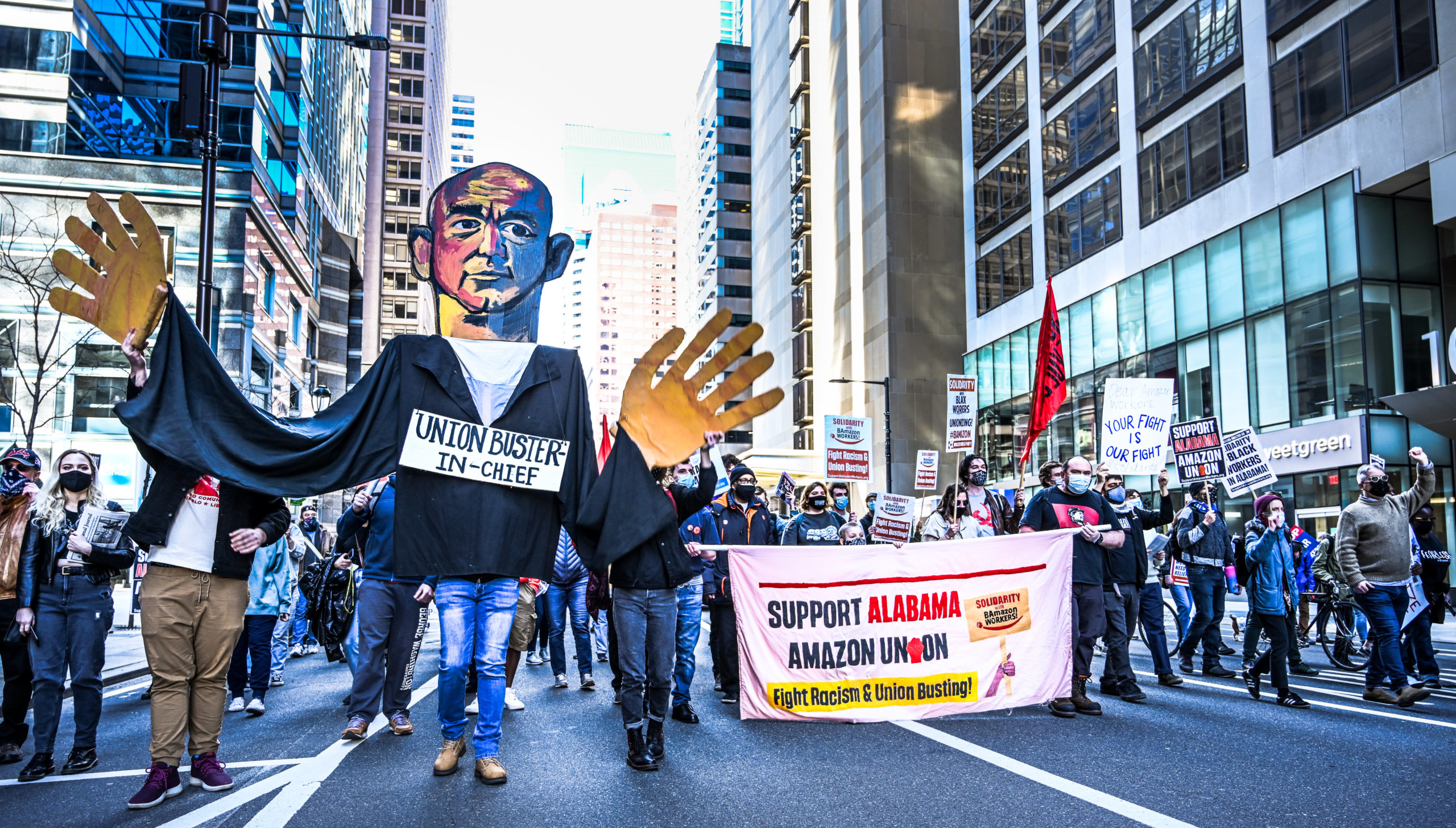 A very nice paper in Management Science by Kini, Shen, Shenoy and Subramanian finds that labor unions reduce product quality. Two strengths of the paper. First, the authors have relatively objective measures of product quality from thousands of product recalls mandated by the FDA, the Consumer Product Safety Commission and the National Highway Traffic Safety Administration covering many different industries. Second the authors use 3 different methods. First, they find that unionized firms are more likely to have recalls than non-unionized firms (a simple difference in means subject to many potential cofounds but I still like to see the raw data), second they find that in a panel model with industry and year fixed effects and other controls that firms which are more unionized have a greater frequency of product recalls. Finally they find that firms where the union just barely won the vote are more likely to have subsequent product recalls than firms for which the union just barely lost the vote–a regression discontinuity study.
In this paper, we study the impact of labor unions on product quality failures. We use a product recall as our measure of quality failure because it is an objective metric that is applicable to a broad cross-section of industries. Our analysis employs a union panel setting and close union elections in a regression discontinuity design framework to overcome identification issues. In the panel regressions, we find that firms that are unionized and those that have higher unionization rates experience a greater frequency of quality failures. The results obtain even at a more granular establishment level in a subsample in which we can identify the manufacturing establishment associated with the recalled product. When comparing firms in close elections, we find that firms with close union wins are followed by significantly worse product quality outcomes than those with close union losses. These results are amplified in non–right-to-work states, where unions have a relatively greater influence on the workforce.
The authors put more weight on financial strains caused by unionization as a mechanism whereas my story would be that unionization prevents firms from disciplining shoddy workers and that leads to lower product quality. Note that my theory would also cover teachers unions which the author’s mechanism would not.
Hat tip: Luke Froeb.
Photo Credit: Joe Piette.
U.S.A. fact of the day
What’s new is this: Almost a quarter of Americans over the age of 18 are now medicated for one or more of these conditions.
More specifically, according to data provided to The Times by Express Scripts, a pharmacy benefits manager, prescriptions across three categories of mental health medications — depression, anxiety and A.D.H.D. — have all risen since the pandemic began. But they have done so unevenly, telling a different story for each age group and each class of medication.
Here is more from the NYT, depressing throughout.
Geographic mobility is one secret of successful immigration
According to Boustan and Abramitzky, the secret weapon deployed by immigrant parents wasn’t education. It wasn’t a demanding parenting style like the one described in Amy Chua’s “Battle Hymn of the Tiger Mother,” either.
It was geographic mobility.
Immigrant kids tended to outperform their peers from similar economic backgrounds because, unencumbered by deep hometown roots, their parents were willing to move to where the jobs were. If you compare immigrants to similar native kids born in the same place, they succeed at similar rates. It’s just that immigrant kids are much more likely to have grown up in one of those high-opportunity places.
“Immigrants are living in locations that provide upward mobility for everyone,” Boustan said.
Here is the full article, which also argues that recent immigrants have been climbing the economic ladder no slower than in the days of Ellis Island. By Andrew Van Dam, based on the work of Leah Boustan and Ran Abramitzky.
DC markets in everything
ShutDownDC, a liberal advocacy group in Washington, D.C., said on Friday that it will offer up to $250 to service industry workers in the district for every sighting of the justices who overturned Roe v. Wade.
Here is the story, and like Charles Cooke (and presumably Dan Klein) I object to the word “liberal” in this context.
And maybe they won’t get the check right away either:
- “We’ll Venmo you $50 for a confirmed sighting and $200 if they’re still there 30 mins after your message.”
Sunday assorted links
1. What is new in China this past week (a lot).
2. China’s population had been overcounted.
3. The South Korean population pyramid.
4. What is the likelihood Catherine the Great ever ate a banana?
5. Top importers and exporters of frog.
6. Is the future of opera to be found in Detroit? (NYT) “By middle school he’d become a self-described “loner kid”; by high school he was watching Bergman’s “Persona” for pleasure.”
7. Hydrogen fuel cells and electrolysis for generation are getting more efficient.
Colombia markets in everything those new service sector jobs
Ex-guerrillas offer birdwatching, hiking and hearty campfire cuisine as part of Tierra Grata Ecotours in La Paz, a town near the border with Venezuela. Over a two-day hike along boggy mountain paths, Jhonni Giraldo, a former farc footsoldier, leads hardy tourists to Marquetalia, a hamlet. In 1964 the military bombed an armed commune founded by refugees here into oblivion; the survivors headed to the hills and the farc insurgency was born. There is not much to see other than the rusted remains of a downed helicopter. Mr Giraldo is mulling over reconstructing the house of Manuel Marulanda, the founder of the farc.
Here is more from The Economist, via Yana.
*The World the Plague Made*
The author is James Belich, and the subtitle is The Black Death and the Rise of Europe. This is a fascinating but not entirely persuasive book. In any case it is one of the books to read this year. Here is a summary sentence:
This book has argued that plague’s dire crucible triggered the Fourth Divergence.
My main worry is simple, namely that the author does not demonstrate his main proposition that the Black Death significantly boosted living standards where it hit. That might be true, and I would say I don’t have a view of my own view on the matter one way or the other. (Here is a recent and very useful survey indicating the positive effects were mostly short-run.) But I would need to see a more careful presentation of wage data, and the author too frequently invokes a) massive literature citations, and b) a pat “half the people, so twice the per capita wealth” argument. Losing up to half the people is highly disruptive, including for the ability to exploit material resources. And is it per capita wealth that matters, or income? Matters for what and for which income classes? I needed to see much more on this.
Anyway, if you buy into the main premise (or even if you don’t) what follows is interesting throughout. Belich takes on exactly when and why various plagues stopped circulating, and whether insufficiency of rats was a major reason. Here is one interesting passage:
The rise of rat resistance — and the decline of it — seems like to have played a major role in the decline of plague — and the exceptions to it — throughout West Eurasia. But as we saw in the last chapter, plague history increasingly diverged regionally from 1500. Epidemics ended in Western Europe by 1720 and Eastern Europe by 1780. Major strikes continued to afflict the Muslim South until about 1840. the end of plague is conventionally attributed to human agency, notably the growing power of states to run effective quarantine measures, public health regulations, and border controls. Other factors include a shift from wood to brick and tile, which was less rat-friendly , and to cheaper arsenic in the 1720s, which was not rat-friendly at all. The decline of wooden houses and thatched roofs, ideal black rat environments, and their replacement by brick and tile varied by class, which may account for the trend toward higher casualties among common folk after 1500.
Belich then sheds some doubt on the public health measures argument, noting that Italy had bad plague outcomes in the 17th century, even though it had the best public health measures at the time. No simple answer, but plenty of interesting discussion.
Another of my favorite sections of the book covered the difficulties at the time in persuading women to emigrate, and how that shaped colonial policies. You also get the author’s take on the Persianate nature of the Mughal invasions, a lengthy account of how the plague shaped the settlement of Siberia, an optimistic take on the capabilities of peak Ottoman empire, how the fiscal state was Britain’s main innovation, how Britain manned its sea fleets from the Nordic countries, and much more. You might say this is all too much, but who am I to complain? I did find every page of the book substantive and interesting, even if I often felt the author was biting off more than he could chew.
So definitely recommended, though with caveats on the side of some of the actual conclusions.
Here are my previous posts on the work of James Belich. In general he is someone whose books I always will read.