Results for “age of em” 17234 found
National identity eases cross-cultural trust problems
Amanda Lea Robinson has a new paper “Nationalism and Ethnic-Based Trust: Evidence from an African Border Region,” here is her main result:
In diverse societies, individuals tend to trust coethnics more than non-coethnics. I argue that identification with a territorially-defined nation, common to all ethnic groups, reduces the degree to which trust is ethnically bounded. I conduct a “lab-in-the-field” experiment at the intersection of national and ethnic boundaries in Malawi, which measures strength of national identification, experimentally manipulates national identity salience, and measures trust behaviorally. I find that shared nationality is a robust predictor of trust, equal in magnitude to the impact of shared ethnicity. Furthermore, national identification moderates the degree to which trust is limited to coethnics: while weak national identifiers trust coethnics more than non-coethnics, strong national identifiers are blind to ethnicity. Experimentally increasing national identity salience also eliminates the co-ethnic trust advantage among weak nationalists. These results offer micro-level evidence that a strong and salient national identity can diminish ethnic barriers to trust in diverse societies.
Hat tip goes to Ben Southwood.
The oddities of trademark law
Offensive words and phrases can be trademarked, and some people are trying to do this to keep such jargon out of broader circulation:
A spokesman for the U.S. Patent and Trademark Office said the office does not comment on trademark applications. Applications for trademarks flagged under a “scandalousness provision” can still be denied, the spokesman said.
Bordenave said he has filed many trademarks for phrases and logos that might prove profitable — radio frequencies, for example, and the phrase “New Orleans Tricentennial.” (The city will celebrate its 300th birthday next year.)
His idea: Build a brand around the n-word by including it discreetly — in T-shirt collar tags or fine print on water bottles, for example — on products emblazoned with larger, positive messages like “UNITY.” He said consumers would learn that, by buying such products, they were keeping the epithet out of more visible circulation.
This plan strikes me as ill-advised, and overly optimistic on the entrepreneurial side:
Maynard — of Snowflake Enterprises, named for a common insult of “someone with thin skin,” he said — planned to co-opt the swastika by including it on baby products. Such “social satire,” he said, could change its meaning and restrict its usage among hate groups.
“One of the hopes is that people look at the swastika flag in 10 years and think: baby wipes,” he said.
Or is there another agenda, hidden in its openness? Here is the full story, via M.
An Era of Darkness: The British Empire in India
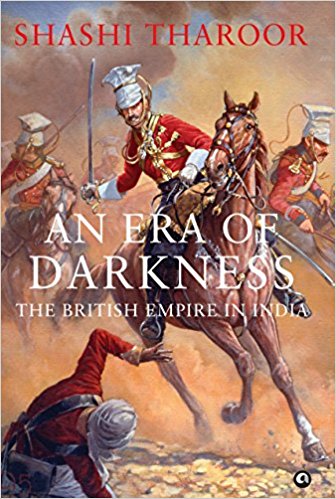 Shashi Tharoor, former Under-Secretary-General at the United Nations, bestselling author, Indian politician and current member of the Indian parliament has written a powerful brief against the British in An Era of Darkness: The British Empire in India (also published as Inglorious Empire). It’s an enjoyable read but some of the economic history is wrong and a number of the social arguments implausible.
I offer no defense of the British empire which was cruel, rapacious and racist but I do correct the record in my long-form review at the Indian journal Pragati.
Here is one bit:
Hindu and Muslim divisions run deeper than the ink marks of colonial census takers. Emperor Aurangzeb killed his brother Dara Shikoh for apostasy in 1659 and the echoes of that fratricide travel down the centuries to Partition. Aurangzeb’s tax on non-Muslims, the jizya tax, abolished in the 16th century by his great-grandfather, the third Mughal emperor Akbar, but re-imposed a hundred years later is another sign of deteriorating interreligious relations. Even some events outside of India, such as the rise of the Wahhabi branch of Sunni Islam in the 19th century, were clearly more important for Hindu-Muslim relations than were the census takers (Allen 2005, Dalrymple 2008). The rise of Wahhabism and the decline of Sufism were bound to upset Hindu-Muslim relations no matter what the British did.
Read the whole thing.
What to make of Elon Musk’s hyperloop announcement?
Just received verbal govt approval for The Boring Company to build an underground NY-Phil-Balt-DC Hyperloop. NY-DC in 29 mins.
— Elon Musk (@elonmusk) July 20, 2017
Adam Ozimek asks me:
How should we think about this in a meta-rational sense? https://www.theverge.com/2017/7/20/16003766/elon-musk-boring-company-hyperloop-nyc-philadelphia-baltimore-dc
…What should we make of it?
To be clear, I have never had interaction with Elon Musk, so I intend these as general possibilities, rather than as commentary on his individual personality:
1. There are some people who on Twitter will just “fuck with us.” Precisely because they have done a lot in the so-called “real world,” they just don’t take Twitter that seriously.
2. Some very successful people are programmed to rhetorically overreach. This makes them the center of attention and furthermore keeps them motivated. They don’t apply the same kind of “reality filter” to their rhetoric that a scientist might.
3. Sometimes exaggeration is used to distract from pending failures, a’la Trump, and this process may include self-distraction. (Tesla?)
4. Exaggeration is a way to keep the hyperloop on the agenda and in the mindset of the nerdy public. Eventually that will help make the hyperloop possible. Speakers with this motive often think of themselves as bootstrapping the reality, rather than “making stuff up.”
Most of talk isn’t about reporting the truth! In this sense the tweet isn’t surprising at all.
And what the heck is “verbal government approval” in a world with federalism, multiple layers of environmental review, NIMBY homeowners, and courts of varying jurisdictions? I like to think the tweet might be an act of sarcastic protest, or Straussian meta-commentary born out of frustration, but somehow I suspect neither of those is the case.
Who’s complacent? (arbitrage for Ontario)
A Toronto man who spent $550 building a set of stairs in his community park says he has no regrets, despite the city’s insistence that he should have waited for a $65,000 city project to handle the problem. The city is now threatening to tear down the stairs because they were not built to regulation standards.
Retired mechanic Adi Astl says he took it upon himself to build the stairs after several neighbours fell down the steep path to a community garden in Tom Riley Park, in Etobicoke, Ont. Astl says his neighbours chipped in on the project, which only ended up costing $550 – a far cry from the $65,000-$150,000 price tag the city had estimated for the job.
“I thought they were talking about an escalator,” Astl told CTV News Channel on Wednesday.
Astl says he hired a homeless person to help him and built the eight steps in a matter of hours.
Astl’s wife, Gail Rutherford, says the stairs have already been a big help to people who routinely take that route through the park. “I’ve seen so many people fall over that rocky path that was there to begin with,” she said. “It’s a huge improvement over what was there.”
The city says the stairs are unsafe and has cordoned them off, banning their use:
“We just can’t have people decide to go out to Home Depot and build a staircase in a park because that’s what they would like to have.”
Here is the article, with photos, via Rob Gray.
Arbitrage, self-made coffin edition
A coffin-making community group has popped up in Tasmania’s north-west, allowing people to make their caskets dirt cheap.
The Community Coffin Club meets once a week at the Ulverstone Community Shed, where mentors help people make coffins for themselves and their family.
Sheree Whittington has been working on her coffin for the past month.
“I’ve always had a bit of a morbid side to me and loved the Addams family and that sort of thing,” Ms Whittington said.
“When I found out about the Coffin Club I thought what better way: make my own coffin.”
Ms Whittington said she planned to put her coffin to good use before she needed it.
“It is going to be a coffin for when my time eventually comes, but in the meantime I’m going to have shelves put in it so I can use it as a CD and DVD rack.”
“It’s an actual, functional piece of furniture.”
Is this true?:
Facing death ‘easier if you’ve got coffin ready’
Maybe so:
“I don’t know what the funeral directors think about it, but we can make them for probably a tenth of the cost.”
When Mr Game’s is finished, his casket will have cost less than $200 to make.
Here is the full story, via NinjaEconomics.
The Golden Age of Conservative Intellectuals
When was the Golden Age of Conservative Intellectuals? It is easy to say when the Golden Age began; April 1947 at the first meeting of the Mont Pelerin society. Among those in attendance were:
- Maurice Allais, Paris
- Aaron Director, Chicago
- Walter Eucken, Freiburg
- Milton Friedman, Chicago
- F. A. Harper, Irvington-on-Hudson, New York
- F. A. Hayek, London
- Henry Hazlitt, New York
- Bertrand de Jouvenel, Chexbres, Vaud
- F. H. Knight, Chicago
- Fritz Machlup, Buffalo
- Ludwig von Mises, New York
- Felix Morley, Washington, D.C.
- Michael Polanyi, Manchester]
- Karl R. Popper, London
- William E. Rappard, Geneva
- Leonard E. Read, Irvington-on-Hudson, New York
- Lionel Robbins, London
- Wilhelm Ropke, Geneva
- George J. Stigler, Providence, Rhode Island
- C. V. Wedgwood, London
(Full list here). It’s more difficult to say when the Golden Age ended. If I had to pick a date I’d say at a moment of triumph, November 9, 1989.
Minimum Wage and Restaurant Hygiene Violations
This is evidence from Seattle, from a new paper by Subir K. Chakrabarti, Srikant Devaraj, and Pankaj C. Patel. Here is the abstract:
We assess the effects of rise in minimum wages on hygiene violation scores in food service establishments. Using a difference-in-difference analysis on hygiene rating of food establishments in Seattle [where minimum wage increased annually between 2010 and 2013] as the treated group and from New York City [minimum wage was constant] as the control group, we find an increase in real minimum wage by $0.10 increased total hygiene violation scores by 11.45 percent. Consistent with our theoretical model, an increase in minimum wage in Seattle has no influence in more severe (red) violations, and a significant increase in less severe (blue) violations. Our findings are consistent while using an alternate control group – Bellevue City, King County, located near Seattle.
Of course this makes perfect sense. Even when minimum wages do not much decrease employment, they are not a free lunch, so to speak. “There ain’t no such thing as a healthy free lunch” [TANSTAAHFL, the pronunciation differs only slightly] could be the new catchphrase.
For the pointer I thank the excellent Kevin Lewis.
When was the Golden Age of conservative intellectuals?
Paul Krugman says a mix of “never” and “certainly not now” (my paraphrases, not actual quotations from him). Here is one bit:
On environment, a similar turn took place a bit later. The use of markets and price incentives to fight pollution was, initially, a conservative idea condemned by some on the left. But liberals eventually took it on board — while cap-and-trade became a dirty word on the right. Crude slogans — government bad! — plus subservience to corporate interests trump analysis.
I believe this is pretty far from the reality, here are a few points:
1. Conservative intellectuals never have turned against the idea of a carbon tax, as evidenced by Greg Mankiw’s leadership of the Pigou Club. Cap-and-trade is somewhat less popular, but that is probably the correct point of view, given the time consistency problems with governments that increase the supply of permits, as has happened in Europe.
2. Water economics is a big part of environmental economics. “Raise the price” and “define property rights better” remain central ideas in that field, commanding a lot of attention. David Zetland is one recent exemplar of these ideas.
3. The idea that there can be too much environmental regulation in many particular cases remains a central contribution, often associated with the Right. Of course this view is compatible with much tougher restrictions on carbon or other forms of air pollution.
4. The idea of properly applying “value of life” analysis to regulation, and seeking greater consistency (let’s save lives in cheaper rather than more expensive ways), remains a significant and undervalued insight.
5. Some of the key work on valuing biodiversity has come from Chicago-related methods, though I do not know the political affiliations of the authors.
6. Matthew Kahn, one of the leading environmental economists today, I would consider broadly in the classical liberal tradition. He recently published an important book on air pollution in China.
6. Jonathan H. Adler is a significant ongoing contributor to environmental law and economics. Or try the work of Terry Anderson.
7. Applying property rights analysis to animal herds, animal ownership, and the tragedy of the commons remains a significant conservative idea. You will note throughout I don’t like calling these “conservative” ideas, they are simply good ideas or bad ideas. Still, in the broader sociological sense you hear these ideas from conservatives and libertarians fairly often.
8. There is plenty of recent work on the political economy of the administrative state, and whether it generates abuses of the rule of law or bad incentives.
9. I could go on, with perhaps Vernon Smith”s recent work on peak-load pricing for electric utilities being next in line. Or pro-green, pro-nuclear analysis often comes from the Right.
10. Overall, “schools of thought” have been dwindling in economics, and so it might seem that the golden ages of various ideologies or schools of thought lie well behind us. But if we focus on the ideas and their influence, rather than whether carriers of those ideas bear particular political labels, the influence of Chicago, UCLA, cost-benefit, and Montana/PERC ideas in environmental economics never has been stronger. In that sense the golden age is right now.
Addendum: Here is a better Krugman piece on the history of thought, though I would note that capital movements were integrated into the price-specie-flow mechanism in the 18th century and fully by the time of Henry Thornton.
In Praise of Extreme Medicine
This Buzzfeed article on unauthorized poop transplants has much of interest:
A spate of studies over the last decade have convinced microbiologists and doctors that “fecal microbiota transplantation,” or FMT, works for at least one disease: a deadly bacterial infection in the gut known as Clostridium difficile, or C. diff. No one knows whether the procedures work on other conditions, though dozens of clinical trials are testing them on people with irritable bowel syndrome, Crohn’s disease, obesity, diabetes, epilepsy, autism, and even HIV.
The science is advancing rapidly, with more and more scientists excited about the potential and potency of fecal matter and the microbes in it. The FDA regulations on these procedures, however, keep them out of reach for most patients: Since 2013, the agency has banned doctors from doing fecal transplants on anything except C. diff.
A rogue clinic in Tampa, however, provides the carefully sourced material and explains to patients how the procedure is done. Since the procedure is simple, lots of experimentation is going on which upsets some people.

Poop from an unscreened stranger could carry serious infections, like hepatitis or gonorrhea, or dormant viruses.
No doubt–this is why we also ban sex and french kissing.
I suspect that many of the so-called treatments are crazy but people do a lot of crazy things. It’s odd that we allow some crazy things and ban others—even more that the crazy things we allow are sometimes socially useless while the crazy things that we ban are sometimes socially valuable.
The case for banning extreme sports, for example, is much stronger than the case for banning extreme medicine. Extreme sports don’t provide much benefit to the rest of humanity, other than some entertainment of questionable social value. Extreme medicine, on the other hand, has the potential to improve all our lives and at the very least is a useful warning about what not to do. Yet, extreme sports are lauded, or at least treated as mostly your own business (we do put some regulations on boxing and race car driving), while extreme medicine is heavily regulated and socially frowned upon.
My attitude is the reverse. You want to risk your life climbing without ropes? Knock yourself out–but don’t expect any support from me. I won’t even watch Alex Honnold because I think that what he does is Russian roulette and I do not approve. But, you want to risk your life trying an unapproved medical treatment? Sir, I salute you. Give that man a Nobel prize.
Do not buy pre-Hispanic antiquities (arbitrage)
Almost all of the artifacts described as the oldest in the permanent collection of the Mexican Museum are either forgeries or cannot be authenticated to display in a national museum.
What Russian journalists think of American Putin-Trump coverage
For broader perspective, I found this a very useful New Yorker piece by Joshua Yaffa. Here is one bit from it:
In advance of Trump and Putin’s first meeting, on the sidelines of the G-20 summit in Hamburg, I decided to ask Russia’s sharpest and most experienced political journalists and investigative reporters what they thought of this coverage…
On the whole, said Mikhail Zygar, a political journalist and the author of “All the Kremlin’s Men,” a well-sourced insider look at the cloistered world of Russian politics, the way the U.S. media has covered the Russia scandal has made “Putin seem to look much smarter than he is, as if he operates from some master plan.” The truth, Zygar told me, “is that there is no plan—it’s chaos.”
And:
The most important thing that U.S. reporters should remember, Shleinov told me, is that “money is fleeing Russia in all directions, people are trying to invest anywhere they can, to get their assets out before the secret services or their competitors show up and try and take them all.” On the whole, Shleinov said, a wealthy Russian—even a politically connected one—is likely buying real estate abroad “as a place to run to,” not on Putin’s orders.
Speculative, but interesting throughout, there is also much on the possible Trump-Putin connections.
Italian average is over
Michele Fontefrancesco, an economic anthropologist and honorary fellow of Durham University, says: “Jobs have been getting more precarious in Italy since the late-1990s. What is becoming more and more common in Italy and other Mediterranean countries is the erratic movement of workers from firm to firm.”
He adds: “It’s becoming harder and harder to access professions with social capital. You study for three or four years longer than your father and you earn less money than him.”
For Agnese Bellieni, a 31-year-old resident of Alessandria, in Italy’s north-west, years of education are failing to pay off, and the eurozone recovery feels intangible. After finishing her doctoral studies in literature her dream was to become a full-time teacher, but in recent years she has been bogged down in a series of continuous but part-time, precarious work assignments — from market research, to Latin and ancient Greek tutoring — that, at best, have earned her €1,500 a month.
That is by Claire Jones in the FT, mostly about how the new eurozone jobs have lower wages and less job security.
John Roberts’ Commencement Speech
Supreme Court Justice John Roberts gave the commencement speech at his son’s 9th grade graduation. This section was striking:
Now the commencement speakers will typically also wish you good luck and extend good wishes to you. I will not do that, and I’ll tell you why. From time to time in the years to come, I hope you will be treated unfairly, so that you will come to know the value of justice. I hope that you will suffer betrayal because that will teach you the importance of loyalty. Sorry to say, but I hope you will be lonely from time to time so that you don’t take friends for granted. I wish you bad luck, again, from time to time so that you will be conscious of the role of chance in life and understand that your success is not completely deserved and that the failure of others is not completely deserved either. And when you lose, as you will from time to time, I hope every now and then, your opponent will gloat over your failure. It is a way for you to understand the importance of sportsmanship. I hope you’ll be ignored so you know the importance of listening to others, and I hope you will have just enough pain to learn compassion.
Whether I wish these things or not, they’re going to happen. And whether you benefit from them or not will depend upon your ability to see the message in your misfortunes.
Forget automation and AI, are goats taking away union jobs? (Malthus! arbitrage!)
University spokeswoman Cheryl Roland said a small goat crew has been on campus this summer, but not to cut grass.
“For the second summer in a row, we’ve brought in a goat crew to clear undergrowth in a woodlot, much of it poison ivy and other vegetation that is a problem for humans to remove,” Roland said. “Not wanting to use chemicals, either, we chose the goat solution to stay environmentally friendly.
“The area is rife with poison ivy and other invasive species, and our analysis showed the goats to be a sustainable and cost-effective way of removing them,” she added.
The goats were formally introduced to the campus and local community on June 2 in parking lot 51 of the Sindecuse Health Center.
Garrett Fickle and his wife, Gina, the owners of Munchers on Hooves in Coldwater, rent out their four-footed “lawn mowers” to homeowners, commercial property owners and other clients.
…The goats are ahead of schedule, said Nicholas Gooch, a university horticulturist and the project leader.
And yet:
The 400-member American Federation of State, County and Municipal Employees has filed a grievance contending that the work the goats are doing in a wooded lot is taking away jobs from laid-off union workers.
“AFSCME takes protecting the jobs of its members very seriously and we have an agreed-upon collective bargaining agreement with Western Michigan,” said Union President Dennis Moore. “We expect the contract to be followed, and in circumstances where we feel it’s needed, we file a grievance.”
Here is the full story, via Rayman Mohamed.