Results for “markets in everything” 1896 found
Labor markets in everything
A New York City real estate company made the offer and dozens of employees are getting inked.
As CBS 2′s Emily Smith reported Tuesday, a tattoo can be a way to show off your personality. For Rapid Realty employees, it is the fast track to a 15 percent pay raise if you get inked with the company logo.
There are no size or location restrictions. Brooke Koropatnick got hers behind the ear.
The story is here, and for the pointer I thank Mark Thorson. By the way, there is this too:
The credit doesn’t go to Rapid Realty owner Anthony Lolli. He said he got the idea from a loyal employee who wasn’t doing it for money.
“He calls me up, he says ‘Hey Anthony, I’m getting the logo on me.’ I show up at the shop and I’m like ‘this is cool, how can I repay you?’” Lolli said.
Markets in everything
I heard reports of inmates checking out popular books like The Da Vinci Code, then auctioning off reading rights to fellow inmates.
That is from Avi Steinberg’s Running the Books: The Adventures of an Accidental Prison Librarian, which is often annoying, intermittently very interesting.
German markets in everything
Responding to an order from above, a Munich court has reopened the media accreditation process for reporters covering the biggest neo-Nazi trial in German history. Seats will now be allotted by raffle, with several being reserved for the Turkish, Greek and other foreign press.
Here is more, note there are several reserved for Persian, Greek, and Turkish media.
Markets in everything
Hawkins’ clients are part of a growing trend: people paying to have their vacations professionally photographed.
Her clients say the results – clean, crisp, blur-free images ideal for holiday cards and brag books – are worth it.
Ugh says I, and the link is here, via Courtney Knapp.
Atheist-branded packages (markets in everything)
Here is a web site that sells them, from Berlin I might add. As Mark Thorson summarizes it:
Packages took an average of 3 more days to arrive and were 10 times more likely to disappear when wrapped with atheist-branded tape vs. plain packaging.
I do not know what kind of double check these numbers have been subject to, or not.
Australian free rider markets in everything
From the excellent and apparently inexhaustible Mark Thorson:
A poster telling customers they’ll be charged $5 for browsing if they don’t purchase anything has been put up at Celiac Supplies in the Brisbane suburb of Coorparoo, Reddit user BarrettFox reported.
Owner of the gluten free produce store, Georgina, says she resorted to putting up the sign after spending hours each week giving advice to people who leave empty-handed.
About 60 people a week would go into the store, ask questions and then buy the same or similar product at a supermarket chain or online.
“I’ve had a gut full of working and not getting paid,” Georgina, who didn’t want her surname published, told AAP.
The full article is here. The store owner comments:
“I can tell straight away who are the rat bags who are going to come in here and pick my brain and disappear,” she said.
Cypriot vending machine markets in everything?
I don’t think this is a joke, and it is only a plan, and not a mainstream business project, in any case my apologies if I have been tricked by an early April Fool’s joke:
Upon examination of the marketplace and many discussions with Justin O’Connell (TDV Newsletter & Gold Silver Bitcoin), as well as another key strategic partner of ours, I have decided to move forward with what I believe could be the next multi-billion dollar business venture: Bitcoin ATM.
But that isn’t all. It is wholly our intention at Bitcoin ATM to put the company in the right position to open its very first ATM in Cyprus. If we did this now, and we are moving quickly to make this so, we would be the only functioning ATM on the island.
That is from “The Dollar Vigilante,” hat tip goes to Mike K.
Russian markets in everything
According to this story in Canada’s National Post, cops in Moscow have been ordered to inspect ambulances after learning that VIP commuters are riding around in “ambulance taxis” that cost as much as $200 per hour.
These aren’t just ordinary ambulances, either. They’ve been cleverly fitted with fancy and luxurious interiors so their passengers can eat caviar and sip champagne while they blow through traffic with lights and sirens blazing.
Hobby drone golf markets in everything
“The Rocketry Golf Organization (RGO) Aimed its First Contest with Golf Pro, Shawn Kelly, vs. Doug Frost, at The Ridge Golf Course, Auburn, Ca., March 19 and 26, 2013
Rockets with plastic golf balls, replace driver clubs, as they fly to the green no matter how far. Shawn Kelly, golf pro, will compete against these rocket machines. Doug Frost, rocketry golfer, will have to putt out with a real golf ball and club.” -PRNewswire
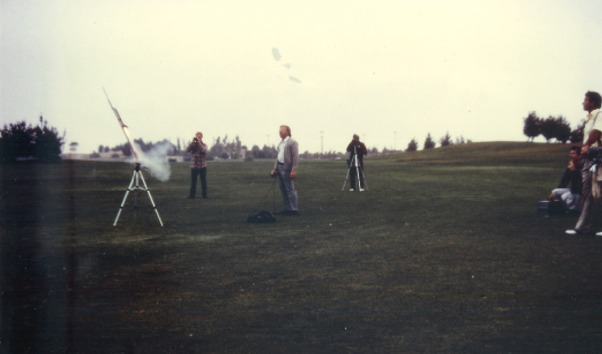
For the pointer I thank the apparently excellent Brett Keller.
China safety markets in everything
Chinese drivers hate to wear their safety belts. Instead, they wear specially designed clothing to pretend they are buckled up. But that won’t stop the seat-belt reminder lights and beeps, which are all extremely annoying.
It is possible to click the belt in the buckle behind your back but that is uncomfortable. It is also possible to fiddle with the electronics but that is difficult. Creative and innovative Chinese companies finally found an easy solution.
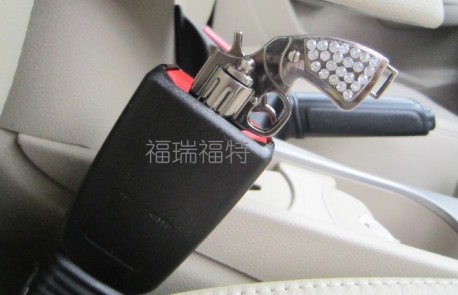
They are priced between fifty cents and $2.40. Here is more, excellent photos too, and for the pointer I thank Michael Verdone.
Thwarted body part markets in everything
The Chicago-based nonprofit faces “the same challenge any business would have, whether I’m selling Hostess Twinkies or cadavers,” says Stephen Burnett, a professor of management and strategy at Northwestern University’s Kellogg School of Management.
To stay ahead, the association wants to supply body parts to the FBI and launch new products, including its own plastinated bodies, says Mr. Dudek, 62, executive vice president since 2005. He draws on his entrepreneurial experience as a co-owner of an MRI center in the south suburbs, which he sold to join the association.
Originally known as the Demonstrator’s Society, the association has not changed its business plan since its founding in 1918. Bodies are donated, embalmed and transferred to institutions such as med schools, where dissection remains a rite of passage.
Reasons for donations vary. Some gifts are part of estate planning, while others are made by relatives who cannot afford funerals.
By law, bodies cannot be sold, although groups like the association can be paid for processing. Member med schools pay about $1,300 per cadaver; nonmembers pay $2,300.
Nationwide, there’s a shortage of cadavers, in part because of the rise in organ donation. Cadavers without their organs are not suitable for medical education, Mr. Dudek notes. The association needs about 425 bodies a year for its members but missed that mark in 2009 and has barely met it in three of the last six years.
And yet globalization and government may come to the rescue:
The Middle East, where the culture discourages body donations, could be a new market. Schools in Lebanon and Saudi Arabia have recently expressed interest, he says. Law enforcement agencies also are prospects. Anatomical Gift is close to signing a contract to supply the FBI’s K-9 unit, which uses body parts to train dogs to find crime victims, he says. Limbs cost $570, plus $335 for HIV and hepatitis testing, since they are not embalmed, Mr. Dudek says. An FBI spokeswoman declines to comment.
There is more here, and for the pointer I thank G. Patrick Lynch.
Markets in everything
For the past year and a half, he has been running a business, the Frivolous Engineering Co., that sells kits to build the gadgets—enough of them that he no longer repairs soft-drink machines.
And what is this fine gentleman from Saskatchewan marketing the instruction kits for?
Invented in the 1950s by an artificial-intelligence expert, the device is known as the “useless machine.” It is typically a small box with an on/off switch and a hinged lid. Turn on the switch and a lever pops out, turns off the switch, then retreats. That is the machine’s sole purpose: You turn it on, and it turns itself off.
There are many kinds of the machines:
There are useless machines made of wood, Plexiglas and Lego parts. There is a very tall useless machine. One uses a furry paw to pop out and switch itself off. Another does it with a toy duck’s bill. There is a useless machine battling another useless machine, turning each other on and off, over and over.
Note that while some call it the “useless” machine, a’ la Turing others call it the “ultimate” machine. The full article is here.
Coasean markets in everything?
A consortium of Central Texas businesses and communities has floated a novel solution to the tug of war over Colorado River water: Pay downriver rice farmers not to farm rice.
Members of the Central Texas Water Coalition are asking the Lower Colorado River Authority to pay rice farmers at least $100 million not to farm rice in perpetuity. They figure that’s cheaper than the cost of a proposed downriver reservoir, whose costs the LCRA estimates at $206 million.
The full story is here, and for the pointer I thank Bill, a marginally loyal MR reader.
The culture that is New York/Los Angeles? (nanny markets in everything)
Dr. Heller, or the Nanny Doctor, as she calls herself (she has a Ph.D. in clinical psychology from the California School of Professional Psychology), is a consultant for an age of anxious parenting, acting as a mediator of sorts for parent and caretaker, at a rate of $200 an hour. She draws from her experiences, both as a mother to two daughters under 3 (she is married to Matt Donnelly, a TV writer), and as a former nanny to clients like the director Stephen Gaghan and his wife, Minnie Mortimer, a fashion designer and socialite.
“I remember her solving a conflict with the kids, who were 5 and 6,” Ms. Mortimer said. “She had them calm down and use their ‘I’ statements. Our little girl said, ‘I don’t feel safe when you throw a Lego at my head.’ Our boy said, ‘I feel that throwing a Lego at your head is the only way to get your attention.’ She treated them with such respect and dignity.”
The article is here. For the pointer I thank @DanielMoerner.
Markets in everything the culture that is Japan there is no great stagnation
You can basically create a gummy replica of yourself to eat. It looks absolutely delicious.
FabCafe in Japan is offering the service for approximately $65 (6,000 Yen), which sounds like a complete steal to me. It’s apparently a 2-part process that requires a 3D body scanner and a lot of gummy colors. FabCafe, which made a chocolate replica for faces, is doing this for Japan’s White Day (in Asian countries, White Day is like Valentine’s Day but the girls give the gifts to the guys. Awesome).
Here is a bit more with photo, hat tip goes to Rob Raffety.