Faith in the Fed- my last word
In his response to my critique, Tyler calls the Federal Reserve the "saviour institution," a most un-Tyler like phrase although consistent with his earlier plea that all will be well if we just put our faith in the Fed.
Clearly, I am less of a true-believer than Tyler but lets turn from faith based argument towards substantive matters.
I said the case for the Fed is weak, Tyler responds that the case for free banking is weak–this is not a rebuttal. The point is more than rhetorical since there are many alternatives to the Fed as we know it, Scott Sumner has relentlessly made the case for nominal-GDP targeting (with futures markets), Kotlikoff makes the case for limited purpose banking, Tyler and Randy Kroszner once made the case for a similar idea, mutual fund banking (Tyler is less favorable today), Selgin and White make the case for free banking, and of course there are also commodity standards such as a gold standard and the BFH system (e.g. see this piece by Bill Woolsey). Since the case for the Fed is weak, I see work on all these alternative institutions as important and valuable.
In the 1970s and 1980s there was a large literature on rules versus discretion at the Fed, that literature faded out with the great moderation. The great moderation today looks more like a combination of luck and structural change rather than discretionary wisdom. The Selgin, Lastrapes, White paper can be read as an argument to put greater weight on rules.
Tyler argues (but compare here) that "Many of the Fed's most serious mistakes are sins of omission, not commission…" and then he seems to argue (it's not entirely clear) that alternative institutions are all omission and thus cannot do better. The rules versus discretion debate shows us the falsity of this conjunction. As Sumner has repeatedly reminded us a nominal GDP rule would have required more action not less. Moreover, it's quite possible that other alternative institutions such as free banking would also do better on avoiding sins of omission as well as commission.
Tyler says:
It takes a good deal of imagination to believe that the Fed's periodic overreaches outweigh the benefits it provides through countercyclicality.
If this were correct the benefits of the Fed in reducing variability would be obvious in the data. The benefits are not obvious in the data, why not? I see several possibilities.
1) As Milton Friedman showed, once we take into account lags and uncertainty it's quite easy to see how counter-cyclical monetary policy can backfire even when the case for monetary policy is strong.
2) As I suggested above, it could also be that alternative institutions performed about as well on counter-cyclicality as the Fed.
3) It could also be that counter-cyclical monetary policy is not as important as we think. Tyler has argued strongly that the current recession is majority structural (e.g. here, here, here) and thus that neither monetary nor fiscal policy is very effective. If a lot of recessions are structural then monetary institutions of any kind might not matter that much.
Say No!
Here is what New York State's Office of Children & Family Services recommends that you tell your children about inappropriate touching:
- You are special and important.
- Your body is your own.
- You have the right to say "NO" if someone wants to touch you in any way that makes you feel uncomfortable, afraid or confused.
- There are parts of your body that are private. You have the right to say "NO" to anyone who wants to touch your vagina, penis, breasts or buttocks. You have my permission to say "NO" even if that person is an adult … even if it's a grown-up you know.
- Pay attention to your feelings. Trust your feelings about the way people touch you.
- If someone bothers you, I want you to tell me. I promise that I will believe you.
- If someone touches you in a way that does not seem right, it is not your fault.
Children need to know that the safety rules about touching apply all the time, not just with strangers … or with men … or with baby sitters. In many cases …children are sexually abused by people they know and trust [including] authority figures….
Also, abusers seldom need to use physical force…Unfortunately, abusers can use threats successfully because children are taught to believe and obey adults.
Excellent advice for children and for adults.
Authority figures, for example, may also use threats of violence to engage in abuse against adults, for example, "you will be blown up unless you let me touch your genitals and take naked pictures of you."
Response to Tyler on the Fed
Tyler's Case for the Fed (see below) has solidified my judgment that the case for the Fed is surprisingly weak. I will draw out some of Tyler's comments.
I view 1929-1932 as a better illustration of "a world without a Fed" than "a world with a Fed," even though of course we had a Fed then.
I have learnt that the best response to this kind of reasoning is to say "please pass the nam tok, Tyrone" and move on. Be forewarned.
The Fed made the recent crisis much better than it otherwise would have been. Without a Fed, we would have experienced something more like the Great Depression, including a frozen payments system.
It's wrong to evaluate a big institution like the Fed by assuming a world in which everything else is exactly the same, except for the Fed's absence. Tyler does a lot of this in his post but I am not enamored of this style of reasoning. This is why we need pre and post-Fed history. Pre and post-comparisons are one of the few methods we have for understanding how entirely different institutional structures perform in equilibrium (looking at countries without a central bank is another possibility). Pre and post-comparisons have all kinds of problems, since other things are changing, but the facts do at least put some constraints on imagination.
By the way, as the Miron paper I linked to shows, comparing just the 25 years before and after the Fed (even if you exclude GD) also suggests that the Fed reduced stability.
Tyler says the Fed has been getting better. Ok, but that also illustrates the weakness of Tyler's approach. After 100 years we would have expected alternative institutions to have also gotten better.
In the 1950s, 1960s, 1980s, and 1990s, I see the Fed as bringing improvements, of unknown magnitude.
Tyler gives us his informed opinion but it's long on opinion and short on information. Would it be possible to be more vague? "Improvements"? Compared to what? Compared to the Fed in the 1970s? Unknown magnitude? As I said, Tyler's case for the Fed leaves me more solidified in my judgment that the case is weak. I will let the Straussians ponder that more.
Historically central banks have been essential in helping nations fight major wars. The world's preeminent military power simply will have a Fed, for the same reason that it has lots of nuclear weapons.
I agree with this entirely. Governments want central banks because they help to fuel war. Historically, this is why central banks were created.
More generally, both Fed and Treasury are usually, in relative terms, voices of economic reason within government, even if they're not everything you wish them to be. It is arguably counterproductive to lower their status. Currently, the relevant alternative is a totally politicized Fed, not no Fed at all;
Like the points Tyler makes in the beginning of his post about who does or does not support deposit insurance this is sociology, irrelevant to the fundamental question of evaluation.
Moreover, as I pointed out earlier the case for "independent" central banks is also weak; central banks are always politicized, only the interest groups change.
Has the Fed Been a Failure?
2013 will mark the 100th anniversary of the Fed. What have we got for our money? Surprisingly little. Inflation is clearly higher in the post-Fed era as is price variability. Deflation is lower, although there is nothing to fear from secular deflation. Barsky, Miron, Mankiw and Weil did find that the Fed dramatically reduced seasonal interest rate variability. I have always found this result puzzling–money is easy to store and seasons are predictable so why aren't interest rates smoothed without a very elastic money supply? In anycase, it's not obvious that smoother rates are better, although there could be small gains.
The big question, of course, is the variability of output. It used to be thought that output variability had decreased post-WW II but, as I pointed out in an earlier post, Romer's work (see also Miron) has shown that when measured on a consistent basis there is no substantial decline in volatility comparing pre-WW 1 to post-WW II. (Note that is generously giving the Fed a pass on the Great Depression!)
Selgin, Lastrapes and White have an excellent review of the empirical literature on inflation, output and other variables and conclude:
The Federal Reserve System has not lived up to its original promise. Early in its career, it presided over both the most severe inflation and the most severe (demand-induced) deflations in post-Civil War U.S. history. Since then, it has tended to err on the side of inflation, allowing the purchasing power of the U.S.dollar to deteriorate considerably. That deterioration has not been compensated for, to any substantial degree, by enhanced stability of real output. Although some early studies suggested otherwise, recent work suggests that there has been no substantial overall improvement in the volatility of real output since the end of World War II compared to before World War I. A genuine improvement did occur during the sub-period known as the "Great Moderation." But that improvement, besides having been temporary, appears to have been due mainly to factors other than improved monetary policy. Finally, the Fed cannot be credited with having reduced the frequency of banking panics or with having wielded its last-resort lending powers responsibly.
The Fed has surely been among the better of the central banks which would make it interesting to run a similiar analysis in other countries.
No, No Trade Theorem
One of my favorite scenes from Michael Lewis's The Big Short is a great illustration of how adverse selection or fear of adverse selection can prevent a market from operating and how noise traders open the market.
Steve Eisman wants to bet against subprime. Greg Lippmann wants to sell him that bet. But Eisman and his partners hold back. They keep asking what does this guy know that we don't? Why is he selling us this great deal? Could it really be this obvious? Could it really be this simple? Over and over again they questions Lippmann and themselves. "Greg," says Eisman's partner, "Don't take this the wrong way. But I'm just trying to figure out how you're going to fuck me."
Everything is telling Eisman that this is the bet of the century but fear that he is missing something, that the other guy is smarter than he is, still holds him back. Finally, Lippmann hits on an unusual idea, he invites Eisman, who wants to short subprime, to meet with the buyers of subprime.
The teppanyaki room inside the Okada restaurant consisted of four islands, each with a large, cast-iron hibachi and dedicated chef. Around each island Lippmann seated a single hedge fund manager whom he had persuaded to short subprime bonds, along with investors who were long those same bonds. The hedge fund people, he hoped, would see just how stupid the investors on the other side of those bets were and cease to worry that the investors knew something they did not.
Lippmann's plan works. Eisman meets the buyers and for the first time groks the stupidity that is ruling the market and he makes the trades that will make him and his partners rich.
Walter Isard: Regional Scientist and Economic Geographer
Walter Isard died late last week. Isard was the founder of regional science, the economic approach to geography. His seminal book, Location and Space-Economy, was a hugely ambitious work with the goal of developing a theory of economics and space that would encompass general equilibrium theory and international trade as special cases. He brought the German contributions of von Thunen and others into the English mainstream, further developed the spatial interpretation of monopolistic competition (following Hoteling) and applied Leontief's input-output model to geography among many other contributions. The New Economic Geography, particularly The Spatial Economy, the key volume by Fujita, Krugman and Venables can be seen as a direct descendant of Isard's research program (Fujita was an Isard student).
Isard was a Quaker and he also applied scientific insights to questions of conflict, establishing the Peace Research Society (now the Peace Science Society) in 1963. His son, Peter Isard, is a distinguished economist with many contributions to international economics.
All the Devils are Here
Lots of excellent material in McLean and Nocera's All the Devils are Here. In addition to devils there are also a few skeletons: in 1990, for example, Fannie paid Paul Volcker to defend and endorse its low capital standards.
A highlight is the chapter on the GSEs and how tightly they wound themselves into the political process.
Everything the GSEs did was behind the scenes. But for Congress, it was the homeowners who mattered, since they were the constituents….Johnson solved this problem by establishing what Fannie Mae called partnership offices. Officially, these were operations dedicated to finding opportunities to purchase mortgages…unofficially, they were the grassroots of a highly sophisticated political operation. Fannie's first partnership office was in San Antonio, which just happened to be home to Representative Henry Gonzales, then the chairman of the House banking committee…
There was a certain formula to these offices. They were staffed by someone close to power–the son of a senator, a governor's assistant, a former congressional staffer. They held ribbon-cutting ceremonies, always with a politician present, to announce, for instance, that Fannie was going to put millions into a senior citizen center. There were as many as two thousand ceremonies a year in partnership offices all over the country….
Fannie Mae also funneled money to politicians….Over the years, the foundation became one of the largest sources of charitable donations in the country. It made heavy donations to, among others, the nonprofit arms of the Congressional Black Caucus and the Congressional Hispanic Caucus.
Fannie hired key insiders to plum jobs..[long list of names,AT]…"It was like the local Tammany Hall operation–a jobs program for ex-pols!" says one closer observer.
Fannie spent a staggering amount of money lobbying: $170 million in the decade ending 2006…
McLean and Nocera go on to document how this power meant reports alterted, investigations dropped and so forth.
We need more of this kind of historical public choice, history written with an eye to how power is wielded in the political sphere and how law is really made. (For another example see my paper, The Separation of Commericial and Investment Banking: The Morgans vs. The Rockefellers.)
Addendum: Arnold Kling's review.
Daylight Savings Time and Nominal Shocks
Nick Rowe has an excellent and timely post on DST and monetary policy:
Metrification was a nominal change that had negiligible real effects, as far as I know. Daylight Savings Time is a nominal change that has real effects. Some monetary changes, like currency reforms where we knock a couple of zeroes off the old currency and call it the new currency, are like metrification, where nothing real changes. And maybe all monetary changes are like metrification in the long run. But some monetary changes are like Daylight savings Time, and have real effects, at least in the short run.
If we understood Daylight Savings Time better, and how it works, we might understand monetary policy better.
Indeed, Nick makes some progress (slightly technical) on this question, read the whole thing for more.
What’s in your Wallet? Depends on your Browser.
What's in your wallet? Less if you use Firefox or IE and more if you use Chrome. Here from J-Walk Blog are interest rates for a car loan from Capital One if you use IE.
and here are the rates if you use Chrome:
I found something similar and the Consumerist also reports similar results.
Price discrimination makes sense if Chrome users are better searchers, as seems likely. I suspect, however, that it is price experimentation and the Chrome<IE effect is being reported more often than the reverse. I cleared cookies and tried a couple of times and although rates varied the lowest rate was still with Chrome. I gave up after a few tries, however.
Regulatory Capture and Judicial Incentives
John Kay recounts the classic story of regulatory capture:
In 1887, Congress passed an act to regulate the US railroad industry. The legislation originated in the demands of farmers and merchants for protection against the “robber barons”.
Despite this background, railroad interests supported the bill. Charles Adams, president of the Union Pacific Railroad, explained his reasoning to a sympathetic congressman, John D. Long. “What is desired,” he wrote, “is something having a good sound, but quite harmless, which will impress the popular mind with the idea that a great deal is being done, when, in reality, very little is intended to be done.”
On the whole, he got what he wanted. The Interstate Commerce Commission established by the act was chaired by a lawyer with experience of the railroad industry – acquired, naturally, by acting on behalf of his railroad clients. When, a decade later, the Supreme Court ruled that a rate-fixing agreement between railroads was illegal, the ICC was crestfallen: surely, the commission said, it should not be unlawful to confer, to achieve what the law enjoins – the setting of just and reasonable rates. Soon after, Congress approved legislation making it a criminal offence to offer rebates on tariffs the ICC had approved, and the commission thereafter operated as the manager of a railroad cartel.
Kay is a little too quick, however, to argue in favor of judges. Aside from the tradeoff (which Kay notes) that Judges will be less informed than people closer to the industry (the bias-efficiency tradeoff familiar from econometrics), judges also have their own set of interests and incentives. Elected judges, for example, tend to be biased towards plaintiffs (voters) and against out-of-state corporate defendants (non-voters). More generally, I think Kay understands politics without romance but still sees law with a romantic lens.
The application of public choice insights to legal institutions, "law without romance," is a new and growing field. If you are interested, I recommend The Pursuit of Justice, a very good new book on this topic (edited by Ed Lopez, I was general editor.)
Is Obama a Keynesian?
Hat tip: Stephen Miller.
From the Rally to Restore Sanity
Popularizing Deadweight Loss
Indy requests a popularization of deadweight loss. Let's do the deadweight loss from a tax.
Imagine that you want to go to New York on a trip. You value the trip at $50 and a bus ticket costs $40. Do you take the trip?
A. Yes. The value ($50) of the trip exceeds the cost of the ticket ($40) so you travel to New York.
How much consumer surplus (net value) do you get from the trip?
A. $10=$50-$40.
The government taxes bus tickets which raises the price of a bus ticket to $60. Do you take the trip?
A. No. The value of the trip is now less than the price of the ticket.
What happened to the $10 consumer surplus which you used to get when there was no tax?
A. It's gone since no trip takes place.
Did the government get any tax revenue from you?
A. No.
Key idea: Consumers lose but the government does not gain from trips that are not taken.
Conclusion: Deadweight loss is the value of the trips (trades) which do not happen because of the tax.
Adventures in El Salvador
Tyler, Garett Jones and I visited El Salvador for a few days, just for fun. Here is a travelogue of some of our adventures.
The moment we exit customs Tyler grabs a driver and starts speaking in rapid Spanish. Neither Garett nor I are fluent but we are laughing because we know exactly what  Tyler is saying. Tyler wants pupusas and not pupasas turÃsticos but estilo familiar. The driver understands as well so we jump into his van and he brings us to a pueblo with about 8 or 9 pupuserÃas in direct competition–we learn later that this is the town speciality. We get Pupusas de chicharrones, queso and lorocco, a herb that is hard to find in the United States. Bien Gusto. Tyler is sated so we continue on to Suchitoto, the small colonial town that will be our base of operations.
The next day we take a boat tour of Lake Suchitlan, an artificial lake nestled among hills and volcanoes. We ask our guide  to take us to a local village–it’s an unusual request but we are the only tourists in town so why not.
We climb a long hill, it’s blazing hot but we have a look around, get a drink and having seen all there is to see start to head back down to the boat. That’s when we hear the sirens and gunshots–other people hear it as well and stop walking. Only now do I remember the advice from Apocalypse Now, “Never get out of the boat!”
Tyler asks the guide what is going on. He isn’t sure either but he asks a local and tells Tyler it’s “the running.” Tyler is puzzled and looks as confused as I am–this is not a good sign–the word has many meanings, it could be the running of the bulls, the running of the race, the running? Well it seems not to be gunshots so I joke to Tyler that it would be awesome if it were the running of the bulls.
Not 15 seconds later I turn around and I am confronted with an angry bull bearing down on me. It looks like this:

Tyler, Garett and I jump out of the way. What the hell is going on?! With a second or two to recover, I realize the bull is being driven by a gaucho. The bull is snorting and none too happy, the sirens and shots are making it skittish, but the guacho slaps it hard, gets it under control and then, as if in a dream, the gaucho and bull vanish around the corner. We breathe a sigh of relief.

The running of the bull–as Tyler, Garett and I have coined the event–however, was not the running.
It was at about this time that things started to get a little surreal.
 The sirens are approaching, the “gunshots” are getting louder and we see a strangely dressed man coming up the hill towards us. He appears to be tall, very tall, wait…am I in a Fellini movie?
The man is on stilts and is accompanied by a coterie of devils.
As the group passes, we are handed a handsome annual report with pictures of the mayor and the year’s accomplishments. Ah, this is fiscal policy! Now we understand.
We head back to the boat, pleased with our luck and well satisfied with the day’s events. 
Addendum: If you go here are few practical things to bear in mind. El Salvador is not geared towards tourists–this has positive and negative aspects. On the positive side you can believe the prices you are quoted, there is not yet a “take the tourist for all they are worth” culture. On the negative side, there isn’t much to buy. There aren’t many indigenous people and, in part because there isn’t a tourist market, there isn’t a strong artisinal culture, as there is in say Guatemala. There are a few Mayan ruins but nothing as extensive as in Guatemala or Mexico. Few people speak English, even at hotels and restaurants. The pupasas are great but the food variety is limited. We were perfectly happy exploring for two days but this is one of the less exotic countries of Central America.
(By the way, do you see the devil at right, so oddly framed between the bars of the truck. Why is he looking at me this way?)
 We stayed in Suchitoto at a small (6-8 room) hotel called Los Almendros de San Lorenzo. It’s run by a former El Savadorean diplomat who lived 30 years abroad and his partner, an interior decorator. Highly luxurious and recommended but anomalous, don’t take this as representing Suchitoto.
El Salvador has a very high murder rate, more than 10 times the US rate. Suchitoto, however, is safe and San Salvador seems fine for walking around in the main sections although every shop with anything of value has a guy with a shotgun standing outside.
On the way back from the village after the boat ride we were going to take the bus back into town. We asked some locales where the bus stop was and they volunteered to give us a ride in the back of their truck. Here’s a nice photo of Tyler (taken by Garett) as we traveled the bumpy road back into town. I believe we discussed Mundell and optimum currency areas.

Popularizing Arrow’s Theorem II
Arnold Kling is not satisfied with Tyler’s popularization of Arrow’s impossibility theorem asking (in the comments) “what exactly did Arrow show was impossible?” Here is my attempt.
- Andy walks into an ice-cream shop and seeing that they have chocolate, strawberry and vanilla, orders chocolate. Before the vendor has a chance to scoop the ice cream she says, “Sorry, we are out of strawberry.” “In that case,” Andy says, “I’ll have vanilla.” Strange right? Yet however strange we might think this behavior is for Andy it is routine when groups make choices (just substitute Bush, Nader, and Gore for chocolate, strawberry and vanilla.) (Failure of IIA.)
- Andy likes sprinkles on his ice cream. Andy walks into the ice-cream shop and seeing that they have chocolate, strawberry and vanilla chooses chocolate. Before the vendor has a chance to scoop the ice cream she says “Today, chocolate comes with free sprinkles.” “In that case,” Andy says, “I’ll have vanilla.” Strange right? Yet once again it is easy to show that improving an option can result in a group rejecting that option (n.b. no psychology is involved in this result). (Failure of positive association.)
- Andy walks into a supermarket and is offered apples or bananas and chooses apples. Andy is then offered bananas or coconuts and chooses bananas. Andy is then offered apples or coconuts and Andy chooses coconuts. (A>B, B>C but C>A). Strange right? Not only is this strange, if Andy has preferences like this the supermarket can take all his money with a money pump. Once again, however, it is quite possible for groups to cycle in just this way even if every individual in the group has perfectly normal (transitive) preferences. (Failure of transitivity).
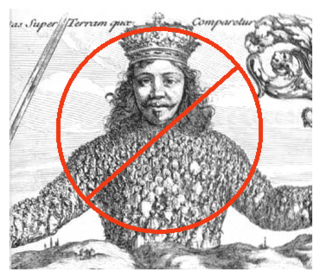 Paradoxes such as the above have been known for centuries. What Arrow showed is that no decision mechanism can eliminate all of these types of paradoxes. (n.b. Arrow’s theorem actually applies to any mechanism for aggregating any rankings not just voting and not just preferences.) We can tamp down some paradoxes but only at the expense of creating others (or eliminating democracy altogether.)
More generally, what Arrow showed is that group choice (aggregation) is not like individual choice.
Suppose that a person is rational and that we observe their choices. After some time we will come to understand their choices in terms of their underlying preferences (assume stability–this is a thought experiment). We will be able to say, “Ah, I see what this person wants. I understand now why they are choosing in the way that they do. If I were them, I would choose in the same way.”
Arrow showed that when a group chooses, there are no underlying preferences to uncover–not even in theory. In one sense, the theorem is trivial. We know or should always have known that a group doesn’t have preferences anymore than a group smiles. What Arrow showed, however, is that without invoking special cases we can’t even rationalize group choices as if leviathan had preferences. Put differently, the only leviathan that rationalizes group choice has the preferences of a madman.