Category: Books
My Conversation with Brink Lindsey and Steve Teles
This is an out-of-synch bonus episode, rushed out because I think their new, just-out book — The Captured Economy: How the Powerful Slow Down Growth, Enrich Themselves, and Increase Inequality — is so important. You will find the podcast here, lots of rapid fire back and forth.
Everyone wanted me to interview them together, but I said no, I would instead interview them separately and ask about 2/3 the same questions to see how their answers might hang together, or not. That is how co-authors should be treated! I also asked each what the other has for breakfast, and by the end each had confessed to several crimes, to avoid a longer sentence of course.
Here is the smallest of bits:
COWEN: Are higher levels of executive compensation part of the problem?
TELES: There you probably would get a different answer between me and Lindsey.
COWEN: That’s why I asked
Recommended, again here is the podcast (no transcript, we wanted to get this out right away).
What should I ask Andy Weir?
I will be having a Conversations with Tyler with Andy Weir, author of The Martian and assorted on-line works (many of which appear to be off-line at the moment). He has a new book coming out, Artemis. Here is Andy’s Wikipedia page.
I thank you all in advance for your ideas and assistance.
Montesquieu’s *Persian Letters*
There is a new edition out, edited and translated by Stuart Warner and Stéphane Douard. This eighteenth century bestseller could hardly be more relevant today. Is it possible to lead a philosophic life? How do political leadership and wisdom intersect? How do Christianity and Islam differ politically? How does politics reflect gender relations in a society? Is there a case for optimism in modernity? I still am not sure we have improved on Montesquieu’s investigations, although I cannot claim he gives us final answers. This is a volume of polyphony, with travel as a source of learning and liberation as a major theme throughout.
Harems play a role too, here are the final paragraphs from Roxane to her sultan master Usbek:
You were astonished not to find in me the ecstasies of love. If you had known me well, you would have found in me all the violence of hatred.
But you have had for a long time the advantage of believing that a heart such as mine was submissive to you. We were both happy you believed me deceived, and I was deceiving you.
This language, without doubt, appears new to you. Could it be possible that after having overwhelmed you with grief, I could still force you to admire my courage? But it is done: poison consumes me; my strength abandons me; the pen falls from my hand; I feel even my hatred weaken; I am dying.
The introduction and notes are outstanding, and also of interest for those of you who are piqued by Straussianism. You will note that the book was first published anonymously.
“Jokes in a serious work are acceptable on the condition that they hide a profound sense beneath a trivial form. It is in this way that Montesquieu, in his novel, Persian Letters, has written one of the most philosophical books of the eighteenth century.” – Alexis de Tocqueville [link]
I am pleased, by the way, to have once had the chance to spend two days with co-editor Stuart Warner discussing Persian Letters and nothing but (thank you again Liberty Fund!). I cannot think of any person more qualified to have undertaken this endeavor.
You can order the volume here.
Rereading *The Moon is a Harsh Mistress*
Yes, by Robert A. Heinlein. I wasn’t expecting too much from this one, which I last read at age 13. Published in 1966, it nonetheless holds up very well and in fact has aged gracefully. It is surprisingly feminist, not at all dewey-eyed about actual rebellion, does not sound antiquated in its tech issues (e.g., malicious AI), has China as central to geopolitics and circa 2076 Greater China controls most of southeast Asia, and the book is full of economics and public choice. TANSTAAFL is coined, but when understood as a section heading it is actually a Burkean slogan, not a libertarian or Friedmanite idea. The lunar rebellion does not achieve independence easily or by keeping its previous friendly nature, nor does Earth receive those “grain shipments” gratis, so to speak. Burke is the Straussian upshot of the whole book — beware societies based on new principles! This is also perhaps the best novel for understanding the logic of a future conflict with North Korea, furthermore Catalonians should read it too. Most of all, I recall upon my reread that this book was my very first exposure to game-theoretic reasoning.
NB: The “character” of Adam Selene is poking fun at H.G. Wells’s lunar Selenites, from The First Man in the Moon, arguably suggesting they descended from earlier human settlers.
*Greater Gotham: A History of New York City from 1898 to 1919*
Written by Mike Wallace, and weighing in at almost 1200 pp., this is one of the best books of the year. Every page has interesting material. You could pull out just the bits on the origins of the subway, or the development of the arts and entertainment, or immigration, and still have one of the best books of the year. From one Amazon review:
The narratives are well-honed and to the point. There is not one ounce of journalistic fluff. There are no fanciful digressions into fads and fashions of the day. There is no imaginary dialogue, unlike the situation found in some “history books” written by mere poseurs.
And:
Simply put this is another masterpiece deserving the highest accolades. Tremendously rich in anecdotes it is superbly written. If you grew-up in New York, particularly in the outer boroughs, the book will have a special meaning for you as you see the physical, cultural and human development of your neighborhood. My favorite sections were on the development of the ‘arteries and ligaments’ of the city; the radicals among the Jewish immigrants, and New York in World War I.
I have read only a few hundred pages of it, and may not read it all, but am likely to read more than half of it. Strongly recommended, it’s also one of the best books on American history period. You can order it here.
Ray Bradbury markets in everything
Ray Bradbury’s Fahrenheit 451 tells the story of a dystopian future where books have been outlawed and are destroyed by firemen who set them ablaze. But in an ironic twist, Super Terrain, a publisher in France, has created a new edition of Bradbury’s classic that actually requires extreme heat in order to be read.
Jo Frenken shared this video to Instagram showing a prototype copy of the book, which was developed by the Charles Nypels Lab at the Netherlands-based Jan van Eyck Academie—a research institute known for its experiments in materials and media. The pages of the book appear completely blacked-out—like a redacted CIA file—as you flip through them. But when heat is applied, using a flame from a lighter, in this case, the heat-activated ink disappears and the underlying text is revealed.
That is by Andrew Liszewski, via Ted Gioia.
What I’ve been reading
1. Building the Intentional University: Minerva and the Future of Higher Education, edited by Stephen M. Kosslyn and Ben Nelson. The new university Minerva explains its educational philosophy, imagining redesigning higher ed from scratch. I would do something very similar to what they did, and this book explains the curricular philosophy and practice in great detail.
2. Olivier Roy, In Search of the Lost Orient: An Interview. There should be a book like this for every substantive thinker, namely a very long, book-length interview with frank rather than perfunctory answers. The dialog covers Afghanistan, Yemen, 1968 Paris and radicalism, China, “political Islam,” and women (ahem), among other topics. Recommended.
3. Aaron Carroll, The Bad Food Bible: How and Why to Eat Sinfully. Yes, that is the Aaron Carroll, the one who writes about health care policy. What does the evidence actually say about which foods are good and bad for you? I’ll just say my diet is healthier than I had thought, and beware added sugar.
I have only browsed Abbas Amanat’s Iran: A Modern History, but it appears to be a very readable and highly useful 908 pp. overview of Persian/Iranian history, though less theoretical and conceptual than what an economist might be looking for.
Harvey Sachs, Toscanini: A Musician of Conscience, is a very high quality book, I would have read more of it except I can’t stand listening to Toscanini.
Eric A. Posner has the forthcoming Last Resort: The Financial Crisis and the Future of Bailouts. He argues that much of what was done was not fully legal.
Dani Rodrik’s Straight Talk on Trade: Ideas for a Sane World Economy is a very good introduction to Rodrik’s basic ideas on trade.
*The Second World Wars*
The subtitle is How the First Global Conflict Was Fought and Won, and the author is Victor Davis Hanson. I loved this book, even though before I started I felt I didn’t want to read yet another tract on WWII. Most of the focus is on the logistics and management side:
By 1944, the U.S. Navy was larger than the combined fleets of all the other major powers.
At the start of the War, the United States accounted for about 55-60 percent of world oil output.
The U.S. soldier was treated for psychiatric disorders at a rate ten times that of German troops. The average hospital stay for an American soldier was 117 days and 36 percent were not returned to the front. Supplies for a typical American soldier exceeded 80 pounds per day.
The German army killed about 1.5 GIs for every German soldier lost.
The highest American fatality rate was in the Pacific, at 4 percent, still a remarkably low rate for the war as a whole. America did so well because of high gdp and remarkably efficient supply lines and equipment and air and naval support.
Poland alone lost more citizens than all of the Western European nations, Britain, and the U.S. combined.
WWII took place in a strange technological window when weapons had advanced much more rapidly than protective body armor. That is one reason why casualties from the fighting were so high. The war is also unusual for having had so many battles and fronts where the victor gave up more lives than the loser, including of course the war as a whole.
Hanson considers the American submarine offensive against Japan as perhaps the most “cost-efficient” offensive from the war.
“No navy in military history had started a war so all-powerful as the Japanese and ended it so utterly ruined and in such a brief period of time…”
Strongly recommended, a shoo-in for the top tier of the year’s best non-fiction list, the writing is gripping too.
Here is a HistoryNet review: “utterly original.” Here is Matthew Continetti at NR: “Masterful.”
*An Economic Tour of the Weird: WTF?!*
That is the new Peter Leeson book, and it is just out. Here is the Amazon summary:
This rollicking tour through a museum of the world’s weirdest practices is guaranteed to make you say, “WTF?!” Did you know that “preowned” wives were sold at auction in nineteenth-century England? That today, in Liberia, accused criminals sometimes drink poison to determine their fate? How about the fact that, for 250 years, Italy criminally prosecuted cockroaches and crickets? Do you wonder why? Then this tour is just for you!
Here are the book’s rather spectacular blurbs. Here is a short Peter piece on medieval ordeals. Here is a Reddit thread on whether medieval ordeals actually were an effective test of guilt. And he has this piece on superstition and Friday the 13th in Newsweek. I would like to see a media outlet excerpt his piece on the rationality of gypsy culture.
I would say that Peter has written a very effective book within the Beckerian tradition, namely trying to explain economic phenomena in terms of a neoclassical rational actor model. Nonetheless I am much less of a Beckerian than Peter is, at least for the socially-oriented issues he is considering. Here is a simple typology of approaches:
1. Beckerians and the rational actor model. I slot Peter in here, along with many Chicago School economists, Marvin Harris, and much of public choice economics. An explanation shows how a social outcome stems from the interaction of means-end maximizing individuals, translated into some aggregate result.
2. Behavioral economics. By now this is old news, but these researchers find what I consider to be relatively small deviations from the rational actor model. This is usually done by measurement, rather than through more complete models.
3. Cultural economics, anthropologists, and many sociologists. Peer effects are paramount, and Frenchmen see the world differently than do Americans, not to mention Bantus or Pygmies. This is due to a social contagion of perception that does not boil down to rationality in the sense that economists understand it (you can build a model in which social mimicry at young ages is rational, but that model won’t generate much insight into the particular phenomena we are trying to explain, nor does that model pick up the mimicry mechanism very well). Historical study plus thick description plus economic rationality at various margins (but margins only) plus some statistics is the way to go. Mostly we’re trying to understand how and why other groups of people see the world in fundamentally different terms.
The economists who can best grasp other points of view thus are the masters of explaining macro-phenomena (by which I mean something quite distinct from traditional macroeconomics).
I am much closer to #3 than are most economists. Furthermore, I view economists as patting themselves excessively on the back for #2, when #3 is far more important. Peter has written a very good book mostly in the tradition of #1, though due to his Austrian background with periodic forays into #3. I once wrote to Peter: “Gypsy culture rational? How about Episcopalian investment bankers in Connecticut being rational?” Probably neither are.
*The Fate of Rome*
That is the new and very important book by Kyle Harper, with the subtitle Climate, Disease, & the End of an Empire. I am just reading through this now, but it appears to be an significant revision of our views on the decline of Rome. p.21 offers a capsule summary, which I will summarize in turn:
1. During the reign of Marcus Aurelius, a pandemic “interrupted the economic and demographic expansion” of the empire.
2. In the middle of the third century, a mix of drought, pestilence, and political challenge “led to the sudden disintegration of the empire.” The empire however was willfully rebuilt, with a new emperor, new system of government, and in due time a new religion.
3. The coherence of this new empire was broken in the late fourth and early fifth centuries. “The entire weight of the Eurasian steppe seemed to lean, in new and unsustainable ways, against the edifice of Roman power…and…the western half of the empire buckled.”
4. In the east there was a resurgent Roman Empire, but this was “violently halted by one of the worst environmental catastrophes in recorded history — the double blow of bubonic plague and a little ice age.”
Here is a key passage from the book:
The centuries of later Roman history might be considered the age of pandemic disease. Three times the empire was rocked by mortality events with stunning geographical reach. In AD 165 an event known as the Antonine Plague, probably caused by smallpox, erupted. In AD 249, an uncertain pathogen swept the territories of Roman rule. And in AD 541, the first great pandemic of Yersinia pestis, the agent that causes bubonic plague, arrived and lingered for over two hundreds years. the magnitude of these biological catastrophes is almost incomprehensible.
Here is the book on Amazon. Here is Kyle Harper on Twitter. Here is Harper on scholar.google.com; he is also Provost at the University of Oklahoma.
I do not feel I can assess the veracity of this thesis, but it does seem to be intelligently and reasonably argued.
Is Leonardo da Vinci overrated?
The Mona Lisa is not the best artwork ever, and as a painter I am not sure Leonardo is much better than either Mantegna or Piero della Francesca, neither of whom is much known to the general public, much less Titian. He has no work as stunning as Michelangelo’s David, and too many of his commissions he left unfinished or he never started them. The Notebooks display a fertile imagination, but do not contain much real knowledge of use, except on the aortic valve, nor did they boost gdp, nor are they worth reading. Much of his science is weak on theory, even relative to his time. In Milan he was too content to serve as court impresario, and he seemed to have no idea of how to apply his own talents in accord with comparative advantage.
His ability to take an idea and turn it into a memorable sketch was his most remarkable ability, and in this he is without peer.
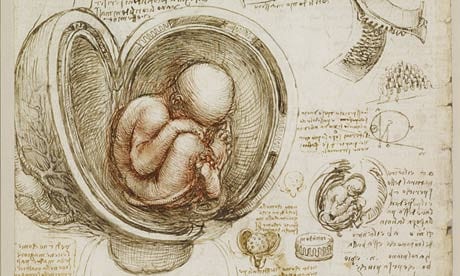
Plus he painted “woman as gorgon” very very well, but with a sweetness too.
I can recommend Walter Isaacson’s new book on Leonardo as a wonderful introduction, but it does not change my mind on these points.
My Conversation with Mary Roach
Here is the transcript and podcast, here is the summary introduction:
She joins Tyler for a conversation covering the full range of her curiosity, including fear, acclimating to grossness, chatting with the dead, freezing one’s head, why bedpans can kill you, sex robots, Freud, thinking like an astronaut, the proper way to eat a fry, and why there’s a Medicare reimbursement code for maggots.
Here are a few excerpts:
ROACH: It is never uncomfortable. People sometimes say, “The questions that you ask people, is it an awkward interview? When you went to Avenal State Prison for the rectum chapter of Gulp, and you, talking to this convicted murderer about using his rectum to smuggle cellphones and other things, was that not a very awkward conversation to have?”
A little bit, but then you have to keep in mind, this is somebody for whom hooping, as it’s called, is . . . everybody does it. It’s just something that you do; it’s everyday to him. Like for a sex researcher, talking about orgasm is like talking about tire rotation for a car mechanic.
And:
COWEN: To do a whirlwind tour of some of your books, you have a book on corpses. If you could chat with the dead, what would you ask them?
ROACH: Oh, if I could chat with the dead. Are we assuming the personality or the body?
COWEN: Well, both.
ROACH: The corpse?
COWEN: The corpse.
ROACH: Oh, is this a research corpse or . . .
COWEN: It’s a research corpse.
ROACH: …So what I’d say to the cadaver is, “Is this embarrassing for you? Are you OK with this? Are they treating you respectfully? Do you wish you had some clothes on?”
And:
COWEN: Why do only 18 percent of people who are in the position to have a life-after-death experience actually have one? What’s your view on that?
ROACH: The trouble seems to be remembering the near-death experience.
And:
COWEN: Why are bedpans dangerous?
There is much, much more at the link. Jonathan Swift, Elvis, Adam Smith, and Jeff Sachs all make appearances, in addition to Catholicism, bee larvae, Mozambique, whether people know what they really want in sex, and whether it should be legal to harvest fresh road kill in Oregon.
Is Piketty’s Data Reliable?
When Thomas Piketty’s Capital in the Twenty-First Century first appeared many economists demurred on the theory but heaped praise on the empirical work. “Even if none of Piketty’s theories stands up,” Larry Summers argued, his “deeply grounded” and “painstaking empirical research” was “a Nobel Prize-worthy contribution”.
Theory is easier to evaluate than empirical work, however, and Phillip Magness and Robert Murphy were among the few authors to actually take a close look at Piketty’s data and they came to a different conclusion:
We find evidence of pervasive errors of historical fact, opaque methodological choices, and the cherry-picking of sources to construct favorable patterns from ambiguous data.
Magness and Murphy, however, could be dismissed as economic history outsiders with an ax to grind. Moreover, their paper was published in an obscure libertarian-oriented journal. (Chris Giles and Ferdinando Giugliano writing in the FT also pointed to errors but they could be dismissed as journalists.) The Magness and Murphy conclusions, however, have now been verified (and then some) by a respected figure in economic history, Richard Sutch.
I have never read an abstract quite like the one to Sutch’s paper, The One-Percent across Two Centuries: A Replication of Thomas Piketty’s Data on the Distribution of Wealth for the United States (earlier wp version):
This exercise reproduces and assesses the historical time series on the top shares of the wealth distribution for the United States presented by Thomas Piketty in Capital in
the Twenty-First Century….Here I examine Piketty’s US data for the period 1810 to 2010 for the top 10 percent and the top 1 percent of the wealth distribution. I conclude that Piketty’s data for the wealth share of the top 10 percent for the period 1870 to 1970 are unreliable.
The values he reported are manufactured from the observations for the top 1 percent inflated by a constant 36 percentage points. Piketty’s data for the top 1 percent of the distribution for the nineteenth century (1810–1910) are also unreliable. They are based
on a single mid-century observation that provides no guidance about the antebellum trend and only tenuous information about the trend in inequality during the Gilded Age. The values Piketty reported for the twentieth century (1910–2010) are based on more
solid ground, but have the disadvantage of muting the marked rise of inequality during the Roaring Twenties and the decline associated with the Great Depression. This article offers an alternative picture of the trend in inequality based on newly available data and a reanalysis of the 1870 Census of Wealth. This article does not question Piketty’s integrity.
You know it’s bad when a disclaimer like that is necessary. In the body, Sutch is even stronger. He concludes:
Very little of value can be salvaged from Piketty’s treatment of data from the nineteenth century. The user is provided with no reliable information on the antebellum trends in the wealth share and is even left uncertain about the trend for the top 10 percent during
the Gilded Age (1870–1916). This is noteworthy because Piketty spends the bulk of his attention devoted to America discussing the nineteenth-century trends (Piketty 2014: 347–50).The heavily manipulated twentieth-century data for the top 1 percent share, the lack of empirical support for the top 10 percent share, the lack of clarity about the procedures used to harmonize and average the data, the insufficient documentation, and the spreadsheet errors are more than annoying. Together they create a misleading picture of the dynamics of wealth inequality. They obliterate the intradecade movements essential to an understanding of the impact of political and financial-market shocks on inequality. Piketty’s estimates offer no help to those who wish to understand the impact of inequality on “the way economic, social, and political actors view what is just and what is not” (Piketty 2014: 20).
One of the reasons Piketty’s book received such acclaim is that it fed into concerns about rising inequality and it’s important to note that Sutch is not claiming that inequality hasn’t risen. Indeed, in some cases, Sutch argues that it has risen more than Piketty claims. Sutch is rather a journeyman of economic history upset not about Piketty’s conclusions but about the methods Piketty used to reach those conclusions.
Kenneth Whyte’s new Herbert Hoover biography
This excellent book is titled Hoover: An Extraordinary Life in Extraordinary Times. Here is one good bit:
Knowing that he could not manage what he could not measure, Hooover made Commerce botha producer and a clearinghouse of relevant information on the U.S. economy. Once again, he turned to like-minded experts, this time primarily in the academic community. Hoover announced the Advisory Committee on Statistics and recruited to it such luminaries as Edwin Gay, the first dean of the new Harvard Business School; Edwin Seligman, the Columbia economist and a founder and past president of the American Economic Association; and Cornell’s Walter Willco, a past president of the American Statistical Association and a former co-director of the U.S. Census. Another eminence, Julius Klein, the Harvard economist and historian, was recruited to head Hoover’s Bureau of Foreign and Domestic Commerce and allowed to increase its budget by a factor and six and its personnel by a factor of five. In short time, these and other initiatives turned Commerce into a vast reservoir of information on every aspect of economic life from steel to motion pictures…
The scope of Hoover’s activities in Commerce was stupendous. Singlehandedly doing enough work for an entire cabinet, he was said to be “Secretary of Commerce and Undersecretary of Everything Else.”
Recommended, note that Hoover was in fact one of the most qualified men ever to have become president.
*The Hard Thing About Hard Things*
I loved this book, by Ben Horowitz of Andreessen-Horowitz, the venture capital firm. While it is hard to pull bits from the broader stories, here are a few:
Most business relationships either become too tense to tolerate or not tense enough to be productive after a while. Either people challenge each other to the point where they don’t like each other or they become complacent about each other’s feedback and no longer benefit from the relationship.
And:
People always ask me, “What’s the secret to being a successful CEO?” Sadly, there is no secret, but if there is one skill that stands out, it’s the ability to focus and make the best move when there are no good moves. It’s the moments where you feel most like hiding or dying that you can make the biggest difference as a CEO.
And:
The first rule of organizational design is that all organizational designs are bad.
And:
The purpose of process is communication.
And:
By far the most difficult skill I learned as CEO was the ability to manage my own psychology.
Finally:
CEO is an unnatural job.
Definitely recommended, it is one of my five favorite management books ever. Furthermore, its lessons are relevant for people in academic, media, and policy worlds, unlike many other management books. Is that because of an emphasis on talent evaluation and also work in teams and small groups?