Category: Law
Can Currency Competition Work?
There is a new model and NBER paper to come from Jesus Fernandez-Villaverde and Daniel Sanches (pdf, ungated), here is the abstract:
Can competition among privately issued fiat currencies such as Bitcoin or Ethereum work? Only sometimes. To show this, we build a model of competition among privately issued at currencies. We modify the current workhorse of monetary economics, the Lagos-Wright environment, by including entrepreneurs who can issue their own fiat currencies in order to maximize their utility. Otherwise, the model is standard. We show that there exists an equilibrium in which price stability is consistent with competing private monies, but also that there exists a continuum of equilibrium trajectories with the property that the value of private currencies monotonically converges to zero. These latter equilibria disappear, however, when we introduce productive capital. We also investigate the properties of hybrid monetary arrangements with private and government monies, of automata issuing money, and the role of network effects.
I would stress a few points. First, the world is going to have some form of currency competition whether one likes it or not. That is already the case today, so these are very real questions, not just thought games for libertarians.
Second, the Bitcoin and broader cryptocurrency experience indicate that the marginal cost of issuing a new private currency is well above zero, contra some of the literature from the 1970s, which viewed the enterprise in terms of printing money and paying only for the additional paper. Bitcoin can be interpreted as a commodity currency of sorts, where the relevant expenditures are on codebreaking and electricity, rather than digging up gold from the ground. Once it is focal enough, it might be able to provide some version of rough price stability in terms of its unit.
Third, if your government is halfway legitimate and not broke, its currency is likely to be a dominant winner in these forms of currency competition, especially to the extent that currency is supported by the fiscal authority. In this sense it is almost impossible to get away from a legitimate or even semi-legitimate government-issued currency.
How bad will the D.C. Metro shutdown be?
I am finding it difficult to get hard information on this plan, surprise, surprise. They won’t say which lines will be shuttered and there is talk of “six months” for the shutdown, which I translate as “quite possibly more than a year.” They are not even saying it will happen for sure, but I find bureaucracies don’t announce such “bad news possibilities” unless they think they are extremely likely.
It is likely that the previous closing of the Metro for a day for “inspections” was in part a theatrical play to justify this decision. They already knew they would find what they were looking for, as no day-long investigation can reveal enough safety about a suspicious system to avoid a shutdown already thought to be necessary.
Given that Metro lines interconnect (“Only the Red Line runs independently of other lines“), and have hub-spoke relations, is it more efficient to close them all (or mostly) at once? Can you imagine a 14-month period where the core of D.C. did not have much working metro service? Or would it be a four- or five-year period with individual lines shuttered sequentially? If the lines are truly so dangerous, it seems a bunch of them will close at once, and soon.

There is no longer much resilience in area traffic patterns, or so many possibilities for rerouting, so downtown might be at a gridlocked standstill much of the time; it’s already hard enough to cross past the White House since the closing of Pennsylvania Avenue.
Discretionary visitors would avoid the city altogether. How many downtown coffee shops and lunch places will go out of business? How many restaurants? How would the Fourth of July fireworks be held? Smithsonian events? There is precious little parking near the Mall. How about getting the workers from D.C. to the Pentagon and to Reagan National Airport?
For many of the government agencies, the IT infrastructure cannot handle a significant percentage of the employees trying to telecommute at the same time. This is not commonly understood.
Many suburbanites will have their first experiences with local buses. But they still have to get from the bus stops to their places of work, and/or park near the bus stops. So often parking is the ultimate constraint.
What other economic implications should I be thinking about?
Will the authorities use this opportunity to upgrade anti-terrorist protections in the Metro?
Might we actually learn that travel is less important than we had thought, and that much of that to and fro was just an input into costly signaling? One wag even suggested to me that the D.C. area could in fact improve, national gdp might go up too.
If you are looking to make Tysons Corner a viable city, this is a good way to start!
I find this story to be under-covered so far. Here is background information on the metro crisis — I was so impressed when I first saw and rode it in 1979, it felt as if I had stepped into the future. Today, here is the Twitter feed UnsuckDCMetro.
The drone wars sex workers culture that is Oklahoma advertising markets in everything
A sex worker in Oklahoma who was filmed using a quadcopter by a self-described “video vigilante” has pleaded guilty to a lewdness charge. According to a report from BBC News, the woman was sentenced to a year in state prison for the misdemeanor, although the case is still pending against her alleged client.
The encounter between the two was filmed by drone pilot Brian Bates, a known figure in Oklahoma City who describes himself as a “video vigilante.” Bates has long used video cameras to capture footage of alleged sex workers, which he uploads to his YouTube channel and his website, JohnTV.com, earning money through ad revenue in the process.

Here is the full story, the photo is of Bates, who because of a famous musical does not live in the most obscure state.
I thank a loyal MR reader for the pointer. And here is the Roam-E-Selfie drone.
Addendum: It is worse than you think. In the comments Jason Bayz alerts us to this story:
FEBRUARY 9–An Oklahoma man who has gained national exposure for his “video vigilante” campaign to expose street prostitution in his hometown was arrested yesterday for allegedly paying hookers to ensure that they serviced customers in an area where he could easily film the illicit trysts.
According to the below Oklahoma City Police Department report, Brian Bates, 34, orchestrated the public encounters so he could peddle the resulting videotape to media outlets (some of Bates’s surveillance tapes are offered for sale on his web site).
In his dealings with prostitutes, Bates was choosy, investigators contend.
For example, if a john was a “regular,” Bates asked prostitutes to give “specific signals” so he would know not to bother rolling tape. Investigators also noted that, like any good auteur, Bates “gave direction to the prostitutes on how to complete the act with a high probability of success,” as well as tips on how to spot an undercover cop.
Bates was hit with a felony pandering charge and a misdemeanor count of aiding in prostitution. The pandering rap, which is usually reserved for pimps, carries a minimum two-year jail term, and a maximum of 20 years in the stir.
Jason wins the internet today!
The case for a belief in free will
The paper title is Believing there is no free will corrupts intuitive cooperation, and the authors are John Protzko, Brett Ouimette, and Jonathan Schooler. The abstract is this:
Regardless of whether free will exists, believing that it does affects one’s behavior. When an individual’s belief in free will is challenged, one can become more likely to act in an uncooperative manner. The mechanism behind the relationship between one’s belief in free will and behavior is still debated. The current study uses an economic contribution game under varying time constraints to elucidate whether reducing belief in free will allows one to justify negative behavior or if the effects occur at a more intuitive level of processing. Here we show that although people are intuitively cooperative, challenging their belief in free will corrupts this behavior, leading to impulsive selfishness. If given time to think, however, people are able to override the initial inclination toward self-interest induced by discouraging a belief in free will.
I would say that we need a large swathe of society to believe in ideals of free will and individual responsibility, even though such concepts are not entirely faultless from a metaphysical point of view. For a given thinker, it is worth asking whether he or she adds to or takes away from that social belief. For some writers, the concepts of individual blame and responsibility apply only to their intellectual adversaries!
For the pointer I thank Ben Southwood.
The criticism of Trump which few will utter
It is sad to see so many people, including those on the Left or in the Democratic Party, criticize the idea of a Trump presidency without ever uttering the phrase: “No man or woman should have so much political power over others.” I agree with many of the moral criticisms of Trump as a leader, but don’t let them distract you from this broader truth.
It is strange but instructive how many Democratic criticisms of Trump circle back into criticisms of other, earlier, and now often irrelevant Republicans. That is simply a language of attack they are more comfortable with.
The good news, if that is what one should call it, is that the best criticisms of Trump involve the concept of individual liberty and freedom from arbitrary legal authority and pure presidential discretion. The bad news is that so few intellectuals have the relevant ideological vocabulary in that regard.
Congratulations to the George Mason University School of Law
From a School of Law email and press release:
George Mason University today announces pledges totaling $30 million to the George Mason University Foundation to support the School of Law. The gifts, combined, are the largest in university history. The gifts will help establish three new scholarship programs that will potentially benefit hundreds of students seeking to study law at Mason.
In recognition of this historic gift, the Board of Visitors has approved the renaming of the school to The Antonin Scalia School of Law at George Mason University.
“This is a milestone moment for the university,” said George Mason University President Ángel Cabrera. “These gifts will create opportunities to attract and retain the best and brightest students, deliver on our mission of inclusive excellence, and continue our goal to make Mason one of the preeminent law schools in the country.”
Mason has grown rapidly over the last four decades to become the largest public research university in Virginia. The School of Law was established in 1979 and has been continually ranked among the top 50 law programs in the nation by U.S. News and World Report.
Justice Scalia, who served 30 years on the U.S. Supreme Court, spoke at the dedication of the law school building in 1999 and was a guest lecturer at the university. He was a resident of nearby McLean, Virginia.
…The gift includes $20 million that came to George Mason through a donor who approached Leonard A. Leo of the Federalist Society, a personal friend of the late Justice Scalia and his family. The anonymous donor asked that the university name the law school in honor of the Justice. “The Scalia family is pleased to see George Mason name its law school after the Justice, helping to memorialize his commitment to a legal education that is grounded in academic freedom and a recognition of the practice of law as an honorable and intellectually rigorous craft,” said Leo.
The gift also includes a $10 million grant from the Charles Koch Foundation, which supports hundreds of colleges and universities across the country that pursue scholarship related to societal well-being and free societies.
Most of all, I would like to congratulate Dean Henry Butler and also President Cabrera and Provost Wu.
As someone who has now taught (part time) at the Law School for over a decade, I simply love the quality and curiosity and drive of the students. I am delighted to see this may get bigger and better yet. And the leadership at the School of Law has long seen legal training as the true place to get a liberal arts education appropriate for the modern world.
How out of bounds is the $15 California minimum wage?
By 2022, when fully phased in (small firms with fewer than 25 workers would have until 2023 to comply), the California minimum wage would represent 69 percent of the median hourly wage in the state, assuming 2.2 percent annual growth from the current median of roughly $19 per hour.
That 69 percent ratio would be all but unprecedented, in U.S. terms and internationally. The current California minimum wage represents about half the state’s median hourly wage, just as the federal minimum wage averaged 48 percent of the national median between 1960 and 1979, according to a 2014 Brookings Institution paper by economist Arindrajit Dube. (It is currently 38 percent of the national median.)
Other industrial democracies with statutory minimum wages typically set theirs at half the national median wage, too.
That is from Charles Lane. This is also worth noting:
Dube, generally a supporter of minimum wages, recommended that states use 50 percent of the median as their benchmark in the United States. (He told me by email that California’s experiment is worth running and monitoring.)
Yet Alan Krueger, among many others, is against it. On what grounds is it worth running?
Did NAFTA help the U.S. auto industry?
There are still more than 800,000 jobs in the American auto sector. And there is a good case to be made that without Nafta, there might not be much left of Detroit at all.
“Without the ability to move lower wage jobs to Mexico we would have lost the whole industry,” said Gordon Hanson of the University of California, San Diego, who has been studying the impact of Nafta on industries and workers since its inception more than two decades ago.
Even in the narrowest sense — to protect jobs in car assembly plants — a wall of tariffs against America’s southern neighbor would probably do more harm than good.
And this:
The Honda CR-V assembled in El Salto, Jalisco, for example, uses an American-made motor and transmission. Roughly 70 percent of its content is either American or Canadian, according to government statistics.
This regional integration gave the United States-based auto industry a competitive edge that was critical to its survival. “There was a concern 20 years ago that an auto industry production chain would develop across Asia, including China and Taiwan and Southeast Asia,” Professor Hanson said. “Maybe Nafta saved us from that.”
That is from Eduardo Porter at the NYT.
Brexit markets in everything
Ukip-backed Brexit campaign employs EU migrants to rally support
Leave.EU employs four phone bank staff from EU countries including Slovakia. Their job is to rally voters across the UK to back Brexit. The appointments come despite Leave.EU claiming that “as the world’s fifth biggest economy, the UK is well placed to supply its own labour”.
Labor Market Rigidity and the Disaffection of European Muslim Youth
In Belgium high unemployment and crime-ridden Muslim ghettos have fomented radicalism but as Jeff Jacoby writes:
Muslims in the United States…have had no problem acclimating to mainstream norms. In a detailed 2011 survey, the Pew Research Center found that Muslim Americans are “highly assimilated into American society and . . . largely content with their lives.” More than 80 percent of US Muslims expressed satisfaction with life in America, and 63 percent said they felt no conflict “between being a devout Muslim and living in a modern society.” The rates at which they participate in various everyday American activities — from following local sports teams to watching entertainment TV — are similar to those of the American public generally. Half of all Muslim immigrants display the US flag at home, in the office, or on their car.
Jacoby, however, doesn’t explain why these differences exist. One reason is the greater flexibility of American labor markets compared to those in Europe.
Institutions that make it more difficult to hire and fire workers or adjust wages can increase unemployment and reduce employment, especially among immigrant youth. Firms will be less willing to hire if it is very costly to fire. As Tyler and I put it in Modern Principles, How many people will want to go on a date if every date requires a marriage? The hiring hurdle is especially burdensome for immigrants given the additional real or perceived uncertainty from hiring immigrants. One of the few ways that immigrants can compete in these situations is by offering to work for lower wages. But if that route is blocked by minimum wages or requirements that every worker receive significant non-wage benefits then unemployment and non-employment among immigrants will be high generating disaffection, especially among the young.
Huber, for example, (see also Angrist and Kugler) finds:
Countries with more centralized wage bargaining, stricter product market regulation and countries with a higher union density, have worse labour market outcomes for their immigrants relative to natives even after controlling for compositional effects.
The problem of labor market rigidity is especially acute in Belgium where the differences between native and immigrant unemployment, employment and wages are among the highest in the OECD. Language difficulties and skills are one reason but labor market rigidity is another, as this OECD report makes clear:
Belgian labour market settings are generally unfavourable to the employment outcomes of low-skilled workers. Reduced employment rates stem from high labour costs, which deter demand for low-productivity workers…Furthermore, labour market segmentation and rigidity weigh on the wages and progression prospects of outsiders. With immigrants over-represented among low-wage, vulnerable workers, labour market settings likely hurt the foreign-born disproportionately.
…Minimum wages can create a barrier to employment of low-skilled immigrants, especially for youth. As a proportion of the median wage, the Belgian statutory minimum wage is on the high side in international comparison and sectoral agreements generally provide for even higher minima. This helps to prevent in-work poverty…but risks pricing low-skilled workers out of the labour market (Neumark and Wascher, 2006). Groups with further real or perceived productivity handicaps, such as youth or immigrants, will be among the most affected.
In 2012, the overall unemployment rate in Belgium was 7.6% (15-64 age group), rising to 19.8% for those in the labour force aged under 25, and, among these, reaching 29.3% and 27.9% for immigrants and their native-born offspring, respectively.
Immigration can benefit both immigrants and natives but achieving those benefits requires the appropriate institutions especially open and flexible labor markets.
Solitary confinement often isn’t solitary
…over 80 percent of the 10,747 federal prisoners in solitary have a cellmate.
In many places, prisons have turned to double celling to cope with overcrowding. “If you can come up with a better way to do this, understanding the fact that we are 162 percent of capacity without double celling, I’m willing to listen to you,” an Illinois Corrections Department spokesman told reporters and mental health advocates in 1994, when the state faced criticism for doubling up the mental health units at Menard. Illinois is under particular pressure as one of the most over-stuffed prison systems in the country.
“We’ve done this utterly bizarre thing, which is to put two people in cells that were built for one and leave them both in there for 23 or more hours a day,” says Craig Haney, a psychologist who has studied solitary for more than 30 years.
That is from Christie Thompson, via The Browser.
How to hide from the police in Los Angeles
Even the region’s flight paths have come to influence how criminals use the city. The heavily restricted airspace around Los Angeles International Airport, Burdette pointed out, has transformed the surrounding area into a well-known hiding spot for criminals trying to flee by car. Los Angeles police helicopters cannot always approach the airport because of air-traffic-control safety concerns. Indeed, all those planes, with their otherwise-invisible approach patterns across the Southern California sky, have come to exert a kind of sculptural effect on local crimes across the city: Their lines of flight limit the effectiveness of police helicopter patrols and thus alter the preferred getaway routes.
That is from an interesting Geoff Manaugh NYT piece on aerial surveillance in Los Angeles. Here is Manaugh’s forthcoming book A Burglar’s Guide to the City, which I have pre-ordered.
For the pointer I thank Alex Xenopoulos.
Why does the United States keep killing #2 in ISIS?
On Friday morning, a US air strike killed Abu Alaa al-Afri, a senior leader in ISIS, whom the US says it considers the organization’s second-ranked leader.
This isn’t the first time that al-Afri has been reported dead — though the US government has allegedly verified his death.
But if (as seems likely) al-Afri is dead, this will be yet another instance in which ISIS’s number two official has been killed. In August of last year, for example, a US airstrike killed Fadhil Ahmad al-Hayali, then identified as the group’s number two.
This continues a trend that news consumers may recognize from counterterrorism efforts against al-Qaeda, in which the group seemed to lose one third-in-command (after Osama bin Laden and Ayman al-Zawahiri) after another.
As some Twitter wags noted, this all hearkens back to a 2006 Onion article, “Eighty Percent Of Al-Qaeda No. 2s Now Dead.”
As Zack mentions, there may be reasons why the #1 is harder to find and kill, but I would suggest a complementary hypothesis. At many points in time there is more than one #2, just as corporations may have a variety of Executive Vice Presidents.
If you a leader of a terror group, do you really want a well-defined #2 who is a focal alternative and who can move to overthrow you? Or do you prefer seven competing #2s, with somewhat unclear status, whom you can play off against each other, or make compete against each other, and offer various sticks and carrots and promotions of influence against each other?
And let’s say that one of these #2’s is killed. How will the United States report this? “One of seven #2’s has been killed”? Or perhaps the easier to communicate and more important sounding “We have taken out number two.”
On Wikipedia, the (a?) previous #2 of ISIS is described as “Deputy leader of ISIL?“, question mark in the original.
Here is one look at the command structure of ISIS (or try this alternative). I cannot vouch for its accuracy, but it is one quick way to see that “#2” is perhaps not always so well-defined:

One concrete implication is this: the more number twos there are, the more likely you can kill one of them. And those are exactly the same circumstances when killing a number two has a low marginal return. Keep in mind that the kill is endogenous, and it could be indicating that one of the stronger #2s has strengthened his hand by betraying one of the weakies and getting the West to do the dirty work. And that kind of competition across subordinates may be precisely what strengthens the hand of the leader.
The one hundredth anniversary of the Irish Easter 1916 uprising
Maria Farrell writes:
The events that precisely triggered the Easter Rising are a little murky. They involve the capture of Roger Casement’s arms shipment, and feature the great hero of the Rising, Padraig Pearse, lying to MacNeill, forging documents and kidnapping and holding his socialist rivals until they acquiesced. Whether the leaders were about to be rounded up and imprisoned is unclear. MacNeill believed it, until he didn’t, but by then it was too late.
How many of you (non-Irish that is, Irish try this) are emotionally stirred by that description, one way or the other? How many of you recall reading about those events at all?
What I find most striking is how little I, as an Irish-American, emotionally identify with any of the sides in this conflict. I recall being asked in New Jersey seventh grade, by another Irish-American, whether my family was Protestant or Catholic in background and I wasn’t even sure (Catholic, it turned out, though my paternal grandparents also had been non-believers).
I was born in Kearny, New Jersey, a working class town full of Irish and Scot atavisms, including bars where they raised money for the IRA, fish and chips, and good soccer teams. My father was more interested in Barry Goldwater, and by the time we moved to the more suburban northern rim of the state all that old country history was forgotten.
On the other side of the water, Ireland is one of the few countries to break through the middle-income trap, and last year it grew at 7.8%, an increasingly embarrassing fact for many “the long run is forever” commentators, not to mention investment up more than 28%.
(Yes, there is fairly rapid post-austerity catch-up growth when institutions are even moderately healthy, and if you are not seeing such growth the economy is probably at its new frontier or structural reforms are required. And to point out that households are not capturing all of those gains — gdp vs. gnp — is to save the pessimistic mood at the expense of the theory. Without a Russian collapse, the Baltics probably would have continued along a similar track.)
Brexit of course would hit both Ireland and Northern Ireland fairly hard; it is strange how the Republic of Ireland has turned out to be the stable political unit in the family.
Here is a BBC piece on how to commemorate 1916. The embarrassing parallel is that the modern IRA cites the 1916 heroes and considers their more recent terror acts to hold comparable status. Somehow the balls must be juggled to avoid this conclusion, especially since there has been a recent uptick in unrest in Northern Ireland.
Various “victim monger” commentators don’t radiate too much sympathy for the Northern Irish republican cause. Is it because the stereotypical representation of the fighters is a little too male, a little too grizzled, too conservative, too white Christian, too chauvinistic, and maybe even too mumbly? I have to listen so closely to those movies to understand at all, and in the end they still bore me. John Lennon’s John Sinclair song never seemed to stick. Yeats too tried his best.
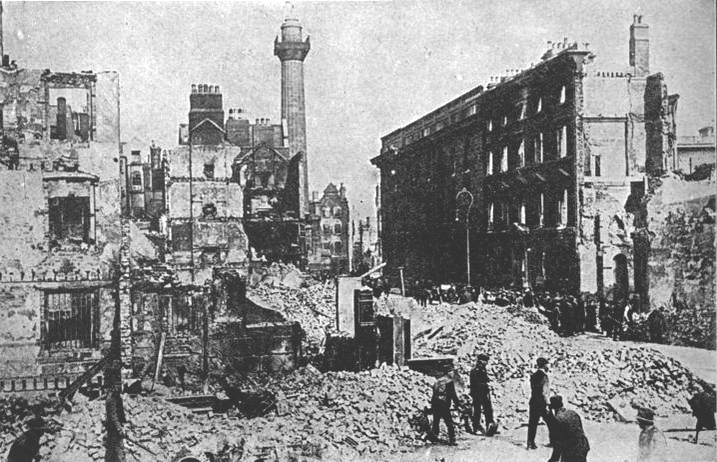
I am struck by how underrepresented this topic is in my Twitter feed.
Don’t murder markets in everything
But when Holmes was released from prison last year, officials in this city offered something unusual to try to keep him alive: money. They began paying Holmes as much as $1,000 a month not to commit another gun crime.
Cities across the country, beginning with the District of Columbia, are moving to copy Richmond’s controversial approach because early indications show it has helped reduce homicide rates. [TC: that is Richmond, CA]
But the program requires governments to reject some basic tenets of law enforcement even as it challenges notions of appropriate ways to spend tax dollars.
…And yet, interest in the program is surging among urban politicians. Officials in Miami, Toledo, Baltimore and more than a dozen cities in between are studying how to replicate Richmond’s program.
…five years into Richmond’s multimillion-dollar experiment, 84 of 88 young men who have participated in the program remain alive, and 4 in 5 have not been suspected of another gun crime or suffered a bullet wound, according to DeVone Boggan, founder of the Richmond effort.
And how is this for bizarre?
Boggan believes that travel is another key to the program’s success. He sets aside $10,000 per fellow for trips that are often the first time participants have left the state or the country. But fellows must agree to partner with someone they have either tried to kill or who attempted to kill them.
“Wild, right?” Boggan says. “But they get out there and realize, ‘Hey, this cat’s just like me.’ ” Boggan’s measure of success: No fellows who have traveled together have been suspected in subsequent shootings against one another.
File under Department of Why Not?
Here is the full story, fascinating throughout, via Michael Rosenwald.