Covid-19 India prize (post with fixed links)
It goes to the COVIN Working Group for their paper “Adaptive control of COVID: Local, gradual, and trigger-based exit from lockdown in India.”
As India ends its lockdown, the team, led by Anup Malani, has developed a strategy to inform state policy using what is called an adaptive control strategy. This adaptive control strategy has three parts. First, introduction of activity should be done gradually. States are still learning how people respond to policy and how COVID responds to behavior. Small changes will allow states to avoid big mistakes. Second, states should set and track epidemiological targets, such as reducing the reproductive rate below 1, and adjust social distancing every week or two to meet those targets. Third, states should adopt different policies in different districts or city wards depending on the local conditions.
This project provides a path that allows states to contain epidemics in local areas and open up more of the economy. Going forward the team plans to help address shocks such as recent flows of laborers out of cities and estimate how effective different social distancing policies are at reducing mobility and contact rates.
This project has 14 authors (Anup Malani, Satej Soman, Sam Asher, Clement Imbert, Vaidehi Tandel, Anish Agarwal, Abdullah Alomar, Arnab Sarker, Devavrat Shah, Dennis Shen, Jonathan Gruber, Stuti Sachdeva, David Kaiser, and Luis Bettencourt) across five institutions (University of Chicago Law School and Mansueto Institute, MIT Economics Department and Institute for Data Systems and Society, IDFC Institute, John Hopkins University SAIS, and University of Warwick Economics Department).
Draft of the full paper is here. And for the visualizations see their website https://www.adaptivecontrol.org
Congrats to all the authors of the paper and their institutions. And here are links to the previous Emergent Ventures anti-Covid prize winners.
And I thank Shruti for her help with this.
Lead headline and sub-header for The New York Times
“Overlooked No More: Valerie Solanas, Radical Feminist Who Shot Andy Warhol
She made daring arguments in “SCUM Manifesto,” her case for a world without men. But her legacy as a writer and thinker was overshadowed by one violent act.”
The piece itself notes she argued for the wholesale extermination of men, that other people treated it as satire, but she defended its seriousness. And of course she shot and tried to kill Warhol and came very close to succeeding. The nature of her other contributions is far from clear, although toward the end of her life she was eating from a dumpster bin in Phoenix.
Later, she moderated her views, and the NYT piece ends with this:
…the author, Breanne Fahs, writes about an exchange between Solanas and her friend Jeremiah Newton. Newton asked Solanas if her manifesto was to be taken literally. “I don’t want to kill all men,” she replied. But, using an expletive, she added: “I think males should be neutered or castrated so they can’t mess up any more women’s lives.”
Loyal MR readers will know that this is not a media-bashing site, nor is it a NYT-bashing site. I remain proud to have written there for ten years, and I remain a loyal subscriber, as I have been since I was ten years old.
But…come on. If you work for The Times, I hope you are in some way able to raise your voice against what can only be described as a grotesque embarrassment, not to mention a contradiction of Black [Men’s] Lives Matter. Maybe the headline will be gone or changed by the time you read this, but the saddest part is that this seems to be part of a pattern, not just a one-off mistake. I’ve known many people at the NYT, at various levels, and each and every one has seemed like a good (and talented) person to me. I can only conclude that something has gone very very badly wrong in the editorial control process.
Addendum: Timothy Noah comments.
Friday assorted links
1. Covid patients in intensive care in Sweden. And my pandemic predictions from early April. Recommended.
2. Almost 1 in 3 pilots in Pakistan have fake licenses.
3. An Italian guy who thinks quantum mechanics is totally wrong (NYT).
4. In this SuperFinal, Stockfish is actually slightly ahead of the AlphaZero semi-clone.
5. The NYT battle over Scott Alexander.
6. New results on T-cell immunity.
7. Covid-19 cases and local partisanship. And more here and the crude polemic version (Krugman is about the most “off” person you can read on this topic).
What should I ask Nathan Nunn?
I will be doing a Conversation with him, he is an economist at Harvard, you could call much of his work economic history and economic development. Wikipedia notes:
A recurrent theme in Nunn’s research is the long-term impact of historical processes on economic development, often mediated through institutions, culture, knowledge and technology.
Key findings of his research include the following:
- Countries’ ability to enforce contracts is possibly a more important determinant of their comparative advantage than skilled labour and physical capital combined.
- A substantial part of Africa’s current underdevelopment appears to be caused by the long-term effects of the Atlantic and Arab slave trades.
- Current differences in trust levels within Africa are attributable to the impact of the Atlantic and Arab slave trades, which have caused the emergence of low-trust cultural norms, beliefs, and values in ethnic groups heavily affected by slavery (with Leonard Wantchekon).
- By impeding not only trade and technological diffusion but also the depredations of slave traders, the ruggedness of certain African regions’ terrain had a significant positive impact on these regions’ development (with Diego Puga).
- The introduction of the potato within the Columbian exchange may have been responsible for at least a quarter of the population and urbanisation growth observed in the Old World between 1700 and 1900 (with Nancy Qian).
- In line with Boserup’s hypothesis, the introduction and historical use of plough agriculture appears to have given men a comparative advantage and made gender norms less equal, with historical differences in the plough use of immigrants’ ancestral communities predicting their attitudes regarding gender equality (with Alberto Alesina and Paolo Giuliano).
- U.S. Food Aid is driven by U.S. objectives and can lead to increased conflict in recipient countries (with Nancy Qian).
So what should I ask him?
Ubundling the Police in NYC
In Why Are the Police in Charge of Road Safety? I argued for unbundling the police–i.e. taking some of the tasks traditionally assigned to police such as road safety and turning them over to unarmed agencies more suited to the task. A new report from Transportation Alternatives adds to the case. The report notes that the police in NYC aren’t even doing a good job on road safety.
For example, in 2017, there were 46,000 hit-and-run crashes in New York City. Yet police officers arrested just one percent of all hit-and-run drivers. In the past five years, hit-and-run crashes in New York City have increased by 26 percent. By comparison, DOT infrastructure projects designed to reduce these traffic crashes have proven effective and scalable.
Streetsblog (cited in the report and quoted here) also notes this remarkable fact:
Streetsblog recently reported that of the 440 tickets police issued to people for biking on the sidewalk in 2018 and 2019, 374 — or 86.4 percent — of those where race was listed went to Black and Hispanic New Yorkers. The wildly disproportionate stats followed another report showing that cops issued 99 percent of jaywalking tickets to Black and Hispanic people in the first quarter of this year.
Average is Over, installment #1437
Over the past few decades, we find that about 80% of the widening residual wage inequality to be within jobs.
Furthermore, performance-pay incidence is the single largest factor behind that, accounting for 42% of those changes. Of course this brings us back to the least popular explanation for growing income inequality, namely that we measure productivity better than before, and reward it accordingly.
That is all from a new NBER working paper by Rongsheng Tang, Yang Tang, and Ping Wang.
Economists modify a SIR model with a spatial and also behavioral dimension
We simulate a spatial behavioral model of the diffusion of an infection to understand the role of geographical characteristics: the number and distribution of outbreaks, population size, density, and agents’ movements. We show that several invariance properties of the SIR model with respect to these variables do not hold when agents are placed in a (two dimensional) geographical space. Indeed, local herd immunity plays a fundamental role in changing the dynamics of the infection. We also show that geographical factors affect how behavioral responses affect the epidemics. We derive relevant implications for the estimation of epidemiological models with panel data from several geographical units.
That is from a new paper by Alberto Bisin and Andrea Moro. Here is a good sentence from the accompanying and descriptive tweet storm:
In Spatial-SIR, local herd immunity slows contagion initially in the less dense city, but faster global herd immunity slows it in the denser city later
I think this means West Virginia is in for some hard times fairly soon.
Researchers speaking on the scientific process
When looking at success indicators, we found that indicators related to openness, transparency, quality, and innovation were perceived as highly important in advancing science, but as relatively overlooked in career advancement. Conversely, indicators which denoted of prestige and competition were generally rated as important to career advancement, but irrelevant or even detrimental in advancing science. Open comments from respondents further revealed that, although indicators which indicate openness, transparency, and quality (e.g., publishing open access, publishing negative findings, sharing data, etc.) should ultimately be valued more in research assessments, the resources and support currently in place were insufficient to allow researchers to endorse such practices. In other words, current research assessments are inadequate and ignore practices which are essential in contributing to the advancement of science. Yet, before we change the way in which researchers are being assessed, supporting infrastructures must be put in place to ensure that researchers are able to commit to the activities that may benefit the advancement of science.
That is from a recent paper by
Thursday assorted links
1. Populous state schools are doing fine in terms of expected enrollment (NYT). And Facebook is launching a new predictions app.
2. Would Adam Smith protest in a pandemic?
3. “I like saber cuts and bold steps. I get bored.” Why one fellow left academia.
4. Maybe “enrichment activities” are neutral or bad for children.
The Gaslighting of Parasite
 I am late to this but Parasite, now available on streaming services, is the most willfully misinterpreted movie that I have ever seen. The conventional interpretation is so obviously wrong that I cannot but think that it is anything but a collective gaslighting. The conventional interpretation is that the film is about inequality and on the surface that makes sense. After all, there is a rich family and a poor family, and an upstairs and a downstairs, and everyone knows that inequality is the problem of our age so despite the subtitles this Korean film must be a version of what we expect to see. Hence, Manohla Dargis writing at the New York Times says “The story takes place in South Korea but could easily unfold in Los Angeles or London.” True but not in the way she imagines! Rather than a conventional discourse on “inequality,” Parasite is deeply, shockingly, politically incorrect, even subversive. Mild spoilers.
The Dargis review is spectacularly, hilariously wrong from the very first sentence “a destitute man voices empathy for a family that has shown him none. “They’re rich but still nice,” he says, aglow with good will.” The man is not destitute (his entire family has been raking in the cash by this point), the family has shown him nothing but generosity and respect, and he is not aglow with good will. But what do you expect from a newspaper that rates Parasite an R for “class exploitation”! The Times is leading the cultural revolution.
Indeed, in the entire film the rich family does nothing wrong whatsoever. This is not my judgement it is what the film tells us. The rich family pay their employees generously (the film goes out of its way to note that they pay overtime), the work is not especially hard (English tutor, art therapist, chauffeur, cook and cleaner), and the employees are treated with respect. Moreover, the rich family are kind and loving. The father works hard but he is not absent. The rich family’s wealth is explicitly shown as coming from innovation and entrepreneurship (not say shady deals or stock market manipulation).
Are the poor family destitute? Not really. The son is handsome, he knows English well and he has an exceptional psychological sense which he uses to teach his student and his father; the daughter is gorgeous and skilled with computers. The mother was a champion athlete, the father is intelligent enough. It’s obvious that this family has everything needed for success. Moreover, the family isn’t discriminated against–they aren’t African-American in the 1950s south, they aren’t Dalits, they aren’t even North Koreans. So why aren’t they successful? One reason is because they aren’t willing to do an honest days work for an honest day’s pay. They fail utterly at folding pizza boxes–not because they are stressed or because the job is difficult–but because they are lazy and don’t give a damn. The film also shows that it is other hard-working, honest-people who are harmed by their laziness (not some evil pizza corporation). The fact that the kids are gorgeous, by the way, is important. The director Bong Joon-ho (and writer Han Jin-won) are telling us to look below the superficial. Note that everything the poor family gets they get by lying and stealing–they are grifters. The son even steals his best friend’s girlfriend–whom he doesn’t even especially like. To exploit her further, he steals her diary.
In fact, Bong Joon-ho hits us over the head with his message. In an early scene, for example, we see the poor family being fumigated but this is not played for pathos. Indeed, the family welcomes the fumigation. The director is telling us that this is the family’s natural habitat. Who gets fumigated? Work it out. The title may help.
Toilets also play a big role. There are many scenes with the poor family and toilets (and none with the rich family). In one scene the poor family is literally swimming in shit. This is not played for pathos. Bong Joon-ho covers the family in shit because he wants us to know they are a shitty family. (This scene comes immediately after a scene making this clear.) The daughter is so comfortable in the shit she relaxes and smokes a cigarette.
At one point, the rich family is away and the poor family takes over their house. What do they do? They immediately get drunk, including the kids. And not just drunk but slovenly drunk with food and garbage spread all over what had been an immaculate house. The family talks about what it would be like if they lived in this house–the film makes it clear that if they lived in this beautiful house it would soon go to shit.
The shit is not an accident. A key element of the film is that the poor family smells bad. Some people read this as a sign of disrespect but the rich family never demean the poor family or bring it up to their face. Indeed, we know the smell isn’t a class marker because it’s the youngest child of the rich family, a pure innocent, who notes it first. Moreover, even after the poor family know that they smell and make plans to fix the problem their bad smell remains. Why? Because they can’t wipe the shit off–a smell they can’t escape is the director telling us that they are a shitty family. A bad smell is a signal that something is rotten, something is off, something is shitty. It’s an elemental warning to the rich family.
Finally we come to the remarkable climax in which the father does something so stupid, so utterly impulsive, so completely contrary to his interest that we see immediately why he has never been able to hold down a job for very long. (The previous “no plan” scene foreshadows.) The first time I saw this scene I thought it didn’t make sense because the father could be a hero and solve all his problems by attacking the person who has probably just killed his son and daughter. Yet instead of doing the sensible thing he does something quite different. The director then metes out his punishment which is to put the father where he belongs, in a prison where he emerges only at night to scuttle around the floor stealing food like a….parasite.
It’s amazing that a film this politically incorrect, even reactionary, could win multiple awards, it’s as if The Camp of the Saints won best picture. Of course, the message had to be ignored to win but even so. I should emphasize that everything I have said is drawn from very obvious scenes. It doesn’t take Freud to understand the meaning. If you must, cancel Bong Joon-ho not me!
Perhaps readers can tell us whether Korean reviewers saw the obvious and were willing to say so.
Betting markets in as many different critters as you need
Last Wednesday, MyBookie, an online sportsbook, invited gamblers to place wagers on the summer migration patterns of nine great white sharks. The company’s website displayed odds on various aspects of each shark’s travel itinerary, using data mined from Ocearch, a nonprofit that’s been tracking the animals’ movements for years. An interactive map on Ocearch’s website monitors shark migration in near-real time, providing gamblers ample fodder for wagers — akin, perhaps, to a virtual horse race, conducted entirely at sea.
With most public sports out of commission because of the coronavirus pandemic, the betting market has been thin in recent months. Wagering on sharks could give gamblers an outlet, and some conservationists wonder if it might result in positive press for oft-maligned great whites.
Here is the full NYT story, via the excellent Kevin Lewis.
Question about the Census and Census data
From an anonymous reader:
You consume more economic research and data than anyone I can think of and you always ask great questions, so I wanted to ask: Do you have any experience working with census data and any thoughts about the kind of data, timeliness of data, etc, that you think is lacking from government?
…Crises like the pandemic can force governments to make some changes…I think Census has a “no turning back” sense about knowing they need to try some innovative things (like the pulse survey), so I’d be happy to hear about any thoughts you have on economic data and surveys. Is there any low hanging fruit? Is there something that frustrates the hell out of many researchers? Are there moonshots in data or data-linkage that the census could attempt that you think could be valuable?
Please do leave your suggestions in the comments…
The culture that is 2020
An abandoned cinema is the macaques’ headquarters. Nearby, a shop owner displays stuffed tiger and crocodile toys to try to scare off the monkeys, who regularly snatch spray-paint cans from his store.
And:
Residents in Lopburi, Thailand, are hiding behind barricaded indoors as rival monkey gang fights create no-go zones for humans. The ancient Thai city has been overrun by a growing population of monkeys super-charged on junk food – as locals try to placate the macaques with snacks. The monkeys usually enjoy a steady supply of bananas from tourists, who have dwindled amid the coronavirus pandemic.
Pointing to the overhead netting covering her terrace, Kuljira Taechawattanawanna said: “We live in a cage but the monkeys live outside.”
“Their excrement is everywhere, the smell is unbearable especially when it rains,” she says from her home in the 13th-century city.
Here is the full story. But hey…cheer up!
For the pointer I thank Shaffin Shariff.
Wednesday assorted links
A Burning
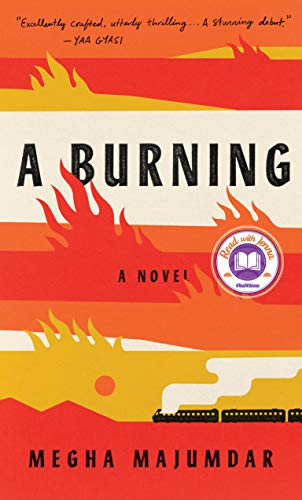 A Burning, the debut novel by Megha Majumdar, received a very unusual stellar review by James Wood in the New Yorker:
Majumdar marshals a much smaller cast of speakers than Faulkner did, and her spare plot moves with arrowlike determination. It begins with a crime, continues with a false charge and imprisonment, and ends with a trial. The book has some of the elements of a thriller or a police procedural, but one shouldn’t mistake its extraordinary directness and openness to life with the formulaic accelerations of genre: Majumdar’s novel is compelling, yet its compulsions have to do with an immersive present rather than with a skidding sequence. Her characters start telling us about their lives, and those lives are suddenly palpable, vital, voiced. I can’t remember when I last read a novel that so quickly dismantled the ordinary skepticism that attends the reading of made-up stories. Early Naipaul comes to mind as a precursor, and perhaps Akhil Sharma’s stupendously vivid novel “Family Life.” Sharma has spoken of how he avoided using “sticky” words—words involving touch and taste and smell—so as to enable a natural velocity; Majumdar finds her own way of achieving the effect.
“A Burning” is about the fateful interactions of three principal characters, who take turns sharing their narratives. At its center is a young Muslim woman named Jivan, who lives in the slums of Kolkata, and who witnesses a terrorist incident that tips her life into turmoil. A halted train at a nearby station is firebombed, and the ensuing inferno kills more than a hundred people. At home, Jivan makes the mistake of posting a politically risky question on Facebook—“If the police didn’t help ordinary people like you and me, if the police watched them die, doesn’t that mean that the government is also a terrorist?”—which attracts official attention. The police come for her in the middle of the night.
…There are two people whose testimony could save Jivan, and much of the novel turns on their capacity and their willingness to offer it. One is an aspiring actress named Lovely, who also lives in the slum. Lovely—the name she took at eighteen—is a so-called hijra, a designation that affords intersex and transgender people a recognized status, but a perilously ambiguous and marginal one.
…The third protagonist, a physical-education teacher called PT Sir, knew Jivan when she was one of the “charity students” at S. D. Gosh Girls’ School.
I agree, A Burning is very good. I will add only two points. I wrote about the hijra of India when I was living in Mumbai and that post is well worth reading for background. Second, most of the reviews, especially the annoying NYTimes review by Parul Sehgal (compare Wood and Sehgal on Lovely’s voice, Wood is right and obviously so if you are not blinded by political correctness) focus on the Indian setting and contemporary Indian politics. That’s a natural, if superficial, vantage point. What impressed me more was the less obvious commentary on social media which is very relevant to the US. How does the pressure and potential of being seen by many others alter our choices? There are multiple mobs in A Burning; two of the mobs, one virtual, the other not, result in the brutal murders of innocent people, a third mob launches a star.