Driving Buy: Pollution, Customers and Development
The literature on air pollution continues to grow. In an impressive paper, Bassi et al. show that firms in Uganda locate on busy roads, Busy roads are more polluted but there are more customers driving and they rely on direct customer acquisition, rather than advertising or marketing, to get customers.
Location choice thus entails a trade-off between pollution exposure, which we verify to be mainly driven by road traffic, and access to customers. We also use our survey data to argue that the benefits can be explained primarily by the fact that, as it is typically the case across the developing world, firms sell locally through face-to-face interactions and do not have any other means to access customers than to be as visible as possible to them. Therefore, proximity to busy roads is essential.
Locating along busy roads increases profits per worker but reduces life expectancy of workers by about two months. A two month loss in life expectancy is substantial. Uganda is so poor (GDP per-capita ~$720), however, that the authors find that an (imaginary) policy of randomly allocating firms would not be cost-effective. Randomly allocating firms, however, is only one potential policy–others include using more buses or instituting a congestion tax. India has higher per capita GDP than Uganda so if all else were equal many such policies would pay in India. One type of “firm” that I have seen locate on congested roads in India is beggars and street sellers. It’s obvious that they go where the customers are but at the price of locating in very polluted areas.
I argued in India recently that reduced pollution could increase GDP. I continue to think that is true on the margin–there is some low-hanging fruit.
In other pollution news. It is clear that pollution papers are becoming a growth industry and thus there are bound to be green jelly bean problems. I haven’t read either closely but I did note that Roy et al. find that pollution increases mutual fund errors and Du finds that pollution increases racist tweets. Well, maybe. The new pollution literature is credible but remember to trust literatures not papers.
Telemedicine is Dying
Bloomberg: Prior to the Covid era, telehealth accounted for less than 1% of outpatient care, according to the Kaiser Family Foundation. Telehealth services have since surged, at their peak accounting for 40% of outpatient visits for mental health and substance use.
Unfortunately, as I warned last year telemedicine is being wound back as regulations which were lifted for the pandemic emergency are put back into place.
Telemedicine exploded in popularity after COVID-19 hit, but limits are returning for care delivered across state lines.
…Over the past year, nearly 40 states and Washington, D.C., have ended emergency declarations that made it easier for doctors to use video visits to see patients in another state, according to the Alliance for Connected Care, which advocates for telemedicine use.
…To state medical boards, the patient’s location during a telemedicine visit is where the appointment takes place. One of MacDonald’s hospitals, Massachusetts General, requires doctors to be licensed in the patient’s state for virtual visits.
I know people who have had to travel over the Virginia/Maryland border just to find a wifi spot to have a telemedicine appointment with their MD physician. Ridiculous.
….telemedicine innovations pioneered during the pandemic should remain as options. No one doubts that some medical services are better performed in-person nor that requiring in-person visits limits some types of fraud and abuse. Nevertheless, the goal should be to ensure quality by regulating the provider of medical services not regulating how they perform their services. Communications technology is improving at a record pace. We have moved from telephones to Facetime and soon will have even more sophisticated virtual presence technology that can be integrated with next generation Apple watches and Fitbits that gather medical information. We want medical care to build on the progress in other industries and not be bound to 19th and 20th century technology.
Lifecycle Investing
and
Investors often think of diversification as a free lunch—it allows them to maintain returns while reducing risk. But most people only get part of diversification right, and that can hurt them later in life.
With traditional diversification, people spread money around different kinds of investments to mitigate risk. That approach misses a key opportunity: “diversifying” how you invest over time.
Most people start investing with a small amount of money, because that is all they can afford, and ramp it up as their earnings grow. But investing so much later in life unnecessarily puts people at greater risk when they are close to retirement. They end up with far greater exposure to stock-market risk in their 50s and 60s than in their 20s and 30s, even if they are buying diversified mutual funds.
We propose a different method: People ought to borrow money to make their initial investments larger, so that they can invest closer to the same amount every year over their lifetime. Think of investing $2 a decade steadily for three decades, instead of $1 for the first, $2 for the next and $3 for the third.
…Sound risky? Consider that young people do the same thing with housing when they borrow money to buy a house they live in for decades—and there the leverage often involves borrowing $9 for every $1 of equity. We propose borrowing only $1 for each $1 invested. Limiting ourselves to 2:1 leverage means we don’t hit a perfectly even market exposure over time, but gets us closer to that ideal.
Most people won’t do this because unlike a home-mortgage it’s a non-standard idea. It could be standardized, however, with retirement planning products. Regardless, I agree with Ayres and Nalebuff that young people should be 100% in equities. Of course, the equity-basket should be diversified, national and internationally, and young people should follow a buy and hold strategy while being very aggressive on the equity-debt mix. Also, if, as you get older, you expect to make a bequest you should continue to be aggressive on the portion of your portfolio you expect be passed on to your beneficaries.
The Nobel Prize Goes to Bernanke and Diamond and Dybvig
The Nobel Prize Goes to Bernanke and Diamond and Dybvig for their work on banking. Bernanke seems like an obvious choice. Doesn’t he have one already? Well, no. But few people have had as stellar an academic career topped by another stellar career in public policy. A few economists have became famous politicians but it’s difficult to think of any economists whose career in public policy consisting of implementing, applying and testing the knowledge they built in academia.
Bernanke, of course, wrote key papers on the Great Depression–the Nobel committee points especially to his 1983 paper Non-Monetary Effects of the Financial Crisis in the Propagation of the Great Depression which showed that it wasn’t just the decline of the money supply that mattered (ala Friedman and Schwartz) but also the decline of the credit supply. Another way of putting this is that the waves of bank failures in the 1930s reduced the economy’s ability to produce output in a way that could not be countered simply by printing more money. As Tyler and I emphasize in our textbook, Modern Principles, nominal and real shocks are often intertwined. Bernanke then famously brought this line of thinking to his actions as head of the Federal Reserve during the 2008-2009 Financial Crises. Bernanke believed that it was critical to rescue the banks and the shadow banks not because he was beholden to financial interests (he was not a Wall Street guy) but because he believed the banks were a critical bridge between savers and investors and if that link were broken the results would be catastrophic. Bernanke rescued the banks to save the bridges.
I’m also a fan of a second, somewhat less well-known paper that Bernanke also published in 1983 (the Annus Mirabilis paper phenomena), Irreversibility, Uncertainty, and Cyclical Investment. Bernanke in this paper pioneered what would later become the real options analysis of investment, i.e. thinking about investment as an option, akin to a financial option. Thus, investment has two key features–you can usually wait a little bit to gather more information before investing but once you strike, the investment is sunk, i.e. irreversible. These two features have important implications for investment decisions and writ-large business cycles. In particular, Bernanke showed something surprising which he dubbed “the bad-news principle.” The bad-news principle says that only the expected severity of bad news matters for the decision whether to invest, good news should not matter at all. The reason is that the real decision an investor must make is whether to invest immediately or wait a little bit to learn more but what makes waiting valuable is not the possibility of good news but the possibility of avoiding mistakes. Avoiding mistakes is what investors care about on the margin. In turn, what that means is that avoiding bad news–creating downside insurance–can generating a huge upside because it can trigger a wave of investment. Bernanke also took this lesson to his role at the Federal Reserve.
Large amounts have been written on Bernanke already, of course, including his own memoir and I don’t think I can add much to that torrent beyond emphasizing the remarkable consistency of Bernanke’s thoughts and actions from academia to central banking.
Diamond and Dybvig are responsible for the now canonical model of banking. You can read Tyler below for more details on Bernanke and an explanation of the DD model.
The Invisible Hand Increases Trust, Cooperation, and Universal Moral Action
Montesquieu famously noted that
Commerce is a cure for the most destructive prejudices; for it is almost a general rule, that wherever we find agreeable manners, there commerce flourishes; and that wherever there is commerce, there we meet with agreeable manners.
and Voltaire said of the London Stock Exchange:
Go into the London Stock Exchange – a more respectable place than many a court – and you will see representatives from all nations gathered together for the utility of men. Here Jew, Mohammedan and Christian deal with each other as though they were all of the same faith, and only apply the word infidel to people who go bankrupt. Here the Presbyterian trusts the Anabaptist and the Anglican accepts a promise from the Quaker. On leaving these peaceful and free assemblies some go to the Synagogue and others for a drink, this one goes to be baptized in a great bath in the name of Father, Son and Holy Ghost, that one has his son’s foreskin cut and has some Hebrew words he doesn’t understand mumbled over the child, others go to heir church and await the inspiration of God with their hats on, and everybody is happy.
Commerce makes people traders and by and large traders must be benevolent, agreeable and willing to bargain and compromise with people of different sects, religions and beliefs. Contrary to what one naively might expect, people with more exposure to markets behave more cooperatively and in less nakedly self-interested ways. Similarly, in a letter-return experiment in Italy, Baldassarri finds that market integration increases pro-social behavior towards in and outgroups:
In areas where market exchange is dominant, letter-return rates are high. Moreover, prosocial behavior toward ingroup and outgroup members moves hand in hand, thus suggesting that norms of solidarity extend beyond group boundaries.
Also, contrary to what you may have read about the mythical Wall Street game versus Community game, priming people in the lab with phrases evocative of markets and trade, increases trust.
In a new paper, Gustav Agneman and Esther Chevrot-Bianco test the idea that markets generate more universal behavior. They run their tests in villages in Greenland where some people buy and sell in markets for their primary living while others in the same village still rely for a substantial part of their subsistence on hunting, fishing and personal exchange. They use a dice game in which players report the number of a roll with higher numbers being better for the player. Only the player knows their true roll and there is no way to detect cheaters on an individual basis. In some variants, other people (in-group or out-group) benefit when players report lower numbers. The upshot is that people exposed to market institutions are honest while traditional people cheat. Cheating is only ameliorated in the traditional group when cheating comes at the expense of an in-group (fellow-villager) but not when it comes at the expense of an out-grou member. More generally the authors summarize:
…We conduct rule-breaking experiments in 13 villages across Greenland (N=543), where stark contrasts in market participation within villages allow us to examine the relationship between market participation and moral decision-making holding village-level factors constant. First, we document a robust positive association between market participation and moral behaviour towards anonymous others. Second, market-integrated participants display universalism in moral decision-making, whereas non-market participants make more moral decisions towards co-villagers. A battery of robustness tests confirms that the behavioural differences between market and non-market participants are not driven by socioeconomic variables, childhood background, cultural identities, kinship structure, global connectedness, and exposure to religious and political institutions.
Markets and trade increase trust, cooperation and universal moral action–it is hard to think of a more important finding for the world today.
Hat tip: The still excellent Kevin Lewis.
India: The Revolution in Private Schooling
A whopping 50%+ of secondary school students in India are educated in private schools. Do private schools increase human capital or merely skim the best students? My paper, Private Education in India: A Novel Test of Cream Skimming made a simple but telling point:
…As the private share of school enrollment increases simple cream skimming becomes less plausible as the explanation for a higher rate of achievement in private schools. If the private schools cream skim when they are at 10% of public school enrollment how much cream can be left in the public school pool when the private schools account for 60% of total enrollment? Thus, if this simple form of cream skimming is the explanation for the higher achievement rate in private schools, we would expect the “private effect,” the difference between private and public scores, to be smaller in regions with a high
share of private schooling.
 In fact, what I find is the private advantage, although larger in districts with smaller shares of private schooling (suggesting some skimming), stabilizes and doesn’t disappear even as the share of private schooling heads towards 100%. I also show that mean scores across all students, public and private, increase with the share of private schooling which is inconsistent with cream skimming (which predicts a constant mean). At right a picture showing that private scores continue to outpace public scores even in districts where private schools educate a majority or larger share of students.
In a new paper, Bagde, Epple and Taylor study 4 million students in thousands of villages in India during 2004-2014. In the early years of the study, none of the villages have private schools but entry starts to occur in 2007-2009 and the authors look at who switches to private schools. They find significant selection from higher income, higher caste, higher ability, and males towards private schools but no evidence that public school students are harmed.
The authors give a nod to the possibility that stratification could generate problems down the line if it increases inequality but they don’t mention the key point that, as with arguments for cream skimming, stratification concerns diminish the more students are in private schools and disappear altogether if 100% of students are in private schools.
More generally, India is pioneering private education on a grand scale and the entire world should pay attention to these innovations.
Addendum: See also my previous post on a key paper by Muralidharan and Sundararaman, Private Schooling In India: Results from a Randomized Trial.
The US has Relatively Low Rates of Hiring Discrimination
There have now been lots of resume-audit studies in which identical resumes but for the “minority-distinct” name are sent out to employers and callback rates are measured. A meta-study of 97 field experiments (N = 200,000 job applicants) in 9 countries in Europe and North America finds there is some discrimination in every county but, if anything, the USA has one of the lower rates of discrimination while France and perhaps also Sweden have very high levels. These result’s aren’t that surprising to those who travel but they run counter to the narrative that the US is uniquely or especially discriminatory because of its history of slavery and capitalism. Capitalism, in fact, is likely to predict less discrimination. A picture summarizes. The US is here defined as 1 and these are relative levels after controlling for some basic differences across studies:

The authors make a number of interesting points:
…national histories of slavery and colonialism are neither necessary nor sufficient conditions for a country to have relatively high levels of labor market discrimination. Some countries with colonial pasts demonstrate high rates of hiring discrimination, but several countries without extensive colonial pasts (outside Europe), such as Sweden, demonstrate similar levels. Likewise, the lower rates of discrimination against minorities in the United States than we find for many European countries seem contrary to expectations that emphasize the primacy of connection to slavery in shaping the contemporary level of national discrimination. These results do not suggest that slavery and colonialism do not matter for levels of discrimination, rather they indicate that they matter in more complex ways than suggested by theories that posit simple, direct influences of the past on current discrimination.
And:
High discrimination in the French labor market seems inconsistent with claims made by some scholars that discourse or measurement of race and ethnicity itself will tend to produce more discrimination by promoting “groupism” and group stereotypes (Sniderman and Hagendoorn 2007). The efforts in France not to measure or formally discuss race or ethnicity do not seem to have led to less discrimination.
And, reminisicent of Agan and Starr’s work on ban the box policies:
…the cross-national differences we find should not be read as primarily reflecting national levels of prejudice or as indicators of national levels of racism. Our discrimination measures are specific to hiring, and some evidence suggests national levels in discrimination in other outcomes may be different. For instance,we find low hiring discrimination in Germany,15 but Germany has not been found to be low on housing discrimination (Auspurg, Schneck, and Hinz 2018), suggesting weak antiminority prejudice may not account for this result. More likely, low discrimination in Germany could be a result of distinctive hiring practices in Germany: Employees typically submit far more extensive background information at initial application than in most other countries—including, for instance, high school transcripts and reports from apprenticeships (Weichselbaumer 2016). This may reduce the tendency of employers to assume lower skills and qualifications among nonwhite applicants, which is one potential source of discrimination. If so, this suggests the importance of high levels of individual information about applicants as a method to mitigate discrimination (c.f., Wozniac 2015; Auspurg et al. 2018).
It’s notable that these studies have mostly been done in Western capitalist democracies. I would bet that discrimination rates would be much higher in Japan, China and Korea not to mention Indonesia, Iraq, Nigeria or the Congo. Understanding why discrimination is lower in Western capitalist democracies would reorient the literature in a very useful way.
Hat tip: Jay Van Bavel.
Will a nuclear weapon be launched in combat by the end of 2023?

This prediction is from Manifold Markets. Metaculus gives similar odds to a similar question. These are serious predictions.
In a 2019 post I pointed out that expert surveys (not markets) suggested the annualized probability of a nuclear war was on the order of ~1%–and I thought that was worryingly high. We are now at ten times that level. This is very, very bad.
Open the Skies!
Here’s a list of the world’s top ten airlines:
- Qatar Airways
- Singapore Airlines

- Emirates
- ANA (All Nippon Airways)
- Qantas Airways
- Japan Airlines
- Turkish Airlines
- Air France
- Korean Air
- Swiss International Air Lines
The airlines in this list have at least two things in common: None of world’s best airlines are US owned and none of them are allowed to operate domestically in the United States. The two common elements are related because so-called “cabotage laws” prohibit foreign airlines from serving domestic travelers.
Imagine what international travel would be like if you could only fly on a US owned airline? Ok it’s not that hard to imagine. Restricting international flights to domestic airlines would make international travel much more expensive and more inconvenient. The US State Department rightly lauds the Open Skies Agreements that have brought competition to international flights:
Since 1992 the United States has pursued an “Open Skies” policy designed to eliminate government intervention in airline decision-making about routes, capacity, and pricing in international markets…Open Skies agreements expand cooperative marketing opportunities between airlines, liberalize charter regulations, improve flexibility for airline operations, and commit both governments to high standards of safety and security. They are pro-consumer, pro-competition, and pro-growth, and facilitate countless new cultural links worldwide.
True! But US domestic flights fly on Closed Skies. Europe has opened up competition to all European airlines. Indeed, Europe is also substantially open to US carriers, but the US is closed to foreign carriers for domestic flights. Cabotage laws are, in effect, a Jones Act for the airlines.
In an good review, Scott Lincicome summarizes:
Europe’s deregulatory experiences—and our own—show that nixing cabotage restrictions would not only put additional downward pressure on fares but also likely improve route coverage and maybe even customer service.
NASA Reduces Existential Risk!
Congratulations to NASA for a direct hit on an asteroid with the goal of shifting its orbit and proving the feasibility of protecting the planet. A great step for mankind!
Tyler and I use asteroid defense as an example of a true public good in our textbook, Modern Principles. Here’s the video from our textbook. Not quite so dramatic but funnier!
Petrov Day!
Today we honor Stanislav Yevgrafovich Petrov whose calm actions and general humanity helped to prevent a nuclear war on September 26th, 1983. The NYTimes reported the events on Petrov’s death in 2017.
Early on the morning of Sept. 26, 1983, Stanislav Petrov helped prevent the outbreak of nuclear war.
A 44-year-old lieutenant colonel in the Soviet Air Defense Forces, he was a few hours into his shift as the duty officer at Serpukhov-15, the secret command center outside Moscow where the Soviet military monitored its early-warning satellites over the United States, when alarms went off.
Computers warned that five Minuteman intercontinental ballistic missiles had been launched from an American base.
“For 15 seconds, we were in a state of shock,” he later recalled. “We needed to understand, ‘What’s next?’ ”
The alarm sounded during one of the tensest periods in the Cold War. Three weeks earlier, the Soviets had shot down a Korean Air Lines commercial flight after it crossed into Soviet airspace, killing all 269 people on board, including a congressman from Georgia. President Ronald Reagan had rejected calls for freezing the arms race, declaring the Soviet Union an “evil empire.” The Soviet leader, Yuri V. Andropov, was obsessed by fears of an American attack.
Colonel Petrov was at a pivotal point in the decision-making chain. His superiors at the warning-system headquarters reported to the general staff of the Soviet military, which would consult with Mr. Andropov on launching a retaliatory attack.
After five nerve-racking minutes — electronic maps and screens were flashing as he held a phone in one hand and an intercom in the other, trying to absorb streams of incoming information — Colonel Petrov decided that the launch reports were probably a false alarm.
As he later explained, it was a gut decision, at best a “50-50” guess, based on his distrust of the early-warning system and the relative paucity of missiles that were launched.
Colonel Petrov died at 77 on May 19 in Fryazino, a Moscow suburb, where he lived alone on a pension. The death was not widely reported at the time.
A White Supremacist Under Every Bed
AlphaHistory: The Red Scare (1947-57) was a decade-long period of intense anti-communist paranoia in the United States. During this period, millions of ordinary Americans were paralysed by an irrational fear of ‘Reds under the bed’ – the belief that thousands of communist agents and sympathisers were secretly living amongst them, plotting or waiting to overthrow the government.
 Today, we live under the White Supremacist Scare, the irrational fear that there is a white supremacist under every bed. An email sent to the parents of University of Virginia students, for example, warns that “events have occurred on Grounds that have been cause for concern” and “the nature and timing of these events have caused some to speculate that they are linked or part of a larger pattern of racially motivated crimes…”. Here is one such event:
Last weekend, several community members reported that a flag bearing a symbol that looked either like a crown or an owl, depending on how the flag is held, was left on the grass near the Memorial to Enslaved Laborers. That same person also left a check for $888.88 that was ultimately delivered, as a surprise, to a student’s room, and the check had the same symbol that was on the flag. As rumors swirled around this bizarre set of events, some speculated that the flag represented a white supremacist organization and that the check was somehow a targeted act of intimidation against a student of color.
A crown! An owl! A check for $888.88! Heil Hitler! It seems odd that giving a check to someone is “targeting” a person of color. But no matter. Logic isn’t important here. What else could this mean but white supremacy? Bear in mind that this is a university where streaking the lawn is a tradition and there are weird numbers, signs, and sigils all over campus.
The UVA police and the FBI—yes, the FBI!—were called in to investigate (n.b. there isn’t even a hint of any crime!). And they got the culprit! Of course, what they discovered was entirely banal. Does it even matter?
“…we discovered that he is part of an organization focusing on micro-philanthropy that occasionally engages in random acts of kindness to current students.”
Moreover, the UVA administration is advertising their investigation, as if how seriously they took this potential threat is a credit to the organization instead of an embarrassment of poor judgment and fevered imagination.
The End of History (of Philosophy)
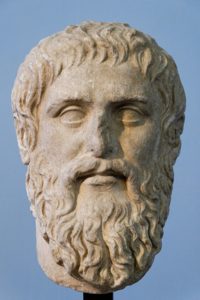 Hanno Sauer on why philosophers spend far too much time reading and writing about dead philosophers:
What credence should we assign to philosophical claims that were formed without any knowledge of the current state of the art of the philosophical debate and little or no knowledge of the relevant empirical or scientific data? Very little or none. Yet when we engage with the history of philosophy, this is often exactly what we do. In this paper, I argue that studying the history of philosophy is philosophically unhelpful. The epistemic aims of philosophy, if there are any, are frustrated by engaging with the history of philosophy, because we have little reason to think that the claims made by history’s great philosophers would survive closer scrutiny today. First, I review the case for philosophical historiography and show how it falls short. I then present several arguments for skepticism about the philosophical value of engaging with the history of philosophy and offer an explanation for why philosophical historiography would seem to make sense even if it didn’t.
A devastating example:
Consider Plato’s or Rousseau’s evaluation of the virtues and vices of democracy. Here is a (non-exhaustive) list of evidence and theories that were unavailable to them at the time:
- Historical experiences with developed democracies
- Empirical evidence regarding democratic movements in developing countries
- Various formal theorems regarding collective decision making and preference aggregation, such as the Condorcet Jury-Theorem, Arrow’s Impossibility-Results, the Hong-Page-Theorem, the median voter theorem, the miracle of aggregation, etc.
- Existing studies on voter behavior, polarization, deliberation, information
- Public choice economics, incl. rational irrationality, democratic realism
The whole subsequent debate on their own arguments…When it comes to people currently alive, we would steeply discount the merits of the contribution of any philosopher whose work were utterly uninformed by the concepts, theories and evidence just mentioned (and whatever other items belong on this list). It is not clear why the great philosophers of the past should not be subjected to the same standard. (Bear in mind that time and attention are severely limited resources. Therefore, every decision we make about whose work to dedicate our time and attention to faces important trade-offs.)
This is obviously true so I think the more interesting question is why do philosophers do this?
Hat tip: Jason Brennan
Taxing Mechanical Engineers and Subsidizing Drama Majors
 In The Student Loan Giveaway is Much Bigger Than You Think I argued that the Biden student loan plan would incentivize students to take on more debt and incentivize schools to raise tuition with most of the increased costs being passed on to taxpayers through generous income based repayment plans. Adam Looney at Brookings takes a deep dive into the IDR plan and concludes that it’s even worse than I thought. Here are some of Looney’s key points:
- As recently as 2017, CBO projected that student loan borrowers would, on average, repay close to $1.11 per dollar they borrowed (including interest). Borrowing was often perceived to be the least favorable way to pay for college. But under the administration’s IDR proposal (and other regulatory changes), undergraduate borrowers who enroll in the plan might be expected to pay approximately $0.50 for each $1 borrowed—and some can reliably expect to pay zero. As a result, borrowing will be the best way to pay for college. If there’s a chance you’ll not need to repay all of the loan—and it’s likely that a majority of undergraduate students will be in that boat—it will be a financial no-brainer to take out the maximum student loan.
- The data shows that roughly half of Americans with some college experience but not a BA would qualify for zero payments under the proposal, as would about 25% of BA graduates. However, the vast majority of students (including more than 80% of BA recipients) would qualify for reduced payments.
- [A] lot of student debt represents borrowing for living expenses, and thus a sizable share of the value of loans forgiven under the IDR proposal will be for such expenses…A graduate student at Columbia University can borrow $30,827 each year for living expenses, personal expenses, and other costs above and beyond how much they borrow for tuition. A significant number of those graduates can expect those borrowed amounts to be forgiven. That means that the federal government will pay twice as much to subsidize the rent of a Columbia graduate student than it will for a low-income individual under the Section 8 housing voucher program…
Looney agrees that the incentive to increase tuition will apply to some graduate and professional programs but he thinks there is less room to increase tuition at undergraduate programs because borrowing is capped (currently! AT) at fairly low rates. But he offers an even more plausible but disheartening scenario that takes us in exactly the wrong direction.
Because the IDR subsidy is based primarily on post-college earnings, programs that leave students without a degree or that don’t lead to a good job will get a larger subsidy. Students at good schools and high-return programs will be asked to repay their loans nearly in full. Want a free ride to college? You can have one, but only if you study cosmetology, liberal arts, or drama, preferably at a for-profit school. Want to be a nurse, an engineer, or major in computer science or math? You’ll have to pay full price (especially at the best programs in each field). This is a problem because most student outcomes—both bad and good—are highly predictable based on the quality, value, completion rate, and post-graduation earnings of the program attended. IDR can work if designed well, but this IDR imposed on the current U.S. system of higher education means programs and institutions with the worst outcomes and highest debts will accrue the largest subsidies.
Looney does a back of the envelope calculation and estimates that typical graduates in Mechanical Engineering will on average get a 0% subsidy but graduates in Music will get a 96% subsidy, in Drama a 99% subsidy and Masseuses a 100% subsidy on average. This of course is exactly the wrong approach. If we are going to subsidize, we should subsidize degrees with plausible positive spillovers not masseues.

The problem is not just the subsidy but the encouragement this gives to create low-value programs:
- …institutions will have an incentive to create valueless programs and aggressively recruit students into those programs with promises they will be free under an IDR plan….The fact that a student can take a loan for living expenses (or even enroll in a program for purposes of taking out such a loan) makes the loan program easy to abuse. Some borrowers will use the loan system as an ATM, taking out student loans knowing they’ll qualify for forgiveness, and receiving the proceeds in cash, expecting not to repay the loan….I suspect that such abuses will be facilitated by predatory institutions.
Overall, the student loan program, as currently written, is looking to be one of the most costly, inefficient and unwise government programs of the 21st century. As I said in my first post, “fixing” the program is likely to drive ever more increasing intervention into higher education much as has happened with health care. My guess is that no one really thought this albatross through.
John Stuart Mill was Woke and Based
I love that John Stuart Mill was woke and based:
Looking at democracy in the way in which it is commonly conceived, as the rule of the numerical majority, it is surely possible that the ruling power may be under the dominion of sectional or class interests, pointing to conduct different from that which would be dictated by impartial regard for the interest of all. Suppose the majority to be whites, the minority negroes, or vice versâ: is it likely that the majority would allow equal justice to the minority? Suppose the majority Catholics, the minority Protestants, or the reverse; will there not be the same danger? Or let the majority be English, the minority Irish, or the contrary: is there not a great probability of similar evil? In all countries there is a majority of poor, a minority who, in contradistinction, may be called rich. Between these two classes, on many questions, there is complete opposition of apparent interest.