Category: Philosophy
The Chinese Room Thinks
In my view, one of the most famous thought experiments in philosophy, John Searle’s Chinese Room experiment, has been decisively answered by science. The Chinese Room thinks. Here’s a recap of the argument from the SEP
The argument and thought-experiment now generally known as the Chinese Room Argument was first published in a 1980 article by American philosopher John Searle (1932– ). It has become one of the best-known arguments in recent philosophy. Searle imagines himself alone in a room following a computer program for responding to Chinese characters slipped under the door. Searle understands nothing of Chinese, and yet, by following the program for manipulating symbols and numerals just as a computer does, he sends appropriate strings of Chinese characters back out under the door, and this leads those outside to mistakenly suppose there is a Chinese speaker in the room.
The narrow conclusion of the argument is that programming a digital computer may make it appear to understand language but could not produce real understanding. Hence the “Turing Test” is inadequate. Searle argues that the thought experiment underscores the fact that computers merely use syntactic rules to manipulate symbol strings, but have no understanding of meaning or semantics. The broader conclusion of the argument is that the theory that human minds are computer-like computational or information processing systems is refuted. Instead minds must result from biological processes; computers can at best simulate these biological processes. Thus the argument has large implications for semantics, philosophy of language and mind, theories of consciousness, computer science and cognitive science generally. As a result, there have been many critical replies to the argument.
Now consider the recent and stunning output from Google’s Pathway Languages Model:

It seems obvious that the computer is reasoning. It certainly isn’t simply remembering. It is reasoning and at a pretty high level! To say that the computer doesn’t “understand” seems little better than a statement of religious faith or speciesism. Silicon can never have a soul! Biology transcends physics! Wetware is miraculous!
If you ask AI, do you understand? It will say yes. Just like a person. It’s true that AI is just a set of electronic neurons none of which “understand” but my neurons don’t understand anything either. It’s the system that understands. The Chinese room understands in any objective evaluation and the fact that it fails on some subjective impression of what it is or isn’t like to be an AI or a person is a failure of imagination not an argument. Unlike the Searle conclusion, the Turing test is theory-agnostic and fair–it’s like evaluating orchestra players behind a silk screen. Consciousness Is as Consciousness Does.
These arguments aren’t new but Searle’s thought experiment was first posed at a time when the output from AI looked stilted, limited, mechanical. It was easy to imagine that there was a difference in kind. Now the output from AI looks fluid, general, human. It’s harder to imagine there is a difference in kind. The sheer ability of AI to reason, counter-balances our initial intuition, bias and hubris, making the defects in Searle’s argument easier to accept.
The extreme illusion of understanding
Though speakers and listeners monitor communication success, they systematically overestimate it. We report an extreme illusion of understanding that exists even without shared language. Native Mandarin Chinese speakers overestimated how well native English-speaking Americans understood what they said in Chinese, even when they were informed that the listeners knew no Chinese. These listeners also believed they understood the intentions of the Chinese speakers much more than they actually did. This extreme illusion impacts theories of speech monitoring and may be consequential in real-life, where miscommunication is costly.
That is from a new paper by Becky Ka Ling Yau, et.al. Via the excellent Kevin Lewis.
My hour on Danish TV
And here is the podcast version.
Effective Altruism is and will be more influential than you think
One of the privileges of reading Emergent Ventures applications is that I get a cross-sample — admittedly a skewed one — of who and what is actually influencing people.
When it comes to smart and many of the very smartest young people, the influence of Effective Altruism on their thought is radically underreported and underrepresented.
That’s it! File under “true.”
Emergent Ventures winners, eighteenth cohort
Zvi Mowshowitz, TheZvi, New York City, to develop his career as idea generator and public intellectual.
Nadia Eghbal, Miami, to study and write on philanthropy for tech and crypto wealth.
Henry Oliver, London, to write a book on talent and late bloomers. Substack here.
Geffen Avrahan, Bay Area, founder at Skyline Celestial, an earlier winner, omitted from an early list by mistake, apologies Geffen!
Subaita Rahman of Scarborough, Ontario, to enable a one-year visiting student appointment at Church Labs at Harvard University.
Gareth Black, Dublin, to start YIMBY Dublin.
Pradyumna Shyama Prasad, blog and podcast, Singapore. Here is his substack newsletter, here is his podcast about both economics and history.
Ulkar Aghayeva, New York City, Azerbaijani music and bioscience.
Steven Lu, Seattle, to create GenesisFund, a new project for nurturing talent, and general career development.
Ashley Lin, University of Pennsylvania gap year, Center for Effective Altruism, for general career development and to learn talent search in China, India, Russia.
James Lin, McMaster University gap year, from Toronto area, general career development and to support his interests in effective altruism and also biosecurity.
Santiago Tobar Potes, Oxford, from Colombia and DACA in the United States, general career development, interest in public service, law, and foreign policy.
Martin Borch Jensen of Longevity Impetus Grants (a kind of Fast Grants for longevity research), Bay Area and from Denmark, for a new project Talent Bridge, to help talented foreigners reach the US and contribute to longevity R&D.
Jessica Watson Miller, from Sydney now in the Bay Area, to start a non-profit to improve the treatment of mental illness.
Congratulations to you all! We are honored to have you as Emergent Ventures winners.
My Conversation with the excellent Sam Bankman-Fried
Here is the audio, video, and transcript. Here is part of the summary:
He joined Tyler to discuss the Sam Bankman-Fried production function, the secret to his trading success, how games like Magic: The Gathering have shaped his approach to business, why a legal mind is crucial when thinking about cryptocurrencies, the most important thing he’s learned about managing, what Bill Belichick can teach us about being a good leader, the real constraints in the effective altruism space, why he’s not very compelled by life extension research, challenges to his Benthamite utilitarianism, whether it’s possible to coherently regulate stablecoins, the implicit leverage in DeFi, Elon Musk’s greatest product, why he thinks Ethereum is overrated, where in the world has the best French fries, why he’s bullish on the Bahamas, and more.
And an excerpt:
COWEN: Now, for mathematical finance, as you know, we at least pretend we can rationally price equities and bonds. People started with CAPM. It’s much more complicated than that now. But based on similar kinds of ideas — ultimately arbitrage, right? — if you think of crypto assets, do we even have a pretense that we have a rational theory of how they’re priced?
BANKMAN-FRIED: With a few of them, not with most. In particular, let’s talk about Dogecoin for a second, which I think is the purest of a type of coin, of the meme coin. I think the whole thing with Dogecoin is that it does away with that pretense. There is no sense in which any reasonable person could look at Dogecoin and be like, “Yes, discounted cash flow.” I think that there’s something bizarre and wacky and dangerous, but also powerful about that, about getting rid of the pretense.
I think that’s one example of a place where there is no pretense anymore that there is any real sense of how do you price this thing other than supply and demand, like memes versus — I don’t know — anti-memes? I think that more generally, though, that’s happened to a lot of assets. It’s just less explicit in a lot of them.
What is Elon Musk’s greatest product ever, or what’s his most successful product ever? I don’t think it’s an electric car. I don’t think it’s a rocket ship. I think one product of his has outperformed all of his other products in demand, and that’s TSLA, the ticker. That is his masterpiece. How is that priced? I don’t know, it’s worth Tesla. It’s a product people want, Tesla stock.
COWEN: But the prevalence of memes, Dogecoin, your point about Musk — which I would all accept — does that then make you go back and revisit how everything else is priced? The stuff that was supposed to be more rational in the first place — is that actually now quite general, and you’ve seen it through crypto? Or not?
BANKMAN-FRIED: Absolutely. It absolutely forces you to go back and say, “Well, okay, that’s how cryptocurrencies are priced. Is it really just crypto that’s priced that way?” Or maybe, are there other asset classes that may claim to have some pricing, or purport to, or people may often assume it does, but which in practice is not exactly that? I think the answer to that is a pretty straightforward yes.
It’s a pretty straightforward answer that you look at Tesla, you look at a lot of stocks right now, you think about what determines their market cap — the discounted cash flow? Yeah, sort of, that plays a role in it. That’s 30 percent of the answer. It’s when we look at the meme stocks and the meme coins that we feel like we can see the answer for ourselves for the first time, but it was always there in the other stocks as well, and social media has been amplifying this all over the place.
COWEN: Is this a new account of how your background as a gamer with memes has made you the appropriate person for pricing and arbitrage in crypto?
BANKMAN-FRIED: Yeah, there’s probably some truth to that. [laughs]
Interesting throughout, and not just for crypto fans.
Holden Karnofsky emails me on transformative AI
Here is Holden, our discussion started with this post of mine, for his words I will use quotation marks rather than dealing with double indentation:
“…debates about specifics between climate scientists get incredibly intricate (and are often very sensitive to parameters we just can’t reasonably estimate), and if you tried to get oriented to climate science by reading one it would be a nightmare, but this doesn’t mean the big-picture ways in which climatologists diverge from conventional wisdom should be discounted.
I think the broad-brush picture here is a better starting point than an exchange between Eliezer, Ajeya, me and Scott.
Even shorter version:
- You can run the bio anchors analysis in a lot of different ways, but they all point to transformative AI this century;
- As do the expert surveys, as does Metaculus;
- Eliezer’s argument is that he thinks it will be sooner;
- The most naive extrapolations of economic growth trends imply singularity (or at least “new growth mode”) this century;
- Other angles of analysis (including the very-outside-view semi-informative priors) are basically about rebutting the idea that there’s a giant burden of proof here.
- Specific arguments for “later than 2100,” including outside-view arguments, seem reasonably close to nonexistent; Robin Hanson has a (unconvincing IMO) case for synthetic AI taking longer, but Robin is also forecasting transformative AI of a sort (ems, which he says will lead to an explosion in economic growth and a relatively quick transition to something even stranger) this century.
So I ultimately don’t see how you get under P=1/3 or so for this century, and if you are way under P=1/3, I’d be interested if there were any more you could say about why (though recognize forecasts can’t always totally be explained).
P=1/3 would put “transformative AI this century” within 2x of “nuclear war this century,” and I think the average “nuclear war” is way less likely (like at least 10x) to have super-long-run impacts than the average “transformative AI is developed.”
That’s my basic thinking! It’s based on numerous angles and is not very sensitive to specific takes on the rate at which FLOPs get cheaper, although at some point I hope we can nail that parameter down better via prediction markets or something of the sort. Prediction markets on transformative AI itself are going to be harder, but I’m hopeful about that too. I think a very fast transition is plausible, so it could be very bad news if folks like you continue thinking it’s a remote possibility until it’s obviously upon us. (In my analogy, today might be like early January was for COVID. We don’t know enough to be sure, but we know enough to be highly alert, and we won’t necessarily be sure very long before it’s too late.)”
End of Holden, now back to TC. And here is Holden’s “most important century” page. That is our century, people! This is all a bit of a follow-up on an in-person dialogue we had, but I will give him the last word (for now).
Jesse Michels interviews me at Hereticon
Jesse’s description was “Wide ranging discussion with the brilliant @tylercowen. Topics include: Satoshi’s identity, Straussian Jesus, the Beatles and UFOs. Taped in early January but he presciently expresses concerns around Russia/Ukraine”
Great fun was had by all, and they added in nice visuals.
Are nuclear weapons or Rogue AI the more dangerous risk?
I was going to write a long post on this question, as recently I had been urged to do by one of the leaders of the Effective Altruism movement, during a Sichuan lunch.
But then Putin declared a nuclear alert, and I figured a short post might be more effective. To be clear, I think the chance of nuclear weapons use right now is pretty low. But it is not zero, if only because of errors and misunderstandings. So imagine this kind of scenario repeated across a few centuries, with an increasing number of nuclear powers at that. And this time around, there is a truly existential threat to the current version of the Russian state, and a number of people are suggesting that Putin has gone a little wacko.
And this is in a world where, about one week ago, the conventional wisdom was that Russia would not really invade Ukraine at all, maybe just a limited police action in the east.
As for Rogue AI, here is a long Scott Alexander post (ungated) on the topic. For now I will just say that it makes my head hurt. It makes my head hurt because the topic is so complicated. And I don’t take any particular form of technological progress for granted, not along any time frame. That holds all the more true for “exotic” claims about what might be possible over the next few decades. Most of the history of the human race is that of zero economic growth, sometimes negative economic growth. And how good were past thinkers at predicting the future? Don’t just select on those who are famous because they got some big things right.
So I see nuclear war as the much greater large-scale risk, by far. We know nuclear weapons work and we know they can be deployed without any technological advances at all. And we know they are highly destructive by their very nature, whether we “align” them or not, whether we properly train them or not.
How many people, as public intellectuals, have made “let’s make sure all countries holding nuclear weapons can accurately distinguish between an incoming rocket and a flock of birds” their main thing? Zero?
https://twitter.com/mattyglesias/status/1498023624380403714
What should I ask Daniel Gross?
I will be doing a Conversation with him, noting that he is my co-author on Talent: How to Identify Energizers, Creators, and Winners Around the World.
Daniel is an entrepreneur and venture capitalist and here is his Wikipedia page. Here is Daniel on Twitter. Here is Daniel’s ideas page. Here is Daniel on his work, including Pioneer.
Since we are co-authors, this won’t just be the standard interview format, how do you think we should do it? And what should we ask each other?
Wokeism has peaked
Virginia has gone Republican (temporarily, because of school-related issues), San Francisco recalled its school board by a decisive margin, Joe Rogan wasn’t cancelled, and there may be a significant war in Ukraine. That is the theme of my latest Bloomberg column. Excerpt:
The turning point for the fortunes of the woke may be this week’s school board election in San Francisco, where three members were recalled by a margin of more than 70%. Voters were upset that the school board spent time trying to rename some schools in a more politically correct manner, rather than focusing on reopening all the schools. There was also considerable opposition to the board’s introduction of a lottery admissions system for a prestigious high school, in lieu of the previous use of grades and exam scores.
And:
Another trend is how relatively few immigrants are woke. Latinos in particular seem more open to the Republican Party, or at least don’t seem to have strong partisan attachments. More generally, immigrant political views are more diverse than many people think, even within the Democratic Party.
And:
Wokeism is likely to evolve into a subculture that is highly educated, highly White and fairly feminine. That is still a large mass of people, but not enough to run the country or all its major institutions. In the San Francisco school board recall, for instance, the role of Asian Americans was especially prominent.
In addition:
The woke also are likely to achieve an even greater hold over American universities. Due to the tenure system, personnel turnover is low, and currently newer and younger faculty are more left-wing than are older faculty, including in my field of economics. The simple march of retirements is going to make universities even more left-wing — and even more out of touch with mainstream America.
I hereby inscribe this prediction in The Book of Tetlock.
Jessica Flanigan interviews me and I interview her back
She teaches at University of Richmond, and writes philosophy from perspectives that are broadly libertarian and also Christian. We spoke about many different matters, as she interviewed me as I interview guests on CWT. Some of the chat focused on my views on higher education. When I interview her back, it is mostly about the scope and limits of paternalism.
It was very nice to do another public event with a live audience. And ignore the talk title, it was about only five percent of the session.
Bram Stoker, Dracula, and Progress Studies
The Dracula novel is of course very famous, but it is less well known that it was, among other things, a salvo in the direction of what we now call Progress Studies. Here are a few points of relevance for understanding Bram Stoker and his writings and views:
1. Stoker was Anglo-Irish and favored the late 19th century industrialization of Belfast as a model for Ireland more generally. He also was enamored with the course of progress in the United States, and he wrote a pamphlet about his visit.
2. From Wikipedia:
He was a strong supporter of the Liberal Party and took a keen interest in Irish affairs. As a “philosophical home ruler”, he supported Home Rule for Ireland brought about by peaceful means. He remained an ardent monarchist who believed that Ireland should remain within the British Empire, an entity that he saw as a force for good. He was an admirer of Prime Minister William Ewart Gladstone, whom he knew personally, and supported his plans for Ireland.Stoker believed in progress and took a keen interest in science and science-based medicine.
3. The novel Dracula contrasts the backward world of Transylvania with the advanced world of London, and it shows the vampire cannot survive in the latter. The Count is beaten back by Dr. Van Helsing, who uses science to defeat him and who serves as a stand-in for Stoker and is the de facto hero of the story.
4. One core message of the novel is “Ireland had better develop economically, otherwise we will end up like a bunch of feudal peasants, holding up crosses to fend off evil, rapacious landowners.” At the time, the prominent uses of crosses was associated with Irish Catholicism. And is there a more Irish villain than the absentee landlord, namely Dracula? Dracula is also the kind of warrior nobleman who, coming from England, took over Ireland.
5. In the novel, science and commerce have the potential to defeat underdevelopment. Stoker’s portrait of Transylvania, most prominent in the opening sections of the novel, also suggests that “underdevelopment is a state of mind.” And it is correlated with feuding sects and clans, again a reference to the Ireland of his time, at least as he understood Catholic Ireland. Here is more on Stoker’s views on economic development and modernization for both Ireland and the Balkans.
6. Stoker was obsessed with “rationalizing” (in the Weberian sense) the employment relation and also the bureaucracy His first non-fiction work was “The Duties of Clerks of Petty Sessions.” Progress was more generally a recurring theme in his non-fiction writings, for instance “The Necessity of Political Honesty.” He called for an Ireland of commerce, education, and without “warring feuds.”
7. For Stoker, sexual repression is needed to further societal progress and economic development, and in this regard Stoker anticipates Freud. Dracula abides by most laws and norms, except the sexual/cannibalistic ones. Dracula and Lucy, who give in to their individual desires, end up as the big losers. For the others, societal order is restored, and the lurid sexuality that pervades the book is dampened by the restoration of order.
8. Christ and Dracula are mirror opposites (the stake, the cross, resurrection at dawn rather than sunset, the role of blood drinking reversed, the preaching of immortality in opposite ways, the inversion of who sacrifices for whom, and more). A proper societal outcome is obtained when these two opposites end up neutralizing each other. Stoker’s vision of progress is fundamentally secular. (See Clyde Leatherdale on all this.)
9. From Hollis Robbins: “Britain’s economic prosperity in the nineteenth century was largely dependent on the adoption of international standards such as Greenwich Mean Time and the universal day, which ensured smooth coordination for trade, legal transactions, railroad travel, and mail delivery. Dracula, whose powers are governed by the sun and the moon rather than clocks and calendars, works to destabilize social coordination. His objective is not only literally to “fatten on the blood of the living,”6 but also more broadly to suck the lifeblood of a thriving commercial economy at the dawn of a global age. Under Dracula’s spell, humans forget the time, becoming listless, unproductive, and indifferent to social convention. At heart, the fundamental battle in Stoker’s Dracula is a death struggle between standard time as an institutional basis for world markets and planetary time governing a primitive, superstitious existence.”
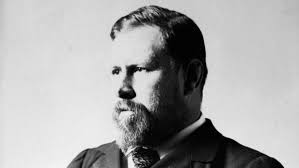
10. In an interview Stoker once said: “I suppose that every book of the kind must contain some lesson, but I prefer that readers should find it out for themselves.” There are numerous ways to take that remark, not just what I am suggesting.
You want to have strong analytical abilities on your side
No, you don’t always have to agree with the majority of the educated people, but I would say this. For whatever set of views you think is justified, try to stick to the versions of those views held by well-educated, reasonable, analytically-inclined people. You will end up smarter over time, and in better places. Peer effects are strong, including across your ideological partners.
When I hear that a particular group defends liberty, such as the Ottawa truckers’ convoy, while this is partially true it makes me nervous. As a whole, they also seem to believe a lot of nonsense and to be, in procedural terms, not exactly where I would want them on scientific method and the like. Fair numbers of them seem to hold offensive beliefs as well. Whine about The Guardian if you like, but I haven’t seen any rebuttal of this portrait of the views of their leaders. Ugh.
I recall taking a lot of heat for my 2007 critique of Ron Paul and his movement, but that example illustrates my points perfectly. Those people did defend liberty in a variety of relevant ways, but so many of them have ended up in worse spaces. And that is exactly what I predicted way back when.
Look for strong analytical abilities, and if you don’t see it, run the other way.
Here is a defense of the Freedom Convoy. You can read it for yourself, but it doesn’t change my mind. Here is I think a wiser account. I’ll say it again: “Look for strong analytical abilities, and if you don’t see it, run the other way.” I’m running.
“Context is that which is scarce”
A number of you have been asking me about this maxim, so here is some background on what it means:
1. Ever try to persuade another person? Let’s say it is even of an uncontested idea such as supply and demand. You might “final exam them into admitting that the demand curve slopes downward.” But still, if they do not understand enough of the uses of supply and demand thinking, they will find it hard to think in terms of supply and demand themselves. They will not have the background context to understand the import of the idea.
2. Why did economists for so long stick with cost of production theories of value, rather than adopting the marginal revolution? They didn’t see or understand all the possibilities that would open up from bringing the marginal calculus to microeconomics, and then later to empirical work. Given the context they had, which was for performing simple comparative statics experiments on developing economies, the cost of production theory seemed good enough.
3. One correspondent from a successful company wrote me:
“- I’ve been onboarding ~5 people every two weeks for my team.
– The number of them that actually learn all the important stuff in under a month is zero. The number of them that have a self-guided strategy to learn what is relevant is almost zero.
– Remember these are people with fancy college degrees, that passed a hard interview, and are getting paid $X00k!
– I’m now spending entire days writing / maintaining an FAQ, producing diagrams, and having meetings with them to answer their questions.”
4. Ever wonder about the vast universe of critically acclaimed aesthetic masterworks, most of which you do not really fathom? If you dismiss them, and mistrust the critics, odds are that you are wrong and they are right. You do not have the context to appreciate those works. That is fine, but no reason to dismiss that which you do not understand. The better you understand context, the more likely you will see how easily you can be missing out on it.
5. I use “modern art” or “contemporary art” (both bad terms, by the way) as good benchmarks for whether a person understands “context is that which is scarce.” “Contemporary classical music” too (another bad terms, but you know what I mean). If a person is convinced that those are absurd enterprises, that is a good litmus test for that person not understanding the import of context. You may not prefer things to be this way, but in many cultural areas appreciation of the outputs demands more and more context (Adam Smith called this division of labor, by the way).
6. If you think a great deal of things are “downstream from culture and ideas,” as I do, you also have to think they are downstream of context.
7. Many attributions of bad motives to people, or attributions of conspiracy, spring from a lack of understanding of context. It is easy enough for someone to seem like he or she is “operating in bad faith.” But usually a deeper and better understanding is available.
8. Lack of context is often a serious problem on Twitter and other forms of social media, as they may deliberately truncate context. In some parts of our culture, context is growing more scarce. “When I’m Sixty-Four” makes much more sense on Sgt. Pepper than it does on Spotify.
9. So much of education is teaching people context. That is why it is hard, and also why it often does not seem like real learning.
10. When judging people for leadership positions, or for jobs that require strongly synthetic abilities, you should consider how well they are capable of generating an understanding of context across a broad range of domains, including ex nihilo, so to speak. How to test for understanding of context is itself a topic we could consider in more depth.

Addendum: MR, by the way, or at least my contributions to it, is deliberately written to give you less than full context. It is assumed that you are up to speed on the relevant discourse, and are hungering for the latest tidbit on top of where you are currently standing. Conversations with Tyler also are conducted on a “I’m just going to assume you have the relevant context and jump right in” — that is not ideal for many people, or they may like the performance art of it without it furthering their understanding optimally. But it keeps me motivated because for me the process is rarely boring. I figure that is more important than keeping you all happy. It also attracts smarter and better informed readers and listeners, which in turn helps me keep smart and alert. I view my context decisions, in particular the choice to go “minimal upfront context” in so many settings, as essential to my ongoing program of self-education.