Uber-Economist
Uber is hiring economists. Looks like an interesting job:
Urban transportation has looked the same for a long time – a really long time – thanks in large part to regulatory regimes that don’t encourage innovation. We think it’s time for change. We’re a tech company sure, and we’re working in the transportation space, but at the end of the day we’re disrupting very old business models. Our Public Policy team prefers winning by being right over some of the darker lobbying arts, and so we’re looking for a Policy Economist to tease smart answers to hard questions out of big data. How do the old transportation business models impact driver income? What effect if any is Uber having on the housing market or drunk driving or public transit? To what extent are the different policy regimes in New York City and Taipei responsible for different transportation outcomes? Just a few of the questions we want you to dig on.
Most Popular MR Posts of 2013
Here is my annual round-up of the most popular MR posts of 2013 as measured, somewhat eclectically, using the number of links, tweets, shares, comments and so forth. Sadly, the post that was most linked to this year was by neither Tyler nor myself but by… Tyrone.
- Tyrone on why the government shutdown and the debt ceiling crisis were brilliant Republican strategy
Look people, I have explained this before. Tyrone is a bad man. Do Not Encourage Tyrone. Fortunately for us Tyrone doesn’t like it when people like him.
Second most highly linked was my post No One Is Innocent. I was also pleased that a related post, Did Obama Spy on Mitt Romney?, was also highly linked although I think that the question raised in this post about the potential for NSA tools to be abused for political purposes hasn’t been truly addressed in the main stream media. Conor Friedersdorf at The Atlantic in The Surveillance State Puts U.S. Elections at Risk of Manipulation was one of the few people to pick up on this important question.
Also highly linked were my post The Great Canadian Sperm Shortage and a few less substantive items drawn mostly from elsewhere such as Equal Population US States and What is the Most Intellectual Joke You Know.
If you followed Tyler’s timely advice in another highly linked post, China, and the soaring price of Bitcoin, you would have saved yourself from a big loss (albeit you would have made an even bigger profit by ignoring Tyler’s earlier advice).
The most shared post was Tyler’s Stereotyping in Europe with over seven thousand shares, followed by Nobody dislikes inflation more than strippers. I was pleased that a bunch of my substantive posts were highly shared including:
- My letter to my son’s high school principal, High School Safety in Northern Virginia
- Sinister Statistics: Do Left Hand People Die Young, a neat piece of statistical reasoning and
- The Animals are also Getting Fat.
Another highly shared and commented upon post was Our DNA, Our Selves on the FDA and 23andMe. Mark my words, when this or similar case goes to court the FDA will eventually lose on free speech grounds.
Gun posts get lots of comments including The Culture of Guns, The Culture of Alcohol, Guns, Suicide and Natural Experiments, Firearms and Suicides and How Japan Does Gun Control.
Question posts such as Who is the Worst Philosopher? and Who is the most influential public intellectual of the last twenty-five years? get lots of comments as did Who is Juan Galt?
There is overlap between most linked, shared, and commented so some of the above would fit in several categories but it’s surprisingly weak. Posts with a lot of comments, for example, often do not draw lots of links.
What were your favorite posts of 2013? And what requests do you have for 2014?
Merry Christmas!

Merry Christmas from New Orleans and best wishes for the New Year to all our readers.
A Few Favorite Books from 2013
Tom Jackson asked me for a couple of best books for his year end column. I don’t read as many books as Tyler so consider these some favorite social science books that I read in 2013.
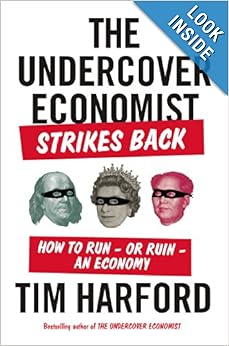 In The Undercover Economist Strikes Back, Tim Harford brings his genius for storytelling and the explanation of complex ideas to macroeconomics. Most of the popular economics books, like The Armchair Economist, Freakonomics, Predictably Irrational and Harford’s earlier book The Undercover Economist, focus on microeconomics; markets, incentives, consumer and firm choices and so forth. Strikes Back is that much rarer beast, a popular guide to understanding inflation, unemployment, growth and economic crises and it succeeds brilliantly. Mixing in wonderful stories of economists with exciting lives (yes, there have been a few!) with very clear explanations of theories and policies makes Strike Back both entertaining and enlightening.
Stuart Banner’s American Property is a book about property law, which sounds like an awfully dull topic. In the hands of Banner, however, it is a 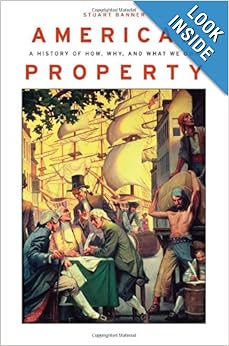 fascinating history of what we can own, how we can own it and why we can own it. Answers to these questions have changed as judges and lawmakers have grappled with new technologies and ways of life. Who owns fame? Was there a right to own one’s own image? Benjamin Franklin, whose face was used to hawk many products, would have scoffed at the idea but after the invention of photography and the onset of what would later be called the paparazzi thoughts began to change. In the early 1990s, Vanna White was awarded $403,000 because a robot pictured in a Samsung advertisement turning letters was reminiscent of her image on the Wheel of Fortune. American Property is a great read by a deep scholar who writes with flair and without jargon.
On June 3, 1980, shortly after the Soviet Union’s invasion of Afghanistan, the U.S. president’s national security adviser was woken at 2:30 am and told that Soviet submarines had launched 220 missiles at the United States. Shortly thereafter he was called again and told that 2,200 land missiles had also been  launched. Bomber crews ran to their planes and started their engines, missile crews opened their safes, the Pacific airborne command post took off to coordinate a counter-attack. Only when radar failed to reveal an imminent attack was it realized that this was a false alarm. Astoundingly, the message NORAD used to test their systems was a warning of a missile attack with only the numbers of missiles set to zero. A faulty computer chip had inserted 2’s instead of zeroes. We were nearly brought to Armageddon by a glitch. If that were the only revelation in Eric Schlosser’s frightening Command and Control it would be of vital importance but in fact that story of near disaster occupies just one page of this 632 page book. The truth is that there have been hundreds of near disasters and nuclear war glitches. Indeed, there have been so many covered-up accidents that it’s clear that the US government has come much closer to detonating a nuclear weapon and killing US civilians than the Russians ever did. Thankfully, we have reduced our stockpile of nuclear weapons in recent years but, as in so many other areas, we are also more subject to computers and their vulnerabilities as we make decisions at a faster, sometimes superhuman, pace. Command and control, Schlosser warns us, is an illusion. We are one black swan from a great disaster and if this is true about the US handling of nuclear weapons how much more fearful should we be of the nuclear weapons held by North Korea, Pakistan or India?
Shiller on Trills
In this short piece, Robert Shiller explains one of the basic ideas of his work on macro markets:
The governments of the world should issue shares in their GDPs, securities that pay to investors as dividends a specified fraction of GDP, in perpetuity (or until the government buys them back on the open market). Governments need to end their historic reliance on debt financing: governments issuing shares in GDP is analogous to corporations issuing equity. My Canadian colleague Mark Kamstra and I propose issuing trillionth shares in GDP, and so to call these “Trills.” Last year, a U.S. Trill would have paid $15.09 in dividends, a Canadian Trill C$1.72. The dividends will change every year as GDP is announced, and predicting these changes will certainly interest investors, just as in the stock market. Governments can auction off Trills when current government debt comes due and needs to be refinanced, as part of a debt reduction program.
In this piece, Shiller focuses on the benefits of Trills as opposed to debt:
Substituting Trills for conventional debt helps deleverage the government, something whose importance has become very clear with the debt crisis in Europe. The payments required of the government by the Trills is connected to the country’s ability to pay, measured by their GDP.
Trills could also be the foundation for many types of insurance products, for example, products that would pay off when GDP was down helping to alleviate business cycle issues. A market in Trills could also be used to make predictions and to judge policies (see Gurkaynak and Wolfers for an early test). Which policies will most increased the value of future trills? Similarly, by looking at how the market for trills changes as the Iowa Political Markets change we could identify which politicians are best for GDP (not just the equity and bond markets).
I featured Shiller’s work on macro markets in my book Entrepreneurial Economics: Bright Ideas from the Dismal Science. I think of this body of work as his most visionary and deserving of the Nobel.
Software Patents
Excellent column by Gordon Crovitz in the WSJ on patents and the prospects for reform:
Today’s patent mess can be traced to a miscalculation by Jimmy Carter, who thought granting more patents would help overcome economic stagnation. In 1979, his Domestic Policy Review on Industrial Innovation proposed a new Federal Circuit Court of Appeals, which Congress created in 1982. Its first judge explained: “The court was formed for one need, to recover the value of the patent system as an incentive to industry.”
The country got more patents—at what has turned out to be a huge cost. The number of patents has quadrupled, to more than 275,000 a year. But the Federal Circuit approved patents for software, which now account for most of the patents granted in the U.S.—and for most of the litigation. Patent trolls buy up vague software patents and demand legal settlements from technology companies. Instead of encouraging innovation, patent law has become a burden on entrepreneurs, especially startups without teams of patent lawyers.
…A system of property rights is flawed if no one can know what’s protected. That’s what happens when the government grants 20-year patents for vague software ideas in exchange for making the innovation public. In a recent academic paper (pdf), George Mason researchers Eli Dourado and Alex Tabarrok argued that the system of “broad and fuzzy” software patents “reduces the potency of search and defeats one of the key arguments for patents, the dissemination of information about innovation.”
…For now, the best prospect for real reform is in the Supreme Court, which earlier this month agreed to hear CLS Bank v. Alice Corp., a case about whether a bank’s computerized process for settling transactions via an escrow can be patented. A judge on the appeals court noted this idea was “literally ancient,” developed during the Roman Empire, and should not get a patent now just because a computer is involved.
I think it is too early to call CLS Bank v. Alice Corp. an obituary for software patents as The Economist does but real patent reform is stronger than I thought it would be even 6 months ago.
Addendum: Here is my 2 minute video on some of the problems with patents.
Guns, Suicides and Natural Experiments
Slate has a number of articles today on guns and violence including It’s Simple: Fewer Guns, Fewer Suicides by Justin Briggs and myself. The Slate article is based on our paper that I covered in an earlier post but here is some new material including one stunning fact that got cut from the Slate piece:
Suicide kills more people than all of the world’s armed conflicts combined.
and the results of two important natural experiments:
..our findings appear robust and are consistent with a series of “natural experiments” from around the world. For example, following the 1996 killing of 35 people in Port Arthur, Australia, a strong movement for gun control developed in Australia. States and territories made uniform and more stringent regulations for the possession of firearms, and instituted a buy-back of the newly illegal guns, most of which were rifles and shotguns. As Andrew Leigh and Christine Neill determined in a paper published in the American Law and Economics Review, these changes resulted in a reduction of the country’s firearm stock by 20 percent, or more than 650,000 firearms, and evidence suggests that it nearly halved the share of Australian households with one or more firearms. The effect of this reduction was an 80 percent fall in suicides by firearm, concentrated in regions with the biggest drop in firearms. Meanwhile there was little sign of any lasting rise in non-firearm suicides.
Suicide is a leading cause of death among adolescents and young adults, and limiting access to guns during those formative, sometimes unsteady years can have a real effect on suicides. In Israel most 18- to 21-year-olds are drafted into the Israeli Defense Forces and provided with military training—and weapons. Suicide among young IDF members is a serious problem. In an attempt to reduce suicides, the IDF tried a new policy in 2005, prohibiting most soldiers from bringing their weapons home over the weekends. Dr. Gad Lubin, the chief mental health officer for the IDF, and his co-authors estimate that this simple change reduced the total suicide rate among young IDF members by a stunning 40 percent. It’s worth noting that even though you might think that soldiers home for the weekend could easily delay suicide by a day or two, the authors did not find an increase in suicide rates during the weekdays. These results are consistent with interviews with near-fatal suicide survivors, who often say their decision was spontaneous and who typically go on to live long lives.
Our Slate article also includes a cost-benefit calculation that will probably upset many people.
Addendum: By popular demand Elsevier has given us a link to our research article, Firearms and Suicides in US states (pdf), that should work for everyone until late January.
The Media Doesn’t Talk About Suicide
Slate has been collecting media reports on gun deaths since Newton. What they found was a big discrepancy between the gun deaths reported in the media and the actual gun deaths as counted by the CDC. Chris Kirk explains:
The CDC counts about 32,000 people killed with guns each year, while Slate’s database only has one-third of that. Why the huge discrepancy?
Earlier this month Slate launched an effort to categorize the gun deaths in our system. That effort verified the source of the discrepancy: suicides. We’ve missed nearly all gun-related suicides, because our information is based on media reports, and the media typically avoid reporting on suicides.
The Media’s Picture of Gun Violence (suicides in red)

The CDC’s Picture of Gun Violence (suicides in red)

Justin Briggs and I also have an article in Slate on suicides and guns. I’ll cover that in another post.
Central Planning for Parking
Central planning is everywhere discredited except for central planning of parking places in American cities. Here from an excellent post is Matt Yglesias.
Are members of the Rockville, Maryland Town Council experts in real estate development? In parking management? Are they putting their own money on the line in the success or failure of projects in the center of their town? Of course not! Nonetheless:
Mayor Bridget Donnell Newton said she attended the Christmas tree lighting recently and was unable to find a parking space in Town Center. Councilman Tom Moore said he would like to get a briefing on Town Center parking from city staff before making a decision.
And:
Councilwoman Virginia Onley said the proposed parking reduction was her biggest concern with Duball’s plan. In Petworth, she said, some apartment residents have a Safeway downstairs. In Rockville, Town Center residents have to get in their cars to go to Safeway.
Suppose other kind of business decisions were made this way. Maybe someone wants to open a burger joint in Rockville, but he doesn’t want to serve milkshakes. One councilman says the last time he wanted to get a milkshake there was a very long line, so obviously the new burger place must serve milkshakes. Another councilman protests that he doesn’t even like burgers. Aren’t more people vegetarians these days?
Market forces aren’t good at everything. But striking a balance between the demand for some service (parking) and the cost (including opportunity costs) of providing it, is exactly what market forces are good at. And yet somehow when it comes to parking spaces no politician in America is radical enough to suggest that the solution is to build as much parking as people want to pay for.
Assorted Thoughts on the Market for New Econ PhDs
Here’s the good news. There were 1,243 new econ PhDs in 2012 and the AEA has 2,790 job listings. Compared to other fields where quantity supplied far outstrips quantity demanded, econ is doing very well.
Why are there fewer PhDs than jobs? One factor may be that women are underrepresented in economics. Women earn 34% of the PhDs in economics which is below the 46% of doctoral degrees earned by women overall. (On the other hand, economics is more gender-balanced than psychology where 72 percent of all degrees are earned by women). If women earned more degrees in economics would total degrees increase? Perhaps, although that hasn’t happened in medicine where the cartel has limited total physician supply.
What about the bad news? The number of new jobs for econ PhDs fell by 4.3%. The fall was especially pronounced in academia where the number of new jobs fell by 6.6%. New jobs tumbled in 2008 and since that time there has been some recovery but no catch-up. Are we seeing the transition to a new equilibrium?
On the university side, Clay Christensen’s prediction that half of all universities may go bankrupt in the next 15 years is not yet showing up in the data. Should I file that under good news or bad news?
Not From the Onion-NROL 39
The National Reconnaissance Office (NRO) launched a new spy-satellite, NROL-39, on Dec. 5. When I first saw this I felt sure it couldn’t be real, it must be from The Onion but no, this is the official logo for the satellite which you can see on the rocket and in this NRO press release.

When the history of how the United States became a dystopian, surveillance state is written no one will be able to say that we were not warned.
Nelson Mandela, 1918-2013
Invictus
By WILLIAM ERNEST HENLEY
Out of the night that covers me,
Black as the pit from pole to pole,I thank whatever gods may beFor my unconquerable soul.
In the fell clutch of circumstanceI have not winced nor cried aloud.Under the bludgeonings of chanceMy head is bloody, but unbowed.
Beyond this place of wrath and tearsLooms but the Horror of the shade,And yet the menace of the yearsFinds and shall find me unafraid.
It matters not how strait the gate,How charged with punishments the scroll,I am the master of my fate,I am the captain of my soul.
The Betrayers Banquet
Here is something for you to try out tomorrow with the family, well some families. The Betrayers’ Banquet is a dinner party/event that ingeniously combines the iterated prisoner’s dilemma with good food, bad food and entertainment. Here is their description:

The event works as follows:
A banqueting table is set with 48 chairs, 24 on each side, at which players are seated at random. For a period of two hours, the food is served in small portions every fifteen minutes, and varies in quality; at the top end of the table, it is exquisite – food you could expect at a fancy restaurant. At the bottom end, the food is charitably described as unpalatable. In between, it is a spectrum between these two extremes.
At regular intervals, pairs of opposing diners are invited to play a round of the prisoner’s dilemma with each other; They are each provided with a small wooden coin with symbols on each side representing cooperation and betrayal, which they place on the table concealed under their palms, and then simultaneously reveal:
- If they both cooperate, then they are both moved up five seats towards the good food.
- If they both betray, they are both moved five seats down towards the worse food.
- If one betrays and one cooperates, the betrayer moves up ten seats, and other down ten seats.
The event is presented as an initiation ritual of a freemason–esque secret society; service is run by servers in hooded robes and the game is arbitrated by a dour, unsympathetic master of ceremony, who punctuate the courses with grave speeches describing the discovery of the game in the court of Charlemagne in the eighth century.
From the participant’s point of view, aside from getting to play a game and try a variety of different foods, the main attraction is that they get to move around the table and talk to a variety of people throughout dinner. The iterated prisoner’s dilemma is famous for creating very complex social dynamics, which keeps conversation lively and generates a high eagerness to continue playing.
Our DNA, Our Selves
At the same time that the NSA is secretly and illegally obtaining information about Americans the FDA is making it illegal for Americans to obtain information about themselves.
In a warning letter the FDA has told Anne Wojcicki, The Most Daring CEO In America, that she “must immediately discontinue” selling 23andMe’s Personal Genome Service, more affectionately known as the spit kit.
As I wrote when this issue first surfaced in 2010:
The ability of genetic tests to predict diseases is currently limited; if the FDA were simply to require firms to acknowledge this point, say with a clear statement of probabilities, that would be one thing (although this task is better met by the FTC under advertising regulation). But the FDA is brazenly overreaching in trying to regulate genetic tests as medical devices. First, there is no question that these tests are safe–safer than brushing your teeth!–and also effective in identifying genetic markers. Thus,
there is no medical reason whatsoever for regulation.
Moreover, genetic tests provide information, personal information about our bodies and our selves. The FDA has no standing to interfere with the provision of such information.
Consider, I swab the inside of my cheek and send the sample to a firm. The idea that the FDA can rule on what the firm can and cannot tell me about my own genes is absurd–it’s no different than the FDA trying to regulate what my doctor can tell me after a physical examination or what my optometrist can tell me after an eye examination (Please read the first line. “G T A C C A…”).
The idea that the FDA can regulate and control what individuals may learn about their own bodies is deeply offensive and, in my view, plainly unconstitutional.
Let me be clear, I am not offended by all regulation of genetic tests. Indeed, genetic tests are already regulated. To be precise, the labs that perform genetic tests are regulated by the Clinical Laboratory Improvement Amendments (CLIA) as overseen by the CMS (here is an excellent primer). The CLIA requires all labs, including the labs used by 23andMe, to be inspected for quality control, record keeping and the qualifications of their personnel. The goal is to ensure that the tests are accurate, reliable, timely, confidential and not risky to patients. I am not offended when the goal of regulation is to help consumers buy the product that they have contracted to buy.
What the FDA wants to do is categorically different. The FDA wants to regulate genetic tests as a high-risk medical device that cannot be sold until and unless the FDA permits it be sold.
Moreover, the FDA wants to judge not the analytic validity of the tests, whether the tests accurately read the genetic code as the firms promise (already regulated under the CLIA) but the clinical validity, whether particular identified alleles are causal for conditions or disease. The latter requirement is the death-knell for the products because of the expense and time it takes to prove specific genes are causal for diseases. Moreover, it means that firms like 23andMe will not be able to tell consumers about their own DNA but instead will only be allowed to offer a peek at the sections of code that the FDA has deemed it ok for consumers to see.
Alternatively, firms may be allowed to sequence a consumer’s genetic code and even report it to them but they will not be allowed to tell consumers what the letters mean. Here is why I think the FDA’s actions are unconstitutional. Reading an individual’s code is safe and effective. Interpreting the code and communicating opinions about it may or may not be safe–just like all communication–but it falls squarely under the First Amendment.
The FDA also has the relationship between testing and clinical validity ass-backward. The FDA wants to say no to testing until clinical validity is established but we are never going to discover clinical validity until we have mass testing. 23andMe is attempting to leverage individuals thirst for knowledge about themselves into a big data project that will discover entirely new connections between genotype and phenotype. But personalized medicine, just like personalized movie recommendations, only works with databases of millions. In the 20th century we took on many of our common diseases but it is now time to take on the uncommon diseases. There are some 7,000 known diseases and only about 500 have a treatment. Individual and disease heterogeneity is so large that even the diseases that we can treat are often not treated well. New approaches are necessary for progress. The collection of large amounts of DNA data is not the last step of personalized medicine but the first and by pushing back against the first steps the FDA is delaying the promise and progress of personalized medicine.
Full Disclosure: The FDA’s threat to regulate genetic tests in 2010 made me spitting mad so I put that spit to good use and became a 23andMe customer. Well worth it, if only to point out to my wife that contrary to all evidence I am in fact only 2.2% Neanderthal.
Noah Webster Defines Rent Seeking
My latest paper, Public Choice and Bloomington School Perspectives on Intellectual Property (pdf) written with Eli Dourado), gives capsule summaries of the Virginia school of public choice and the Ostrom’s Bloomington School and then applies some of these ideas to the political economy of intellectual property. Here is one bit on the early history of the copyright law illustrating that Disney’s rewriting of the copyright law to extend its rents is nothing new, rent seekers began to expand on the Constitutional clause almost from the day the ink was dry:
Almost immediately after the first session of Congress, writers began to petition Congress for protection for their works. The Copyright Act of 1790 was meant to fill in the administrative details of how copyright law would work. Importantly, the first draft of the new law appears to have been written not by a member of Congress, but by Noah Webster (Patry 1994)! Webster, cousin to Senator Daniel Webster, was the author of numerous textbooks and, of course, the famous dictionary that still bears his name. His draft of the copyright act, which was not adopted in full, would have extended copyright not just to authors, but also to booksellers and printers. As it was, the 1790 law covered not only books but also maps and charts (a rather broad reading of the Constitution’s writings). Webster was also instrumental in getting the 1831 act passed. The 1831 act doubled protections from 14 to 28 years. Writing to Eliza W. Jones, Webster noted,
[My] business in part was to use my influence to procure an extension of the law for securing copy-rights to authors. . . . By this bill the term of copy-right is secured for 28 years, with the right of renewal . . . for 14 years more. If this should become law, I shall be much benefited.
Webster to Eliza W. Jones, January 10, 1831.