Category: History
My favorite things Nebraska
If it is the most obscure state, I thought it worth a ponder and profile of what they have produced. And the answers are surprisingly strong:
1. Author: I’ll take Willa Cather over Raymond Chandler, but neither puts the state to shame. I don’t care for Nicholas Sparks’s writings, but he makes the list. Malcolm X wrote one of the great memoirs of American history.
2. Actors and actresses: There is Brando, Harold Lloyd, Hilary Swank, Henry Fonda, Montgomery Clift, and James Coburn. What a strong category.
3. Dancer and singer: Fred Astaire, try this from Swing Time. For his underrated singing, try “Cheek to Cheek.”
4. Music: I can think only of Elliott Smith, am I missing anything?
5. TV personalities: Johnny Carson and Dick Cavett. Did you know that Carson learned Swahili on-line after his retirement and became fluent in the language?
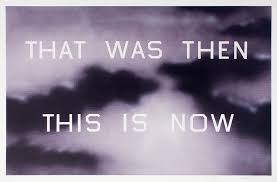
6. Painter: Edward Ruscha.
7. Album, set in: Bruce Springsteen’s Nebraska, favorite song “Open All Night.”
8. Movie, set in: Election. I feel there are others too, Nebraska for one but presumably a fair number of Westerns too.
9. Investor: Duh.
10. Economist: Lawrence Klein was born in Omaha, although I cannot say his is my favored approach. How about Edith Abbott?
11. Other: I cannot count L. Ron Hubbard as a positive. I believe I have neglected some native Americans born in Nebraska, maybe some cowboys too. I don’t have favorite cowboys.
The bottom line: People, this state should not be so obscure!
Which is the most obscure Chinese province?
This is one of my favorite links of the year so far, namely how every Chinese province got its name. I cannot recommend it to most of you however, but if you ever have worried about Shanxi vs. Shaanxi, this is the place to go:
Shaanxi is unique amongst Chinese provinces in being the only one whose name is rendered not in Hanyu Pinyin but in Gwoyeu Romatzyh (GR), the romanization system used in pre-Communist China. Instead of using accents above letters as in Pinyin, tones in GR were reflected in spelling. In Pinyin, which was invented in 1958, the provinces Shanxi and Shaanxi are indistinguishable in spelling, so the old romanization was retained to remove this ambiguity. However, authorities still tacked on the Pinyin “xi” instead of the GR “shi” to spell out the second character, making Shaanxi’s name even more unusual by combining two entirely different romanization systems within a single name.
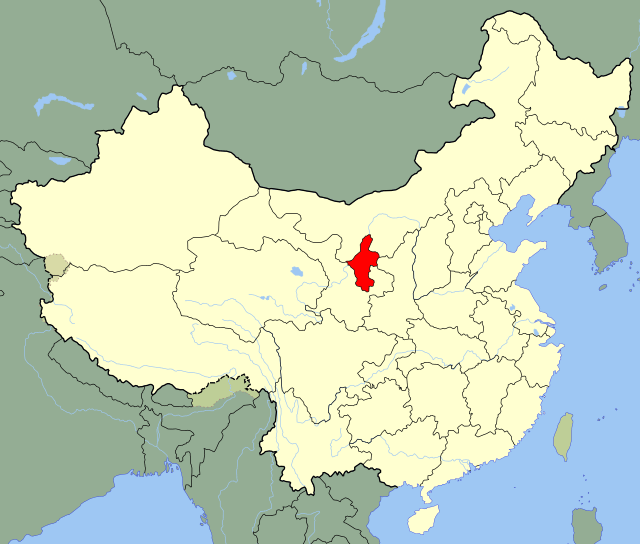
I say the most obscure Chinese province is the very small Ningxia 寧夏, outlined in red below, what do you think? Or does it count only as an autonomous region? Is Gansu perhaps a runner up?
Which is the most obscure American state to an outsider? Nebraska? Idaho? Somewhere else? (I say it helps the Dakotas that you have two of them.) I believe the Clintons put Arkansas on the map, globally speaking that is, thereby removing it from contention for this honor.
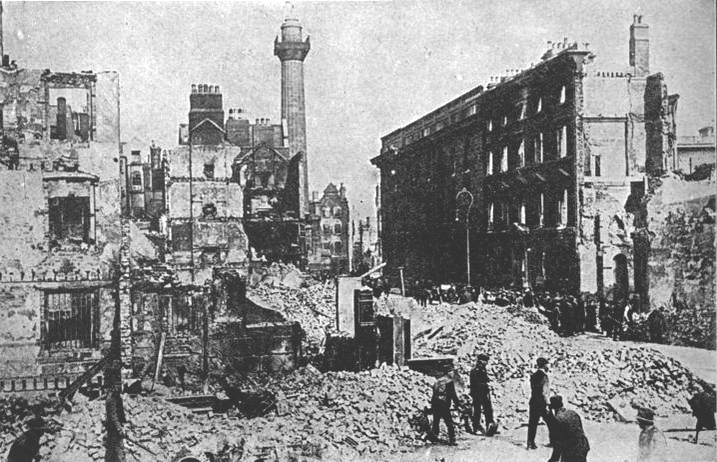
The one hundredth anniversary of the Irish Easter 1916 uprising
Maria Farrell writes:
The events that precisely triggered the Easter Rising are a little murky. They involve the capture of Roger Casement’s arms shipment, and feature the great hero of the Rising, Padraig Pearse, lying to MacNeill, forging documents and kidnapping and holding his socialist rivals until they acquiesced. Whether the leaders were about to be rounded up and imprisoned is unclear. MacNeill believed it, until he didn’t, but by then it was too late.
How many of you (non-Irish that is, Irish try this) are emotionally stirred by that description, one way or the other? How many of you recall reading about those events at all?
What I find most striking is how little I, as an Irish-American, emotionally identify with any of the sides in this conflict. I recall being asked in New Jersey seventh grade, by another Irish-American, whether my family was Protestant or Catholic in background and I wasn’t even sure (Catholic, it turned out, though my paternal grandparents also had been non-believers).
I was born in Kearny, New Jersey, a working class town full of Irish and Scot atavisms, including bars where they raised money for the IRA, fish and chips, and good soccer teams. My father was more interested in Barry Goldwater, and by the time we moved to the more suburban northern rim of the state all that old country history was forgotten.
On the other side of the water, Ireland is one of the few countries to break through the middle-income trap, and last year it grew at 7.8%, an increasingly embarrassing fact for many “the long run is forever” commentators, not to mention investment up more than 28%.
(Yes, there is fairly rapid post-austerity catch-up growth when institutions are even moderately healthy, and if you are not seeing such growth the economy is probably at its new frontier or structural reforms are required. And to point out that households are not capturing all of those gains — gdp vs. gnp — is to save the pessimistic mood at the expense of the theory. Without a Russian collapse, the Baltics probably would have continued along a similar track.)
Brexit of course would hit both Ireland and Northern Ireland fairly hard; it is strange how the Republic of Ireland has turned out to be the stable political unit in the family.
Here is a BBC piece on how to commemorate 1916. The embarrassing parallel is that the modern IRA cites the 1916 heroes and considers their more recent terror acts to hold comparable status. Somehow the balls must be juggled to avoid this conclusion, especially since there has been a recent uptick in unrest in Northern Ireland.
Various “victim monger” commentators don’t radiate too much sympathy for the Northern Irish republican cause. Is it because the stereotypical representation of the fighters is a little too male, a little too grizzled, too conservative, too white Christian, too chauvinistic, and maybe even too mumbly? I have to listen so closely to those movies to understand at all, and in the end they still bore me. John Lennon’s John Sinclair song never seemed to stick. Yeats too tried his best.
I am struck by how underrepresented this topic is in my Twitter feed.
*Dante: The Story of His Life*
…Dante’s fame as a necromancer is also in a certain sense documented.
Such notoriety shouldn’t be surprising. For one thing, he had a reputation as an expert in astrology, and we know that this discipline could easily spill over into magical and necromantic practices. And then, above all, he was famous after the publication of Inferno for having descended live into the realms of the afterlife and for having encountered devils there, the souls of the damned, and having spoken to them. It must have been a rumor widely spread and also disturbing. It seems, according to Boccaccio, that the women who used to pass him in the street would say to each other: Look, “he who goes into Hell, and returns whenever he likes, and brings back news of those who are down there…”
That is from the new Dante biography by Marco Santagata, Belknap Press at Harvard, definitely recommended, it will make my best non-fiction of the year list for sure.
My favorite things Belgian
No, I am not there but think of this as an act of homage from a distance. Here goes:
1. Novelist: There is Simenon, Yourcenar, and Amelie Nothomb. I like them all but do not love them. Can I pick Julio Cortázar, who was born in Belgium even if he did not come of age there and essentially was Argentinian? As for a fictional character, how about Hercule Poirot?
2. Playwright: Maurice Maeterlinck, read especially Blue Bird.
3. Composer: César Franck is the obvious modern pick. There is also Henri Pousseur, and a variety of Renaissance composers, including Heinrich Isaac, Guillaume Dufay, Johannes Ockeghem, and Josquin des Prez. I’ll pick the violin works of Eugène Ysaÿe, as the Renaissance music is arguably more Burgundian or “Franco-Flemish” than culturally Belgian as it relates to the modern nation.
4. Jazz musician: Django Reinhardt, that one is easy, try this cut. Toots Thielmans, the jazz harmonica player, is perhaps runner up.
5. Economist: Jacques H. Drèze and Robert Triffin would be the obvious picks. A dark horse choice would be Jean Drèze, son of Jacques, for his obsessive data work in India. He still awaits a much-deserved major profile. Gustav de Molinari, who first wrote about private protection agencies and arguably was the first modern libertarian anarchist.
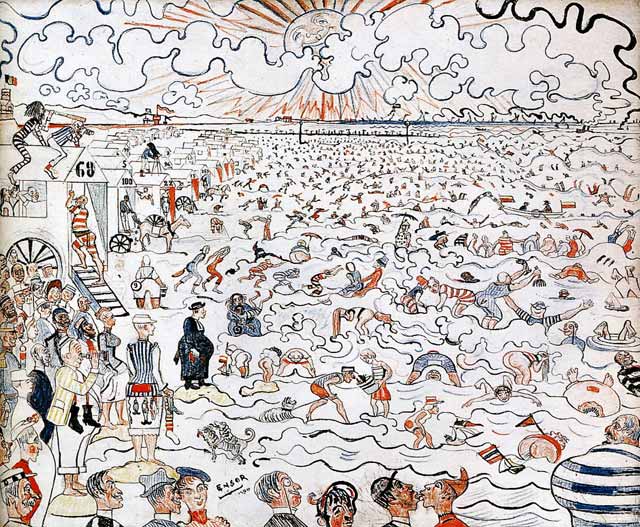
6. Painter: This has to be the strong suit. Magritte is an obvious choice, but there is also Gerard David, Hans Memling, Peter Paul Rubens, Anthony van Dyck, Adriaen Brouwer, Luc Tuymans, Jacob Jordaens, Paul Delvaux, Petrus Christus, Robert Campin, and Pierre Alechinsky, among others. Jan van Eyck is one of the greater painters ever, but for sheer Belgianness I will opt for James Ensor, see the image below.
7. Sculpture: Marcel Broodthaers. Right now there is a nice retrospective of his work on at MOMA.
7. Historian: Henri Pirenne, way ahead of his time.
9. NBA point guard: Tony Parker was born there, to American and Dutch parents, that counts for something.
10. Anthropologist: Claude Levi-Strauss. Tristes Tropiques remains a beautiful book to be read by all.
11. Movie: I cannot think of one I really like, can you help? And I can’t easily digest the works of Chantal Akerman.
11b. Movie, set in: In Bruges, a fun dark comedy.
12. Violinist: Arthur Grumiaux, but with competition from Sigiswald Kuijken.
The bottom line: Once you get into the period where Belgium is a modern nation, it’s all so wonderfully offbeat.
Early opposition to the jump shot
But in March 1963, a month before his final game for the Celtics, [Bob] Cousy complained to the Associated Press, “I think the jump shot is the worst thing that has happened to basketball in ten years.” Cousy’s objections? “Any time you can do something on the ground, it’s better,” he said, sounding very much like a coach who would have enjoyed benching Kenny Sailors or Bud Palmer. “Once you leave the ground, you’ve committed yourself.” Jump shot critics discouraged players from flying into the air because they feared the indecision that came when someone left their feet. They feared the bad passes from players who jumped with no clear plan of what they’d do in the air. Staying grounded meant fewer mistakes. It was simply a safer way to play the game, if not as exciting.
That is from Shawn Fury’s new and fun Rise and Fire: The Origins, Science, and Evolution of the Jump Shot — and How it Transformed Basketball Forever. Keep this in mind the next time you hear someone criticize Stephen Curry for taking (and making) so many three point shots. This is what I call “@pmarca bait.”
How both sides can believe they are losing
If you read narratives of recent history from the perspective of the left and the right, each side believes it is losing. One could dismiss this as marketing strategy. If our side is winning, then why is it urgent to read my book or donate to my organization?
But I think it is possible for the each side to sincerely believe it is losing.
The left presumes that government can solve problems. We have problems. Therefore, we must be losing!
The right presumes that the government causes problems. We have problems. Therefore, we must be losing!
That is from Arnold Kling.
*Empire of Things*
The author is Frank Trentmann and the very apt subtitle is How We Became a World of Consumers, from the Fifteenth Century to the Twenty-First. I have only browsed this, but it appears both readable and well informed. It is a “big book” with 690 pp. of core text, bringing together many ideas from history and the social sciences yet in narrative form.
What should I ask Camille Paglia?
I’ll be doing a Conversations with Tyler with her, Tuesday, April 12. What should I ask her?
How does GPS change our perceptions?
Disorientation is always stressful, and before modern civilization, it was often a death sentence. Sometimes it still is. But recent studies have shown that people who use GPS, when given a pen and paper, draw less-precise maps of the areas they travel through and remember fewer details about the landmarks they pass; paradoxically, this seems to be because they make fewer mistakes getting to where they’re going. Being lost — assuming, of course, that you are eventually found — has one obvious benefit: the chance to learn about the wider world and reframe your perspective. From that standpoint, the greatest threat posed by GPS might be that we never do not know exactly where we are.
That is from a long and very interesting Kim Tingley NYT piece on the former navigation secrets of the Marshall Islanders. Here is one bit on how it works:
The Marshalls provide a crucible for navigation: 70 square miles of land, total, comprising five islands and 29 atolls, rings of coral islets that grew up around the rims of underwater volcanoes millions of years ago and now encircle gentle lagoons. These green dots and doughnuts make up two parallel north-south chains, separated from their nearest neighbors by a hundred miles on average. Swells generated by distant storms near Alaska, Antarctica, California and Indonesia travel thousands of miles to these low-lying spits of sand. When they hit, part of their energy is reflected back out to sea in arcs, like sound waves emanating from a speaker; another part curls around the atoll or island and creates a confused chop in its lee. Wave-piloting is the art of reading — by feel and by sight — these and other patterns. Detecting the minute differences in what, to an untutored eye, looks no more meaningful than a washing-machine cycle allows a ri-meto, a person of the sea in Marshallese, to determine where the nearest solid ground is — and how far off it lies — long before it is visible.
Recommended.
Hayek and Freud, *The Viennese Students of Civilization*
Erwin Dekker’s The Viennese Students of Civilization: The Meaning and Context of Austrian Economics Reconsidered is an original and interesting look at the foundations of the Austrian School of Economics, properly situating it in the context of its time. Here is one bit:
In the “Civilization and its Discontents” — as Rosten attempts to point out to Hayek — Freud argues that civilization means constraining ourselves. Freud argues that morality works through a sense of guilt, and that restraint and hence civilization is created and upheld by this sense of guilt. As civilization progresses, this sense of guilt has to be intensified or heightened. This is in line with Hayek’s ideas, as we will see later, but Hayek refuses to acknowledge this.
Dekker also discusses the relevance of Nietzsche, Hermann Broch, and Peter Drucker for the Austrian school, and goes beyond the usual hagiography.
What predicts (causes?) party realignments?
Richard L. McCormick discusses this question in his The Party Period and Public Policy (the quoted chapter is reproduced in jstor):
After coding and analyzing the contents of party platforms and federal statutes, Benjamin Ginsberg conclude that realigning eras were marked by high degrees of ideological difference between the parties and by significant transitions in national policy. David W. Brady and several coworkers marshaled evidence of heightened party voting in Congress and of the adoption of “clusters of policy changes” following the realignments of the 1890s and the New Deal era.
The simple-minded amongst us might be tempted to conclude we are likely in a realignment period right now, as argued very recently by David Frum. It should be noted that McCormick criticizes these theories for their simplicity in some regards, and their rather casual aggregation of different time periods.
Here is the Ginsberg piece from jstor. Here is one of the cited Brady pieces, again jstor.
Where is Germany headed?


European place names with the word “saint” in them

No, they didn’t forget to fill in the map for Scandinavia, those are the actual metrics. Source here.
Why did the Whig Party collapse?
The Whigs were also badly hurt by the short-lived Native American or Know-Nothing party, which was primarily anti-immigrant and anti-Catholic.
That is just part of the answer of course. Here is another account, again too simplistic:
- For a brief time, many Americans supported the nativist Know-Nothing Party, concerned that the Know-Nothings might represent the only truly national party possible, largely united by a general fear of Catholic immigrants.
- But in the end, the issue over slavery proved stronger than fears over non-protestant immigrants, and southerners lined up behind the Democratic party and northerners behind the Republican party.
- Sectional party systems replaced a national party.
This seems to be the definitive detailed account. Try this book too. Most of the time, however, parties do not collapse but rather party members fall in line, fearing the costs of the alternatives, including the costs to their careers.
Here is my previous post Why did the Federalist Party collapse?