Nelson Mandela, 1918-2013
Invictus
By WILLIAM ERNEST HENLEY
Out of the night that covers me,
Black as the pit from pole to pole,I thank whatever gods may beFor my unconquerable soul.
In the fell clutch of circumstanceI have not winced nor cried aloud.Under the bludgeonings of chanceMy head is bloody, but unbowed.
Beyond this place of wrath and tearsLooms but the Horror of the shade,And yet the menace of the yearsFinds and shall find me unafraid.
It matters not how strait the gate,How charged with punishments the scroll,I am the master of my fate,I am the captain of my soul.
The Betrayers Banquet
Here is something for you to try out tomorrow with the family, well some families. The Betrayers’ Banquet is a dinner party/event that ingeniously combines the iterated prisoner’s dilemma with good food, bad food and entertainment. Here is their description:

The event works as follows:
A banqueting table is set with 48 chairs, 24 on each side, at which players are seated at random. For a period of two hours, the food is served in small portions every fifteen minutes, and varies in quality; at the top end of the table, it is exquisite – food you could expect at a fancy restaurant. At the bottom end, the food is charitably described as unpalatable. In between, it is a spectrum between these two extremes.
At regular intervals, pairs of opposing diners are invited to play a round of the prisoner’s dilemma with each other; They are each provided with a small wooden coin with symbols on each side representing cooperation and betrayal, which they place on the table concealed under their palms, and then simultaneously reveal:
- If they both cooperate, then they are both moved up five seats towards the good food.
- If they both betray, they are both moved five seats down towards the worse food.
- If one betrays and one cooperates, the betrayer moves up ten seats, and other down ten seats.
The event is presented as an initiation ritual of a freemason–esque secret society; service is run by servers in hooded robes and the game is arbitrated by a dour, unsympathetic master of ceremony, who punctuate the courses with grave speeches describing the discovery of the game in the court of Charlemagne in the eighth century.
From the participant’s point of view, aside from getting to play a game and try a variety of different foods, the main attraction is that they get to move around the table and talk to a variety of people throughout dinner. The iterated prisoner’s dilemma is famous for creating very complex social dynamics, which keeps conversation lively and generates a high eagerness to continue playing.
Our DNA, Our Selves
At the same time that the NSA is secretly and illegally obtaining information about Americans the FDA is making it illegal for Americans to obtain information about themselves.
In a warning letter the FDA has told Anne Wojcicki, The Most Daring CEO In America, that she “must immediately discontinue” selling 23andMe’s Personal Genome Service, more affectionately known as the spit kit.
As I wrote when this issue first surfaced in 2010:
The ability of genetic tests to predict diseases is currently limited; if the FDA were simply to require firms to acknowledge this point, say with a clear statement of probabilities, that would be one thing (although this task is better met by the FTC under advertising regulation). But the FDA is brazenly overreaching in trying to regulate genetic tests as medical devices. First, there is no question that these tests are safe–safer than brushing your teeth!–and also effective in identifying genetic markers. Thus,
there is no medical reason whatsoever for regulation.
Moreover, genetic tests provide information, personal information about our bodies and our selves. The FDA has no standing to interfere with the provision of such information.
Consider, I swab the inside of my cheek and send the sample to a firm. The idea that the FDA can rule on what the firm can and cannot tell me about my own genes is absurd–it’s no different than the FDA trying to regulate what my doctor can tell me after a physical examination or what my optometrist can tell me after an eye examination (Please read the first line. “G T A C C A…”).
The idea that the FDA can regulate and control what individuals may learn about their own bodies is deeply offensive and, in my view, plainly unconstitutional.
Let me be clear, I am not offended by all regulation of genetic tests. Indeed, genetic tests are already regulated. To be precise, the labs that perform genetic tests are regulated by the Clinical Laboratory Improvement Amendments (CLIA) as overseen by the CMS (here is an excellent primer). The CLIA requires all labs, including the labs used by 23andMe, to be inspected for quality control, record keeping and the qualifications of their personnel. The goal is to ensure that the tests are accurate, reliable, timely, confidential and not risky to patients. I am not offended when the goal of regulation is to help consumers buy the product that they have contracted to buy.
What the FDA wants to do is categorically different. The FDA wants to regulate genetic tests as a high-risk medical device that cannot be sold until and unless the FDA permits it be sold.
Moreover, the FDA wants to judge not the analytic validity of the tests, whether the tests accurately read the genetic code as the firms promise (already regulated under the CLIA) but the clinical validity, whether particular identified alleles are causal for conditions or disease. The latter requirement is the death-knell for the products because of the expense and time it takes to prove specific genes are causal for diseases. Moreover, it means that firms like 23andMe will not be able to tell consumers about their own DNA but instead will only be allowed to offer a peek at the sections of code that the FDA has deemed it ok for consumers to see.
Alternatively, firms may be allowed to sequence a consumer’s genetic code and even report it to them but they will not be allowed to tell consumers what the letters mean. Here is why I think the FDA’s actions are unconstitutional. Reading an individual’s code is safe and effective. Interpreting the code and communicating opinions about it may or may not be safe–just like all communication–but it falls squarely under the First Amendment.
The FDA also has the relationship between testing and clinical validity ass-backward. The FDA wants to say no to testing until clinical validity is established but we are never going to discover clinical validity until we have mass testing. 23andMe is attempting to leverage individuals thirst for knowledge about themselves into a big data project that will discover entirely new connections between genotype and phenotype. But personalized medicine, just like personalized movie recommendations, only works with databases of millions. In the 20th century we took on many of our common diseases but it is now time to take on the uncommon diseases. There are some 7,000 known diseases and only about 500 have a treatment. Individual and disease heterogeneity is so large that even the diseases that we can treat are often not treated well. New approaches are necessary for progress. The collection of large amounts of DNA data is not the last step of personalized medicine but the first and by pushing back against the first steps the FDA is delaying the promise and progress of personalized medicine.
Full Disclosure: The FDA’s threat to regulate genetic tests in 2010 made me spitting mad so I put that spit to good use and became a 23andMe customer. Well worth it, if only to point out to my wife that contrary to all evidence I am in fact only 2.2% Neanderthal.
Noah Webster Defines Rent Seeking
My latest paper, Public Choice and Bloomington School Perspectives on Intellectual Property (pdf) written with Eli Dourado), gives capsule summaries of the Virginia school of public choice and the Ostrom’s Bloomington School and then applies some of these ideas to the political economy of intellectual property. Here is one bit on the early history of the copyright law illustrating that Disney’s rewriting of the copyright law to extend its rents is nothing new, rent seekers began to expand on the Constitutional clause almost from the day the ink was dry:
Almost immediately after the first session of Congress, writers began to petition Congress for protection for their works. The Copyright Act of 1790 was meant to fill in the administrative details of how copyright law would work. Importantly, the first draft of the new law appears to have been written not by a member of Congress, but by Noah Webster (Patry 1994)! Webster, cousin to Senator Daniel Webster, was the author of numerous textbooks and, of course, the famous dictionary that still bears his name. His draft of the copyright act, which was not adopted in full, would have extended copyright not just to authors, but also to booksellers and printers. As it was, the 1790 law covered not only books but also maps and charts (a rather broad reading of the Constitution’s writings). Webster was also instrumental in getting the 1831 act passed. The 1831 act doubled protections from 14 to 28 years. Writing to Eliza W. Jones, Webster noted,
[My] business in part was to use my influence to procure an extension of the law for securing copy-rights to authors. . . . By this bill the term of copy-right is secured for 28 years, with the right of renewal . . . for 14 years more. If this should become law, I shall be much benefited.
Webster to Eliza W. Jones, January 10, 1831.
Cosmos and Taxis
Cosmos and Taxis: Studies in Emergent Order and Organization is a new journal that looks to be of interest. The editor, David Emanuel Andersson, writes in the introduction:
It is our belief that Hayek and Polanyi’s contributions constitute the foundation for a new research program in the social sciences. Spontaneous-order theory has the potential for clearing up a great deal of confusion about the workings of market, democracies and the global scientific community….But spontaneous orders are only a subset of a wider class of emergent orders. As diZerega explains, emergent orders are unplanned and exhibit orderly development trajectories, but only some of them are spontaneous orders in the sense of providing easily interpreted feedback to order participants. Examples of emergent orders that are not spontaneous in the sense of Hayek or Polanyi are civil society, the ecosystem, and human cultures. Thus emergent orders in this more general sense are relevant not only to [economics, political science and the philosophy of science] but also to sociology and biology. It is our intent that Cosmos+Taxis will become an arena for multidisciplinary conversations that engage scholars across all five disciplines.
The first issue can be found here (pdf) and it contains the following pieces:
- Introduction – David Emanuel Andersson
- Outlining a New Paradigm – Gus diZerega
- Spontaneous Orders and the Emergence of Economically Powerful Cities – Johanna Palmberg
- Rules of Spontaneous Order – Jason Potts
- Computable Cosmos – Eric M. Scheffel
- Comments on Palmberg, Potts, and Scheffel – Gus diZerega
The FDA and International Reciprocity
Bacterial meningitis causes swelling of the membranes covering the brain and spinal cord. In the United States the disease kills approximately 500 people a year, often within days of infection. Survivors can have permanent disabilities including paralysis and mental disabilities. Since March seven cases of the type B strain have been diagnosed at Princeton University, with one case just last week. A vaccine exists and is available in Europe and Australia but the FDA has not permitted the type B vaccine for use in the United States.
The Centers for Disease Control and Prevention, however, has lobbied the FDA and they have now received special and unusual permission to import the type B vaccine. Following the CDCs recommendation, Princeton University has agreed to administer and pay for the vaccine for any student that wants it.
It’s good that the FDA has lifted the ban on the type B vaccine but why should Americans have to wait for the FDA? Americans living in Europe or Australia can be prescribed the vaccine so why not here? I believe that Americans should have the right to be prescribed any drug that has been approved in Europe, Australia, Canada, Japan or other developed nation.
Indeed, as Dan Klein and I wrote at FDAReview.org, international reciprocity of drug approvals is simple common sense:
If the United States and, say, Great Britain had drug-approval reciprocity, then drugs approved in Britain would gain immediate approval in the United States, and drugs approved in the United States would gain immediate approval in Great Britain. Some countries such as Australia and New Zealand already take into account U.S. approvals when making their own approval decisions. The U.S. government should establish reciprocity with countries that have a proven record of approving safe drugs—including most west European countries, Canada, Japan, and Australia. Such an arrangement would reduce delay and eliminate duplication and wasted resources. By relieving itself of having to review drugs already approved in partner countries, the FDA could review and investigate NDAs more quickly and thoroughly.
As has now become clear, international reciprocity is not just about choice it can also save lives.
Wise Crowds Tell No Lies
One of the benefits of tapping the wisdom of the crowds is that the market doesn’t lie*. Not even white lies, as Lars Christensen found to his chagrin when he recently gave a talk to investment advisors in the Danske Bank group:
As I was about to start my presentation somebody said “The audience have been kind of quiet today”. I thought that was a challenge so I immediately jumped on top of a table. That woke up the crowd.
I ask the audience to guess my weight. They all wrote their guesses on a piece of paper. All the guesses was collected and an average guess – the “consensus forecast” – was calculated, while I continued my presentation.
I started my presentation and I naturally started telling why all of my forecasts would be useless – or at least that they should not expect that I would be able to beat the market. I of course wanted to demonstrate exactly that with my little stunt. It was a matter of demonstrating the wisdom of the crowds – or a simple party-version of the Efficient Market Hypothesis.
I am certainly not weighing myself on a daily basis so I was“guestimating” my own weight then I told the audience that my weight is 81 kilograms (fully dressed). I usually think of my own weight as being just below 80 kg, but I was trying to correct it for the fact I was fully dressed – and I added a bit extra because my wife has been teasing me that I gained weight recently.
As always I was completely confident that the “survey” result would come in close to the “right” number. So I was bit surprised when the ”consensus forecast” for my weight came in at 84.6 kg
It was close enough for me to claim that the “market” – or the crowd – was good at “forecasting”, but I must say that I thought the “verdict” was wrong – nearly 85 kg. That is fat. I am not fat…or am I?
So once I came back home I immediately jumped on the scale – for once I hoped to show that the Efficient Market Hypothesis was wrong. But the verdict was even more cruel. 84 kg!
So the “consensus forecast” was only half a kilo wrong and way better than my own guestimate. So not only am I fat, but I was also beaten by the “market” in guessing my own weight.
* The market doesn’t lie doesn’t mean the market is always correct. A lie is an intentional falsehood. Market manipulation would be analogous to an intentional lie so it’s not impossible for markets to lie only difficult much of the time.
Pinternet
Very cool.
Firearms and Suicides in US States
Suicides outnumber homicides in the United States by 3:1. (In 2010 there were 38,364 suicides and 12, 996 homicides.) Lots of studies have investigated the relationship between firearms and homicide but the potential for reverse causality makes this a difficult problem. More homicides in a region, for example, might cause an increase in gun ownership so a positive correlation between guns and homicide doesn’t tell you which is cause and which is effect. Reverse causality is less of a problem for understanding the guns to suicide link because it’s less likely that a rash of suicides would encourage gun ownership.
In my latest paper, Firearms and Suicides in US States, (written with the excellent Justin Briggs) we examine the easier question, what is the relationship between firearms and suicide? Using a variety of techniques and data we estimate that a 1 percentage point increase in the household gun ownership rate leads to a .5 to .9% increase in suicides.* (n.b. slight change in language from earlier version for clarity.)
Even if one thinks that suicides don’t cause gun ownership one might imagine that they are correlated due say to a third factor such as social anomie. We have an interesting test of this in the paper. If suicides and gun ownership were being driven by a third factor we would expect gun ownership to be correlated with all suicides not just gun-suicide. What we find, however, is that an increase in gun ownership decrease non-gun suicide. From an economics perspective this makes perfect sense. As gun ownership increases, the cost of gun-suicide falls because guns are easier to access and as the cost of gun-suicide falls there is substitution away from non-gun suicide.
Put differently, when gun ownership decreases other methods of suicide increase. Substitution among methods is not perfect, however, so when gun ownership decreases we see a big decrease in gun-suicide and a substantial but less than fully compensating increase in non-gun suicide so a net decrease in the number of suicides.
Our econometric results are consistent with the literature on suicide which finds that suicide is often a rash and impulsive decision–most people who try but fail to commit suicide do not recommit at a later date–as a result, small increases in the cost of suicide can dissuade people long enough so that they never do commit suicide.
The results in the paper appear to be robust but the data on gun ownership is frustratingly sparse due to political considerations.
Who is Juan Galt?
USA Today: Thousands of Venezuelans lined up outside the country’s equivalent of Best Buy, a chain of electronics stores known as Daka, hoping for a bargain after the socialist government forced the company to charge customers “fair” prices.
…Members of Venezuela’s National Guard, some of whom carried assault rifles, kept order at the stores as bargain hunters rushed to get inside.
“I want a Sony plasma television for the house,” said Amanda Lisboa, 34, a business administrator, who had waited seven hours already outside one Caracas store. “It’s going to be so cheap!”
…The president, who took over from Hugo Chávez in April 2013, appeared on state television Friday calling for the “occupation” of the chain, which employs some 500 staff.
“This is for the good of the nation,” Maduro said. “Leave nothing on the shelves, nothing in the warehouses … Let nothing remain in stock!”
…Daka’s store managers, according to Maduro, have been arrested and are being held by the country’s security services. Neither Daka nor the government responded to requests for comment.
In Atlas Shrugged‘s money speech Rand, drawing on Hayek, provides an implicit warning to Maduro and Venezuela:
…when a society establishes criminals-by-right and looters-by-law–men who use force to seize the wealth of disarmed victims–then money becomes its creators’ avenger. Such looters believe it safe to rob defenseless men, once they’ve passed a law to disarm them. But their loot becomes the magnet for other looters, who get it from them as they got it. Then the race goes, not to the ablest at production, but to those most ruthless at brutality. When force is the standard, the murderer wins over the pickpocket.
Did Obama Spy on Mitt Romney?
Did Obama spy on Mitt Romney? As recently as a few weeks ago if anyone had asked me that question I would have consigned them to a right (or left) wing loony bin. Today, the only loonies are those who think the question 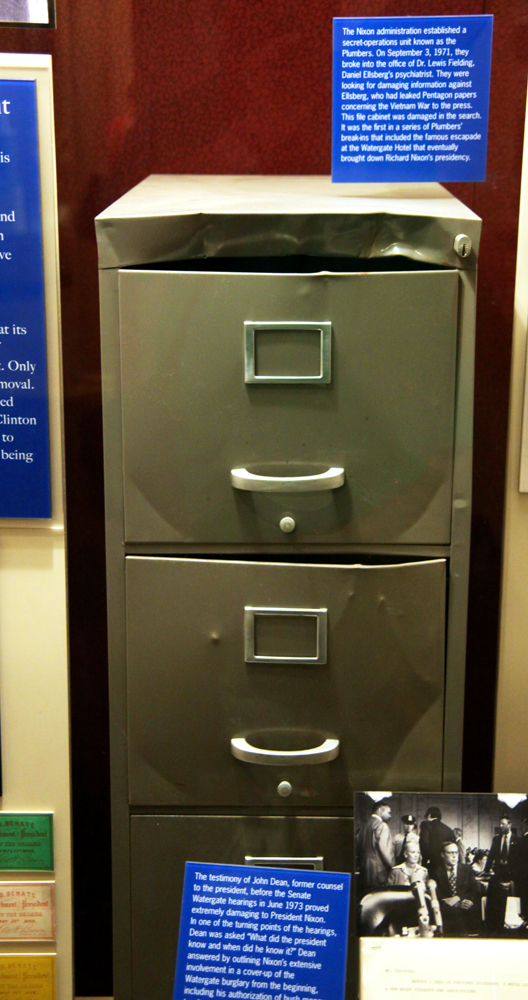 unreasonable. Indeed, in one sense the answer is clearly yes. Do I think Obama ordered the NSA to spy on Romney for political gain? No. Some people claim that President Obama didn’t even know about the full extent of NSA spying. Indeed, I imagine that President Obama was almost as surprised as the rest of us when he first discovered that we live in a mass surveillance state in which billions of emails, phone calls, facebook metadata and other data are being collected.
The answer is yes, however, if we mean did the NSA spy on political candidates like Mitt Romney. Did Mitt Romney ever speak with Angela Merkel, whose phone the NSA bugged, or any one of the dozens of her advisers that the NSA was also bugging? Did Romney exchange emails with Mexican President Felipe Calderon? Were any of Romney’s emails, photos, texts or other metadata hoovered up by the NSA’s break-in to the Google and Yahoo communications links? Almost certainly the answer is yes.
Did the NSA use the information they gathered on Mitt Romney and other political candidates for political purposes? Probably not. Will the next president or the one after that be so virtuous so as to not use this kind of power? I have grave doubts. Men are not angels.
The Nixon administration plumbers broke into the offices of Daniel Ellsberg’s psychiatrist in order to gather information to discredit him. They busted into a single file cabinet (pictured). What a bunch of amateurs.
The NSA has broken into millions of file cabinets around the world.
Nixon resigned in disgrace. Who will pay for the NSA break-ins?
Inflation Sentence of the Day
The Federal Reserve Bank of Cleveland reports that its latest estimate of 10-year expected inflation is 1.73 percent. In other words, the public currently expects the inflation rate to be less than 2 percent on average over the next decade.
The Sad Losers of Politics
Pierce, Rogers and Snyder find that political partisans are more upset about an election loss than a random sample of parents were upset by the Newtown shootings.
Partisan identity shapes social, mental, economic, and physical life. Using a novel dataset, we
study the well-being consequences of partisan identity by examining the immediate hedonic
impact of electoral loss and victory. We employ a quasi-experimental regression
discontinuity model that minimizes many of the inferential biases associated with surveys.
First, we find that elections strongly affect the well-being of partisan losers (for about a
week), but minimally impact partisan winners. This is consistent with research on the goodbad
hedonic asymmetry. Second, the well-being consequences to partisan losers are intense.
To illustrate, we show that partisans are affected two times more intensely by their party
losing the U.S. Presidential Election than both respondents with children were to the
Newtown Shootings and respondents living in Boston were to the Boston Marathon
Bombings. We discuss implications regarding the centrality of partisan identity to the self
and its well-being, and the methodological contribution.
The authors suggest that the happiness effects of political losses are surprisingly large but they would have done better to compare elections with something people really care about, sports (and here). Sports and politics share the same irrational attachment to a team, the only difference being that the rivalries and hatreds of the former rarely lead to as much death and destruction as the latter.


I feel fortunate to have never been emotionally invested in the winner of any election. It’s all a carnival of buncombe to me–a giant robbers cave experiment for the amusement of those in the know.
Addendum: the authors make one error, on the eve of the election the Iowa political markets were not predicting a close election but a strong Obama win (the authors confuse the vote share market with the winner take all market.)
Hat tip: Paul Kedrosky.
Restructuring the Social Sciences
Very interesting paper (pdf) from Gary King with practical advice on reorganizing centers and departments for the information age:
The social sciences are undergoing a dramatic transformation from studying problems to solving them; from making due with a small number of sparse data sets to analyzing increasing quantities of diverse, highly informative data; from isolated scholars toiling away on their own to larger scale, collaborative, interdisciplinary, lab-style research teams; and from a purely academic pursuit to having a major impact on the world. To facilitate these important developments, universities, funding agencies, and governments need to shore up and adapt the infrastructure that supports social science research. We discuss some of these developments here, as well as a new type of organization we created at Harvard to help encourage them — the Institute for Quantitative Social Science. An increasing number of universities are beginning efforts to respond with similar institutions. This paper provides some suggestions for how individual universities might respond and how we might work together to advance social science more generally.
Learning to Compete and Cooperate
What drives individualism and competitiveness as opposed to collectivism and cooperation? Leibbrandt, Gneezy and List have a great paper studying this question with an ingenious 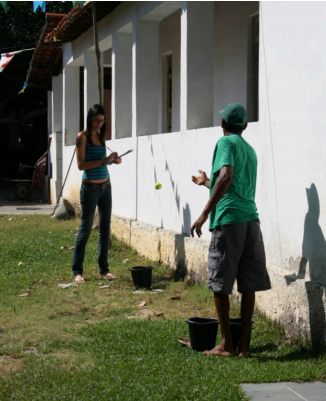 experiment. LGL study two types of fishermen in Northeastern Brazil. The two types live within ~50km of one another but one type are lake fishermen and the other sea fishermen. Lake fishing favors individual fisherman in small boats while sea fishing favors team production on larger boats.
LGL ask the fisherman to participate in a simple experiment, throw 10 tennis balls into a bucket. The participants choose how they are paid, 1 monetary unit per successful attempt or 3 units per successful attempt if they have more successes than an unknown competitor (chosen randomly and without their knowledge to avoid social effects; in case of a tie they are paid 1 unit per success). Fishermen could earn 1-2 days of income for less than an hour of work depending on how successful they were and the payment scheme chosen.
Perhaps you won’t be too surprised to learn that 45.6% of the lake fishermen chose to compete compared with just 27.6% of the sea fishermen. What makes the paper great is all the secondary tests the authors do to understand this result at a deep level. The result, for example, is not due to differences in throwing ability or risk preferences.
You might suspect that the different choices about whether to compete or not are driven by cultural differences. But that too is incorrect. The authors, for example, show that women–who do not fish in either the sea or lake villages–do not show differences in the choices to compete (both chose to compete less than the men but at the same rates in lake or sea villages).
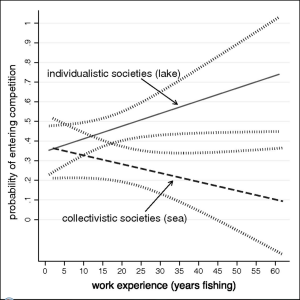 Instead, what the authors demonstrate is that differences in the choice to compete or not appear to be learned differences. First, the lake villagers who chose to compete are among the most successful lake fishermen–that is, they have learned that competition increases income. In the sea villages there is no correlation between choosing to compete and fishing income.
Finally, and most tellingly, there is a dose-response relationship between competition and learning. In particular, the choice to compete or not increases with fishing experience with the experienced lake fisherman choosing to compete more and the experienced sea fishermen choosing to compete less (as shown at left).
The paper appears on the surface to be affirming the importance of cultural differences and to be agreeing with the kind of literature that stresses the idea of self-interest and individualism as western and contingent. Yet, in fact, the paper is suggesting that at a deeper level so-called cultural differences may not be transmitted down through the generations but instead are learned responses to very particular production techniques. Note that such learned responses may change rapidly as production techniques change and that the sea and lake villages are both unusual in the modern world in relying on just one dominant production technique with few other options for learning.
More generally, learning needs to be added to incentives, genetics, and culture as an independent yet entangled determinant of choice.