Category: The Arts
The Art of Kal Mansur
I’m a fan of the work of Canadian artist, Kal Mansur (whom I have known since high school). Photos of his work look like paintings but they are more like sculptures. Underneath the surface are sculptural elements that refract and diffuse the light. In person these pieces have a glow and they look subtly different at different angles or in different light.
Kal has an exhibition at George Billis in New York, Sep 1-Oct 1, 2016, with opening reception Sept. 1, 6-8 pm if you are interested or see the link above. Tell him Alex said hello.


Tyler Cowen’s guide to Enlightenment
No, that is not enlightenment about life, that is enlightenment about Enlightenment, as in the eighteenth century phenomenon. P., a loyal MR reader, wrote to me with such a request, noting correctly that “I usually find that broad, ambitious survey books are not the answer.”
That survey would be Peter Gay, recently a bestseller in China by the way, and then Ernst Cassirer, Jonathan Israel, and Roy Porter, but let me outline an alternative program of study. The goal here is to be practical, engaging, and vivid, not comprehensive or scholarly per se:
Books:
Geoffrey Clive’s short book The Romantic Enlightenment.
James Boswell, Journals, selected excerpts, he was an early blogger by the way, and David Hume, An Enquiry Concerning Human Understanding. I find that to be one of the wittiest of books. Plus Hume’s Essays.
Diderot, Rameau’s Nephew, and Rousseau’s Second Discourse. Condorcet, Essay on the Progress of the Human Mind. Voltaire I consider overrated.
Swift, Gulliver’s Travels, yes I know it is arguably “anti-Enlightenment,” better yet. If you insist on another Irishman, Bishop Berkeley is an entertaining writer as well.
Founding documents of the United States, and Ben Franklin, Autobiography.
Kant, Perpetual Peace, “What is Enlightenment?”, and Lessing, Nathan the Wise.
Beccaria, Of Crimes and Punishments.
If you have the time to tackle longer books, start with Smith’s Wealth of Nations and Boswell’s Life of Johnson and then Casanova and Tristram Shandy (there is by the way a splendid book on the postmodern in the Enlightenment but I can no longer remember the cite). Leave Montesquieu to the Straussians, although the returns are high if you are so inclined.
For history, read up on eighteenth century scientific societies, Robert Darnton on the rise of publishing and the book trade, Habermas on the coffeehouse debate culture and the public sphere, and Brewer and McKendrick on the rise of consumer society in England. Try Wikipedia for Catherine the Great, Frederick the Great, and other rulers of the time. There is also Margaret C. Jacob, The Radical Enlightenment, and books on 18th century Freemasonry. The French Revolution seems to require its own blog post, as does the Industrial Revolution, slavery too, in a pinch resort to the MR search function box on this blog. Foucault will give you a sense of the dark side of the Enlightenment, his history is unreliable but read him on Discipline and Punishment and on ideology try the rather dense The Order of Things.
That all said, I would start with music and the arts first.
Music:
Haydn, the London symphonies and late piano sonatas and string quartets Op.76.
Mozart, the major operas, including reading through the libretti while listening. If you can only do one thing on this list…
Gluck, assorted operas, noting he is not nearly the equal of Haydn or Mozart as a composer but he did capture the spirit of Enlightenment.
C.P.E. Bach, the Prussian Sonatas.
Painting:
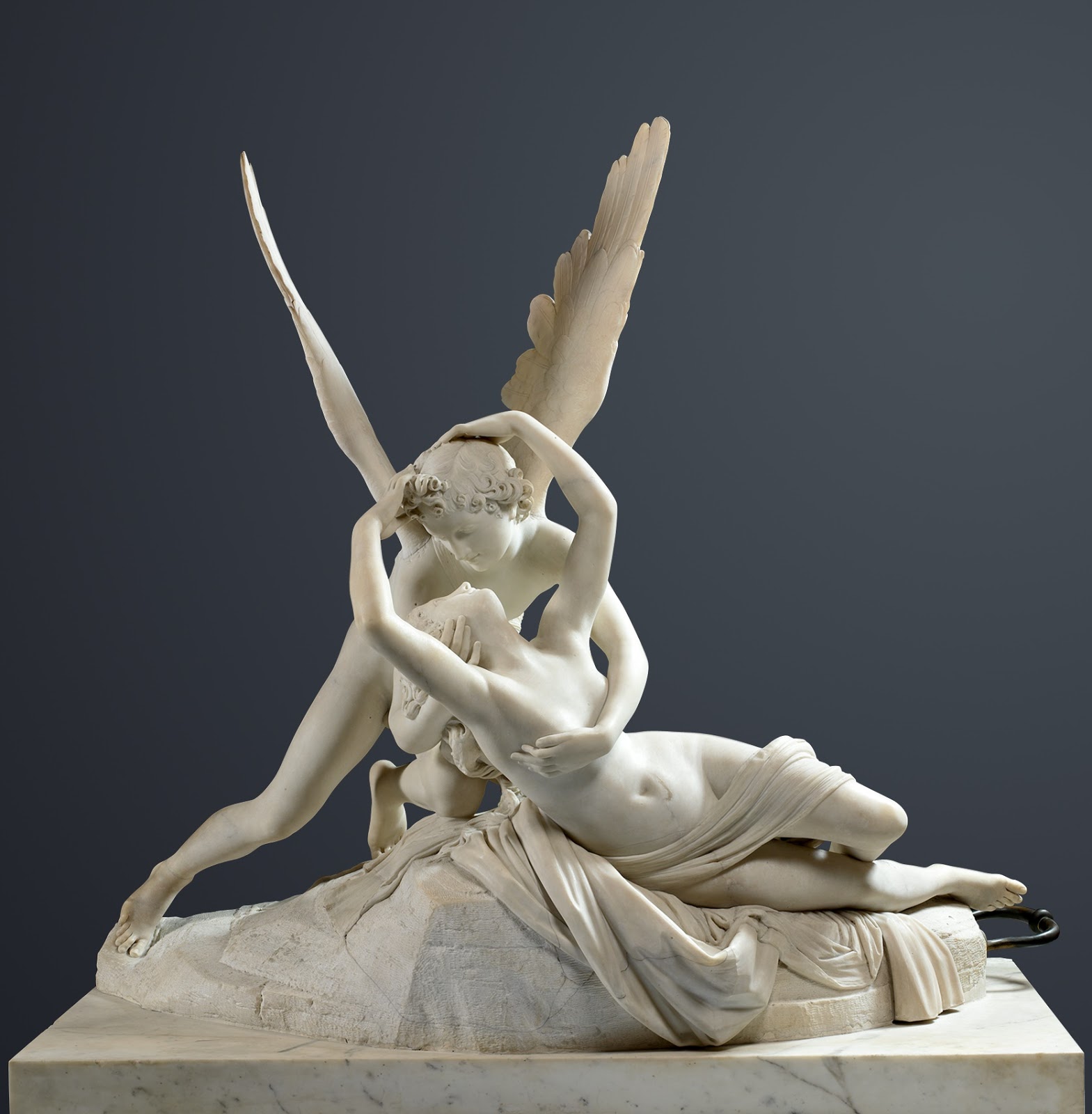
Study French painting from Chardin through David, picture books will do if you can’t visit the original works. Focus on Watteau, Boucher, Fragonard, Vigée-Le Brun, Boilly, Hubert Robert, and others, how their works tie into the history of the period and how the styles transformed over time. Visit Paris, Huntington Gardens, and Tiepolo’s work in the Residenz in Würzburg. Do a tour of Georgian architecture in England, in a pinch visit the derivative works at Harvard, Yale, and Alexandria, Virginia. Study Tiepolo more generally, Goya, and also Antonio Canova.
Movies:
Why not? I’ll toss up Dangerous Liaisons (Vadim and Malkovich versions), Barry Lyndon, Casanova, Amadeus, A Royal Affair (can’t forget Denmark!), Marie Antoinette, Ridicule, and The Madness of King George.
What did I leave out that is of utmost importance?
The Economics of Building Art to Last
 Michael Heizer, the large-scale sculpture artist, has been building City, a sculpture in the Nevada desert since 1972. City is reputedly on the scale of the Washington, DC’s National Mall and something like Teotihuacan but no one knows for sure since “Visitors are explicitly not welcome, and due to its orientation away from the road and system of earthen berms no part of “City” can be viewed from the ground without trespassing on posted property.” A few photos have been smuggled out.
The New Yorker has an interesting article on Heizer. Naturally I appreciated his thoughtful consideration of the economics of building something for the ages:
“City” is made almost entirely from rocks, sand, and concrete that Heizer has mined and mixed on site. The use of valueless materials is strategic, a hedge against what he sees as inevitable future social unrest. “My good friend Richard Serra is building out of military-grade steel,” he says. “That stuff will all get melted down. Why do I think that? Incans, Olmecs, Aztecs—their finest works of art were all pillaged, razed, broken apart, and their gold was melted down. When they come out here to fuck my ‘City’ sculpture up, they’ll realize it takes more energy to wreck it than it’s worth.”
My Conversation with Margalit Fox
Here is the summary:
The stereotypical obituary is a formulaic recitation of facts — dry, boring, and without craft. But Margalit Fox has shown the genre can produce some of the most memorable and moving stories in journalism. Exploiting its “pure narrative arc,” Fox has penned over 1,200 obituaries, covering well-known and obscure subjects with equal aplomb.
In her conversation with Tyler Cowen, Fox reveals not only the process for writing an obituary, but her thoughts on life, death, storytelling, puzzle-solving, her favorite cellist, and how it came to be that an economist sang opera 86 times at the Met.
Here are the transcript, video, and podcast versions of the dialogue. Here is one excerpt:
FOX: …Things happen. But in general, we try to have a certain level of preparedness with the major figures. We do indeed have the advance obits — all but the top, as it were — written, edited, on file. We have about 1,700.
That said, the vast majority of what my colleagues and I down in the trenches do, probably 90 percent of our working life, are daily obits that are found out about, reported, written, edited, copyedited, put in the paper all in the space of a single day, just like any other article in the paper.
And this:
COWEN: Are there obituaries of economists that stand out in your mind? Or maybe some you’ve written?
FOX: Well, interestingly, there is one. As I said, my original training was in classical music, so my editors almost jumped out of their skins with excitement when they discovered they could assign me the obituary of a Harvard economist named Richard T. Gill.
Now, why did they give that to me? Because as we say in the lede of the obit, “Richard T. Gill, in all statistical probability the only Harvard economist to sing 86 performances with the Metropolitan Opera, died,” etc., etc.
COWEN: Yes, I remember reading that one. That was before I knew that you were you.
FOX: I was me then. You just didn’t know it.
COWEN: Correct.
Do read the whole thing. I asked her about privacy concerns, how well a famous person is really known by his or her family and friends, whether there should be affirmative action in the obituaries section, who is chosen for this exclusive club and why, what one learns reading obituaries (“death sucks”), what is underrated in life (“silence”), why British obituaries are different, and about her very good books on linguistic code cracking from antiquity and Bedouin sign language. And more.
Here is the Conversations with Tyler series. Here is basic information on Margalit Fox. Here is Margalit Fox on Twitter.
My personal tech ecosystem, updated
A few of you have asked, I considered that question in 2012, here is a significantly revised update:
1. Now I know how to text, sort of, though I hardly ever do it. It strikes me as the worst and most inefficient technology of communication ever invented (seriously). It’s not that fast, and it’s broken up into tiny bits of back and forth. I don’t see how it makes sense beyond the “What should I get at the supermarket? — Blueberries” level. There is intertemporal substitution, so just, at some other point in time, spend more time talking, writing longer letters, making love, whatever. Not texting. It is never the best thing to be doing, except to answer some very well-defined question.
2. I now carry only one iPad around, as I donated my spare iPad to a poor Mexican family. I use it very often for directions, book and restaurant reviews, and general life advice. Plus email and keeping current on my Twitter feed. I simply don’t want a screen any smaller than that. My iPad now also has a rather pronounced crack on the front glass, but that adds to its artistic value. I dare not drop it again.
3. I have an iPhone, which I hardly ever use for anything. Occasionally someone calls me on it, or I use it to check email in situations when it might be rude to pull out the iPad. Other times I am rude, but it’s actually a form of flattery if I am willing to check my iPad in front of you. You may not feel flattered, however.
3b. Except for the occasional Uber ride, I don”t use apps and hate reading news sites through the apps, I won’t do it. I’m used to the web, not your app, and I hope I can get away with being a stubborn grouch on this forever.
4. I now have a Bloomberg terminal, which is very cool. It is amazing that a product designed in the “before the internet as we know it” era still is the clear market leader and the best option. Bloomberg is a great company with a great product(s). Right now I can do about 5 of the 25,000 separate commands, but the fault is mine not theirs. In the meantime, send me email at my gmu address, not what is listed on the Bloomberg column.
5. I use my Kindle less over time. It remains in that nebulous “fine” category, but I prefer “real books.” Kindle is best for works of fiction when I know in advance I wish to read every page in the proper order. I am continuing with my long-range plan to read Calvin’s Institutes on my Kindle, bit by bit, in between other works. This will take me ten years, but a) he is a brilliant mind, and b) in the meantime I won’t lose sight of the plot line.
6. I have a new Lenovo laptop, sleek and fast, plus some computers at work. I don’t even know what they are, but probably they are quite subpar.
Way more iPad and way less texting are I suppose the main ways in which I deviate from the dominant status quo. Come join me in this and we shall conquer the world.
Which part of the world is most underrated in literary terms?
I asked that question of Michael Orthofer, and his answer was this:
Underrated, I would absolutely think the regional language and literature of India. I think surprisingly, even though, perhaps, English is the main literary language of India and a great deal is locally translated, even there much of the vernacular literature still isn’t available in English.
What one can see of it and also in part hear about it — we’re missing an awful lot. There is a literary culture there, especially, for example, in Bengali, but we’ve had that since Tagore. One of the remarkable things is Tagore won his Nobel prize over a hundred years ago, and there are still novels by him which haven’t been translated into English. He is really a very good novelist.
It’s truly worthwhile, and this goes for many regions. The southern region of Kerala where they write in Malayalam — there’s remarkable literary production there, and we just see so little of it.
My inclination was to suggest Chile. Here’s why this country of below 18 million people is nonetheless a fierce literary contender:
1. Pablo Neruda was one of the two or three best poets of the latter part of the twentieth century. His Canto general is not his best poetic work but as a general statement of the history and underlying unity of the New World it is unparalleled. Gabriela Mistral is noteworthy too.
2. José Donoso’s The Obscene Bird of the Night is one of the very best Latin novels, yet it is hardly read these days, I am not sure why. I think it is clearly better than say One Hundred Years of Solitude.
3. Roberto Bolaño is probably the most important Latin author post-García Márquez, and he is from Chile, though he wrote much more about Mexico.
4. Antonio Skármeta isn’t even a top figure in this lineage yet he is still quite good, the same holds for Ariel Dorfman (born in Argentina, moved to Chile shortly afterwards), Alejandro Zambra, and yes Isabel Allende, who is the Chilean author most in the public eye in the United States. She is usually too sentimental for my taste but some of it I enjoy nonetheless.
And why is Chile underrated? Well, when you are there it feels fairly provincial — just ask a Porteño. Bolaño didn’t stick around and more generally exile from Pinochet prevented the creation of any well-defined group or movement. The Pinochet years also gave Chile a…shall we say…non-artistic reputation, and finally both Neruda and Doñoso don’t translate so well out of the Spanish.
Do you have an alternative choice?
My conversation with Michael Orthofer
That is the latest entry in the Conversations with Tyler series, here is the transcript, audio, and video. Here is the overview:
Michael Orthofer, one of the world’s most prolific book reviewers, joins Tyler Cowen for a conversation on — what else? — books. Read to discover why Michael believes everyone should read more fiction, how we should choose books, why American popular literature is overrated, what he thinks about authors like Herman Melville, Fyoder Dostoevsky, Goethe, J.K. Rowling, Arno Schmidt, and many others, his recommendations for the best sites for readers, why studying literature at college was such a big disappointment, how much book covers matter, and why his opinion will never be the final word.
Here is one excerpt:
COWEN: Here’s another life hack which I totally reject, but it may just be because I’m an addict of sorts. You tell me why, for you, it’s wrong.
A lot of people say to me, “Well, I love fiction, but I’m never going to read new works because I can’t tell what’s really good. I’ll just wait 20 years and then look back on what was truly excellent from 20 years ago and read that 20 years later. In the meantime, now I’ll just read classics or things in other areas which are verified as being truly excellent.” Does that make sense?
ORTHOFER: I worry very much about people who rely on what gets that stamp of approval. Just because it has a cover review in the New York Times Book Review does not mean that that book really is, if we look at it from five or ten years down the road — that that book will still be a significant work. I find so much which is highly praised at any one point long‑term won’t be. Again, however — .
Another question:
COWEN: If we take American citizens, who are not necessarily the people who read you, but at the margin, we could give them more nonfiction, we could give them more travel, we could give them more fiction, or we could actually give them more of some really good TV, which of those things are we rooting for them to do more of, at the margin?
And this exchange:
COWEN: Bottom’s Dream. Most people have never heard of Arno Schmidt.
ORTHOFER: Regrettably, no.
COWEN: We have a chance now to read his masterwork. Some of his others are in English already. Tell us why we should care.
…COWEN: But you giggled when you read Bottom’s Dream, right?
ORTHOFER: Yes.
COWEN: You giggled a lot.
ORTHOFER: The English edition, I think, is just under 1,500 pages.
COWEN: A mere pittance compared to Dream of the Red Chamber, right?
Do read the whole thing.
Here is my short review of Michael’s big book on world literature: “If you measure book quality by the actual marginal product of the text, this is one of the best books written, ever. Reading the manuscript in draft form induced me to a) write an enthusiastic blurb, and b) order about forty items through Amazon, mostly used of course. The book is basically a comprehensive guide to what is valuable and interesting in recently translated world literature, a meta-book so to speak, with extensive coverage of most of the countries you might want.” And here is Michael’s blog. You can order Michael’s book here.
What are young men doing?
Here is Erik Hurst, from an excellent piece profiling Erik Hurst:
Right now, I’m gathering facts about the possible mechanisms at play, beginning with a hard look at time-use by young men with less than a four-year degree. In the 2000s, employment rates for this group dropped sharply – more than in any other group. We have determined that, in general, they are not going back to school or switching careers, so what are they doing with their time? The hours that they are not working have been replaced almost one for one with leisure time. Seventy-five percent of this new leisure time falls into one category: video games. The average low-skilled, unemployed man in this group plays video games an average of 12, and sometimes upwards of 30 hours per week. This change marks a relatively major shift that makes me question its effect on their attachment to the labor market.
To answer that question, I researched what fraction of these unemployed gamers from 2000 were also idle the previous year. A staggering 22% – almost one quarter – of unemployed young men did not work the previous year either. These individuals are living with parents or relatives, and happiness surveys actually indicate that they quite content compared to their peers, making it hard to argue that some sort of constraint, like they are miserable because they can’t find a job, is causing them to play video games.
This problem, if that is the right word for it, will not be easily solved.
Claims about clutter
Tidy by category, not by location
One of the most common mistakes people make is to tidy room by room. This approach doesn’t work because people think they have tied up when in fact they have only shuffled their things around from one location to another or scattered items in the same category around the house, making it impossible to get an accurate grasp of the volume of things they actually own.
The correct approach is to tidy by category. This means tidying up all the things in the same category in one go. For example, when tidying the clothes category, the first step is to gather every item of clothing from the entire house in one spot. This allows you to see objectively exactly how much you have. Confronted with an enormous mound of clothes, you will also be forced to acknowledge how poorly you have been treating your possessions. It’s very important to get an accurate grasp of the sheer volume for each category.
That is from Marie Kondo, Spark Joy: An Illustrated Guide to the Japanese Art of Tidying, a recommended book. Also never tidy the kitchen first, do not keep make-up and skin care products together, and “…the first step in tidying is to get rid of things that don’t spark joy.”
I have a related tip. If you want to do a truly significant clean-up, focus only on those problems which are not immediately visible. This will help you build efficient systems, and prepare the way for more systematic solutions to your clutter problems. You’ll then be prompted to take care of the visible problems in any case. If you focus on the visible problems instead, you will solve them for a day or two but they will rapidly reemerge because the overall quality of your systems has not improved.
My Conversation with Cass Sunstein
There is audio, video, and transcript at the link. I introduced Cass like this:
The Force is strong with this one. Cass is by far the most widely cited legal scholar of his generation. His older book, Nudge, and his new book on Star Wars are both best sellers, and he was head of OIRA [Office of Information and Regulatory Affairs] under President Obama from 2009 to 2013. Powerful, you have become.
So tonight I’d like to start with a survey of Cass’s thought. We’re going to look at legal theory and then go to Nudge and then consider Star Wars, how it all ties together, and then we’re going to talk about everything.
On every point Cass responded clearly and without evasion. We talked about judicial minimalism, Bob Dylan’s best album, the metaphysics of nudging, Possession, the ideal size of the Supreme Court, the wisdom of Yoda, Hayek, why people should choose their own path, the merits of a banned products store, James Joyce, why the prequels are underrated, and which of the first six movies is the worst of the lot. Here is one bit:
COWEN: Let’s take a concrete example from real life: Jedi mind tricks. Obi-Wan comes along and says, “These aren’t the droids you’re looking for.” And what does the stormtroooper do? He goes away. Now, is that a nudge?
SUNSTEIN: No, it’s a form of manipulation. So — .
[laughter]
COWEN: OK, but how do you draw the metaphysical categories? It seems like a nudge that just happens to work all the time.
SUNSTEIN: OK. I’ll give you a quick and dirty way of getting at that…
Here is another:
COWEN: If you were to pick one character from Star Wars who would nudge you — you get to elect them; you’re the only vote. Even Samantha doesn’t get a vote, just Cass — not your children — which character would you pick? Whom would you trust with that nudge? It’s a universe full of Jedi here, right?
SUNSTEIN: Yoda.
COWEN: Yoda?
SUNSTEIN: I trust that guy.
COWEN: But I worry about Yoda.
SUNSTEIN: I trust him.
Finally:
SUNSTEIN: Thank God for libertarian paternalism, that Luke has a choice. The Sith, by the way, like the Jedi, respect freedom of choice. In the crucial scene in Episode III where the question is whether Anakin is going to save the person who would be emperor, he says, “You must choose.” And so there’s full respect for freedom of choice. Nudgers have that. Good for them.
COWEN: Bad guys always tell you the deal, and then they say, “Choose evil.” It seems the good guys always mislead you.
There’s this funny tension. Star Wars makes me more nervous about nudge. I’m not like this huge anti-nudge guy, but when I look at Obi-Wan and Yoda lying to Luke — “Ben, Ben, Ben, why didn’t you tell me?” How many times have I heard that in these movies?
…SUNSTEIN: It’s fair to ask whether Obi-Wan and Yoda had it right.
There is much, more more…self-recommending!
https://medium.com/conversations-with-tyler/cass-sunstein-star-wars-nudge-a7c874f3ce8c#.am5grz4nh
Art as a wartime investment the asset that is countercyclical
From a new Economic Journal article by Kim Oosterlinck:
During World War II, artworks significantly outperformed all alternative investments in Occupied France. With the surge in demand for portable and easy-to-hide (discreet) assets such as artworks and collectible stamps, prices boomed. This suggests that discreet assets may be viewed as crypto-currencies, demand for which varies depending on the environment and the need to hide value. Regarding art market valuation, this paper argues that while some economic actors derive significant utility from conspicuous consumption, others value the discretion offered by artworks. Motives for purchasing art may thus vary over time.
The pointer is from Kevin Lewis. And via Samir Varma, here is a new piece on how the returns to fine art have been overestimated.
Are cultural omnivores actually stuck-up sticky bits?
Poking big holes in long-held assertions, Goldberg and his colleagues at Stanford and Yale universities analyzed millions of Yelp and Netflix reviews to reveal that people considered the most culturally adventurous are actually the most resistant to experiences perceived as “crossing the line.”
That is, those dubbed “cultural omnivores” — because they eat Thai for lunch, play bocce ball after work, and stream a French film that night — are the very ones opposed to mixing it up. No hummus on their hot dogs, forget about spaghetti Westerns, and do not mention Switched-On Bach. Those offerings are not considered culturally authentic. They are a hodgepodge to which these folks would likely wrinkle their collective noses — as they did in 1968 when Wendy (nee’ Walter) Carlos electrified J.S. Bach. Today’s cultural elites approve only if the experience is authentic, which means eating pigs’ feet at a Texas barbecue passes the test and slathering a taco with tahini does not.
“We find these people hate the most atypical offerings,” says Goldberg, an assistant professor of organizational behavior at Stanford Graduate School of Business. “They can pretend to be the most open, but it turns out they are not. By being multicultural, they are the most conservative and the most resistant to changes to the status quo.”
Or should we just call it good taste?
Here is the Katherine Conrad article, via the excellent Dan Wang.
The economics of *Hamilton*, and money left on the table
The average resale of “Hamilton” tickets on StubHub is roughly $872, according to a New York Times analysis, a markup of $700 above the current average original ticket sale price.
For any given performance, roughly 13 to 22 percent of the seats at the Richard Rodgers — somewhere between 180 and 300 tickets — are available on the secondary market, according to The Times’s research and interviews with ticket sellers. So for each performance of “Hamilton,” ticket sellers and brokers are reaping roughly $150,000. With the Broadway cast putting on more than 400 shows per year, that means these sellers could reap about $60 million per year, just in New York — money the producers, investors and Mr. Miranda will never see.
I still find this equilibrium puzzling. By the way, here are some numbers on book tie-ins:
“Hamilton” can even sell books. “Hamilton: The Revolution,” a behind-the-scenes book about the creation of the musical by Jeremy McCarter and Mr. Miranda, went on sale in April with a list price of $40. In less than two months, it sold more than 101,000 copies, according to Nielsen, and hit the No. 1 spot on the New York Times hardcover nonfiction best-seller list. (Other authors have benefited from “Hamilton” fever, too: Ron Chernow’s 2004 biography, which inspired Mr. Miranda to write the musical, has spent 33 weeks on the paperback best-seller list. This fall, Three Rivers Press will publish Jeff Wilser’s self-help book “Alexander Hamilton’s Guide to Life.”)
Here is the Michael Paulson and David Gelles NYT piece, it has much more of interest on the economics of the show.
My conversation with Camille Paglia
Here is the transcript, the video, and the podcast. We covered a good deal of ground, here is one bit:
COWEN: You once wrote, I quote, “My substitute for LSD was Indian food,” and by that, you meant lamb vindaloo.
PAGLIA: Yes.
COWEN: You stand by this.
PAGLIA: Yes, I’ve been in a rut on lamb vindaloo.
COWEN: A rut, tell us.
PAGLIA: It’s a horrible rut.
COWEN: It’s not a horrible rut, it may be a rut.
PAGLIA: No, it’s a horrible rut. It’s a 40-year rut. Every time I go to an Indian restaurant, I say “Now, I’m going to try something new.” But, no, I must go back to the lamb vindaloo.
All I know is it’s like an ecstasy for me, the lamb vindaloo.
COWEN: Like De Quincey, tell us, what are the effects of lamb vindaloo?
PAGLIA: What can I say? I attain nirvana.
And this:
COWEN: This is Sexual Personae, your best known book, which I recommend to everyone, if you haven’t already read it.
PAGLIA: It took 20 years.
COWEN: Read all of it. My favorite chapter is the Edmund Spenser chapter, by the way.
PAGLIA: Really? Why? How strange.
COWEN: That brought Spenser to life for me.
PAGLIA: Oh, my goodness.
COWEN: I realized it was a wonderful book.
PAGLIA: Oh, my God.
COWEN: I had no idea. I thought of it as old and fusty and stuffy.
PAGLIA: Oh, yes.
COWEN: And 100 percent because of you.
PAGLIA: We should tell them that The Faerie Queene is quite forgotten now, but it had enormous impact, Spenser’s Faerie Queene, on Shakespeare, and on the Romantic poets, and so on, and so forth. The Faerie Queene had been taught in this very moralistic way. But in my chapter, I showed that it was entirely a work of pornography, equal to the Marquis de Sade.
COWEN: [laughs]
PAGLIA: How interesting that you would be drawn to that.
COWEN: Very interesting.
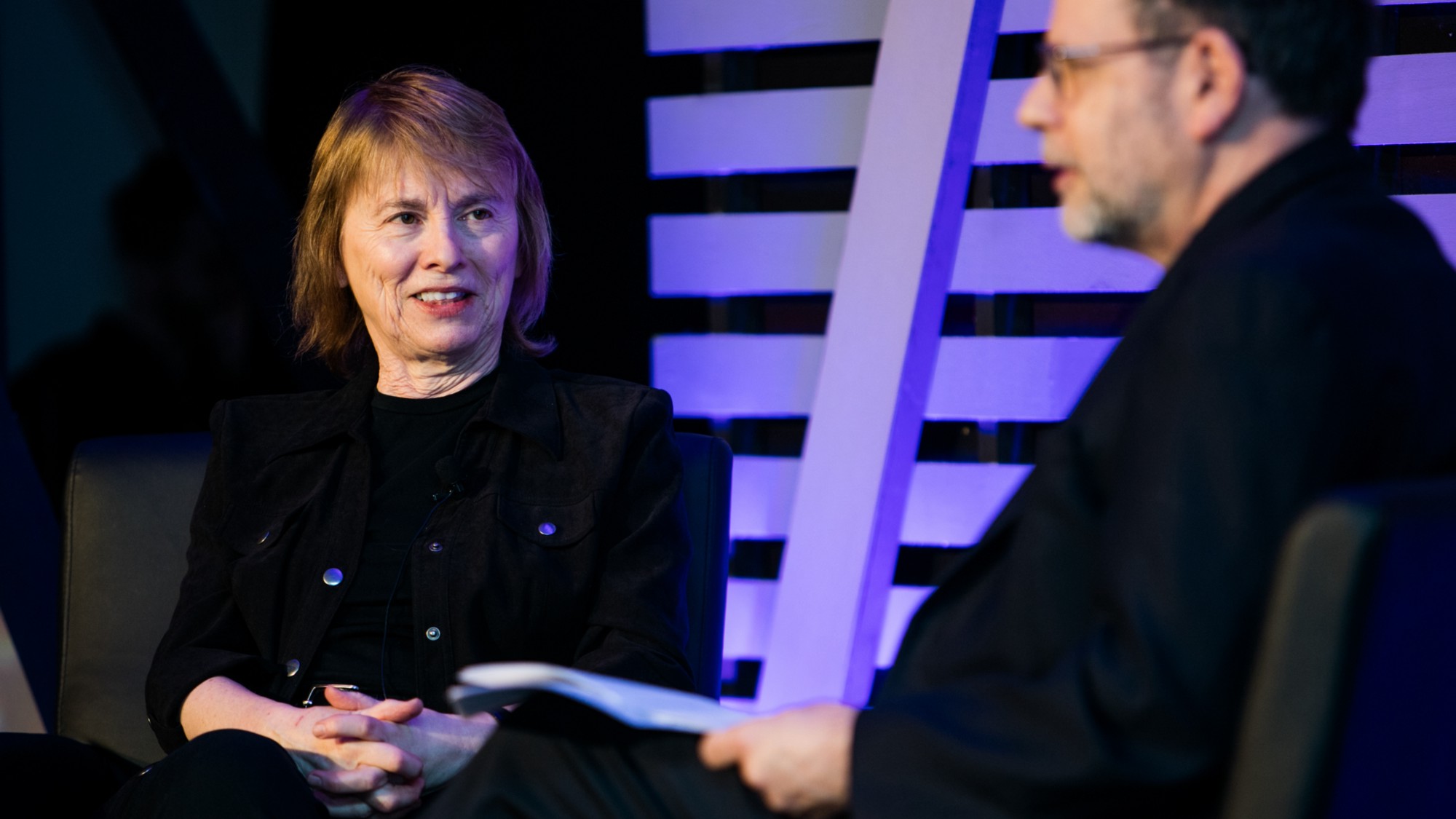
You also can read or hear Camille on Star Wars: The Force Awakens, the Byrds, Foucault, Suzanne Pleshette vs. Tippi Hendren, dating, Brazil, Silicon Valley, Harold Bloom, LSD, her teaching career, and much, much more.
Typically a Conversation with Tyler is about ten thousand words, this one is closer to fifteen thousand.
My chat with Camille Paglia
It is set for 3:30 EST, the Live Stream will be here.
Update: The full event video, transcript, and audio edition will be released Monday, April 25. Check back here on MR or at mercatus.org/conversations.